
Barbara Boyd discusses the monumental shift brought about by President Trump, which has led to the end of the Western Alliance as announced by Chatham House.
The video addresses three critical stories:
The impact of Chatham House’s declaration
Trump’s recent visit to Detroit, and
The tussle between Trump and Federal Reserve Chairman Jerome Powell
Boyd explains how Trump is reshaping America’s role on the global stage, reversing 80 years of decline, prioritizing American workers, and challenging the existing post-World War II order.
The episode also covers Trump’s economic policies aimed at reducing healthcare costs, capping credit card interest rates, and making housing more affordable.
Chapters
00:00 The Midweek Update - Chatham House PANIC: "Trump Destroyed the West" - January 14, 2026
01:23 Chatham House Confesses: 'Trump Ended the West'
04:35 Detroit Booming: Promises Made, Promises Kept
07:12 Powell's Hostage Video Backfires
Snapshots and Notes
The Chatham House1 is in a PANIC as President Trump has ended what has been in existence since its formation at the end of WWI - the Western Alliance2
This is Chatam House Director Bronwen Maddox…
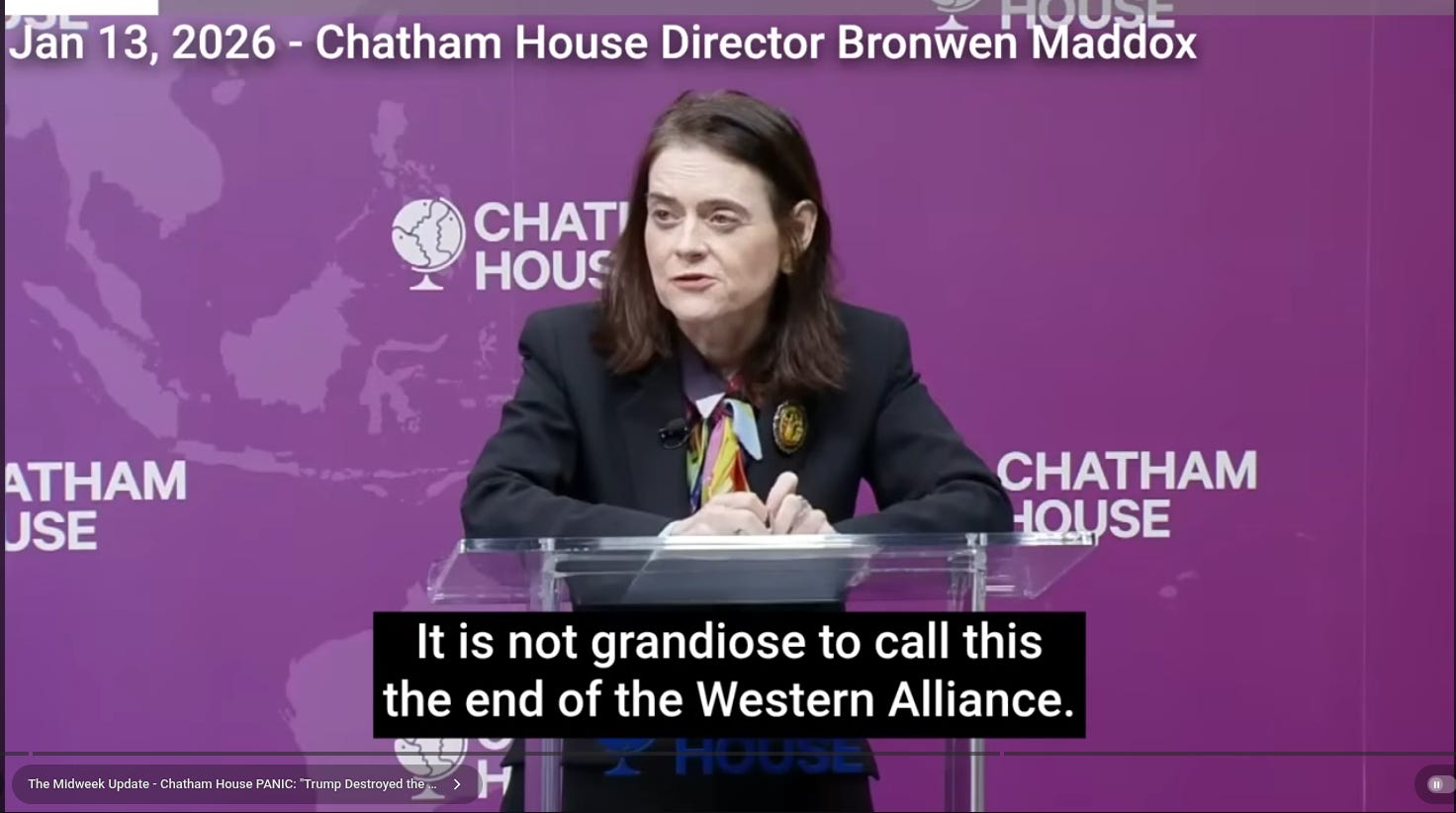
“It is not grandiose to call this the end of the Western alliance.
“We’ve heard from President Trump what amounts to a revolution.
“He’s given the U.S. a radically new role in the world.
“Donald Trump has just ended the Western alliance.”
A terrified confession of the British Empire’s brain trust, Chatham House, was released in their 2026 Vision of the World yesterday.

While they are mourning the end of their 80-year death grip on our country, Donald Trump was in Detroit yesterday, taking selfies with auto workers at a Ford plant running 24-hour shifts.
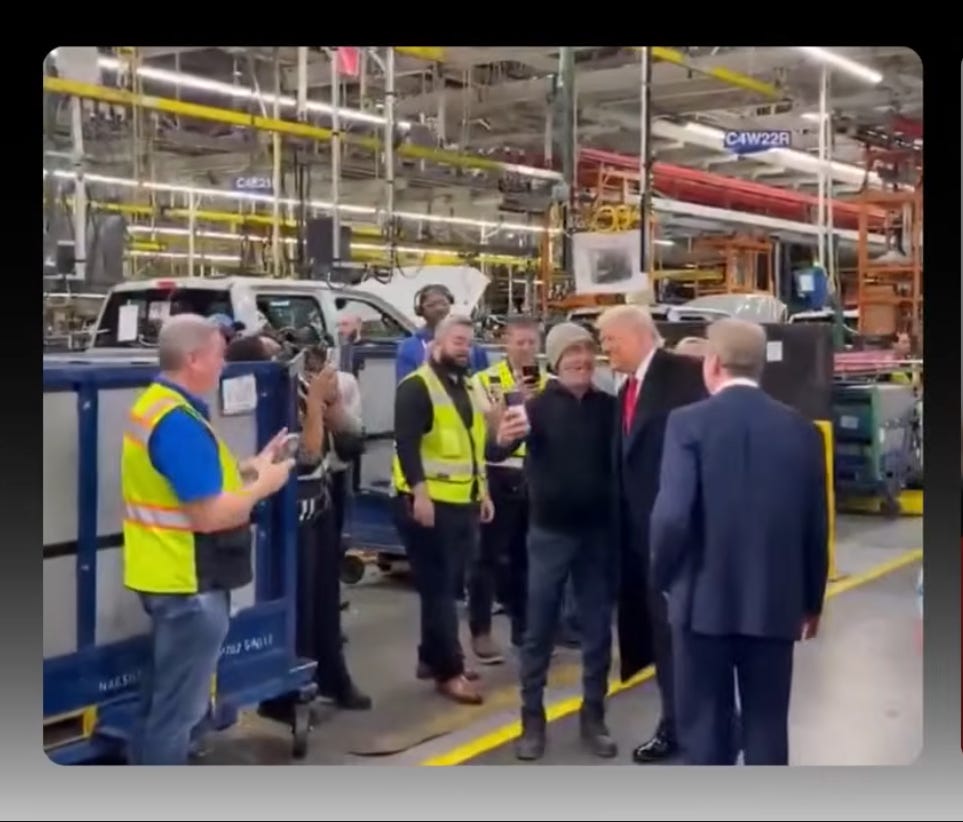
The empire is mourning itself; America is building and booming.
Chatham House Confesses: ‘Trump Ended the West’ (01:23)
Chatham declared the Western Alliance dead yesterday and said Trump was the killer.
If you don’t know the history of this organization, you’ll miss the significance of this event.
The Royal Institute of International Affairs, Chatham House’s longer name, was founded by the leaders of the British Empire right after World War I, along with our own Council on Foreign Relations (CFR)3.
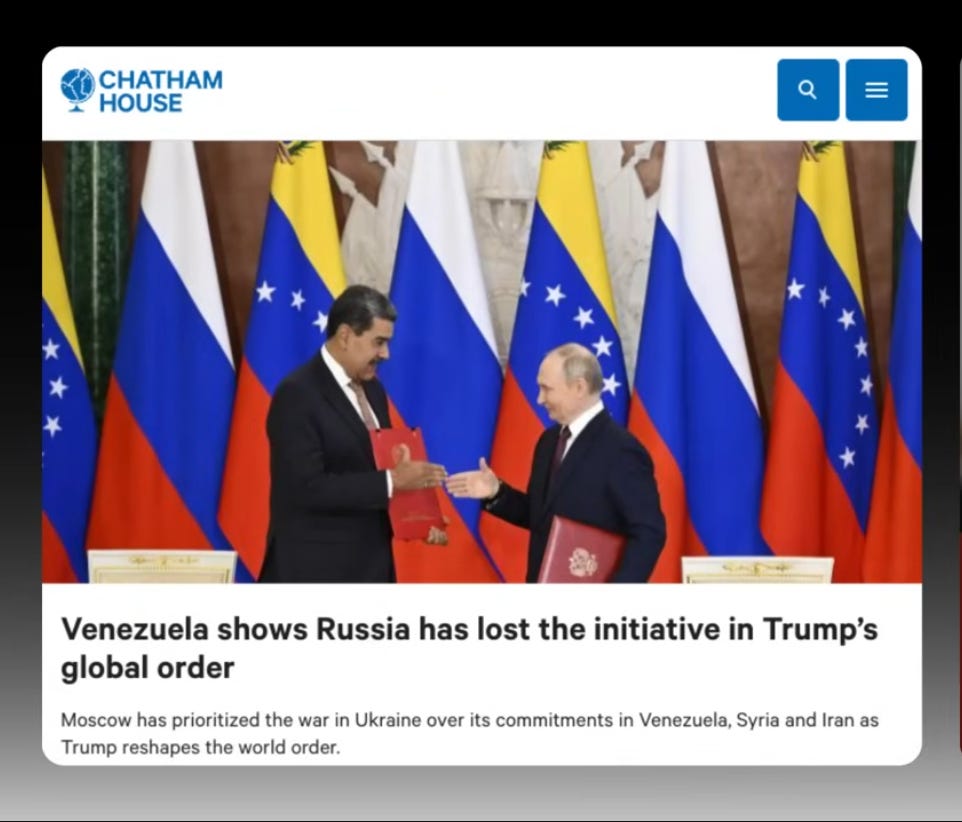

They were supposed to be partners in tandem, and it always worked that way.
They were founded to work together to control the foreign affairs of all nations.
When you hear the term 'special relationship,' this is what it refers to.
It is the actual enemy of our nation.
So too with globalism, they are its authors.
The great historian, Caroll Quigley, studied this network, which is the backbone of British Imperial Empire (CLICK HERE for a downloadable PDF of Carroll’s book - opens in our online library).

He fooled them into giving him access to their secret papers.
After a two-year study of these papers, he concluded …
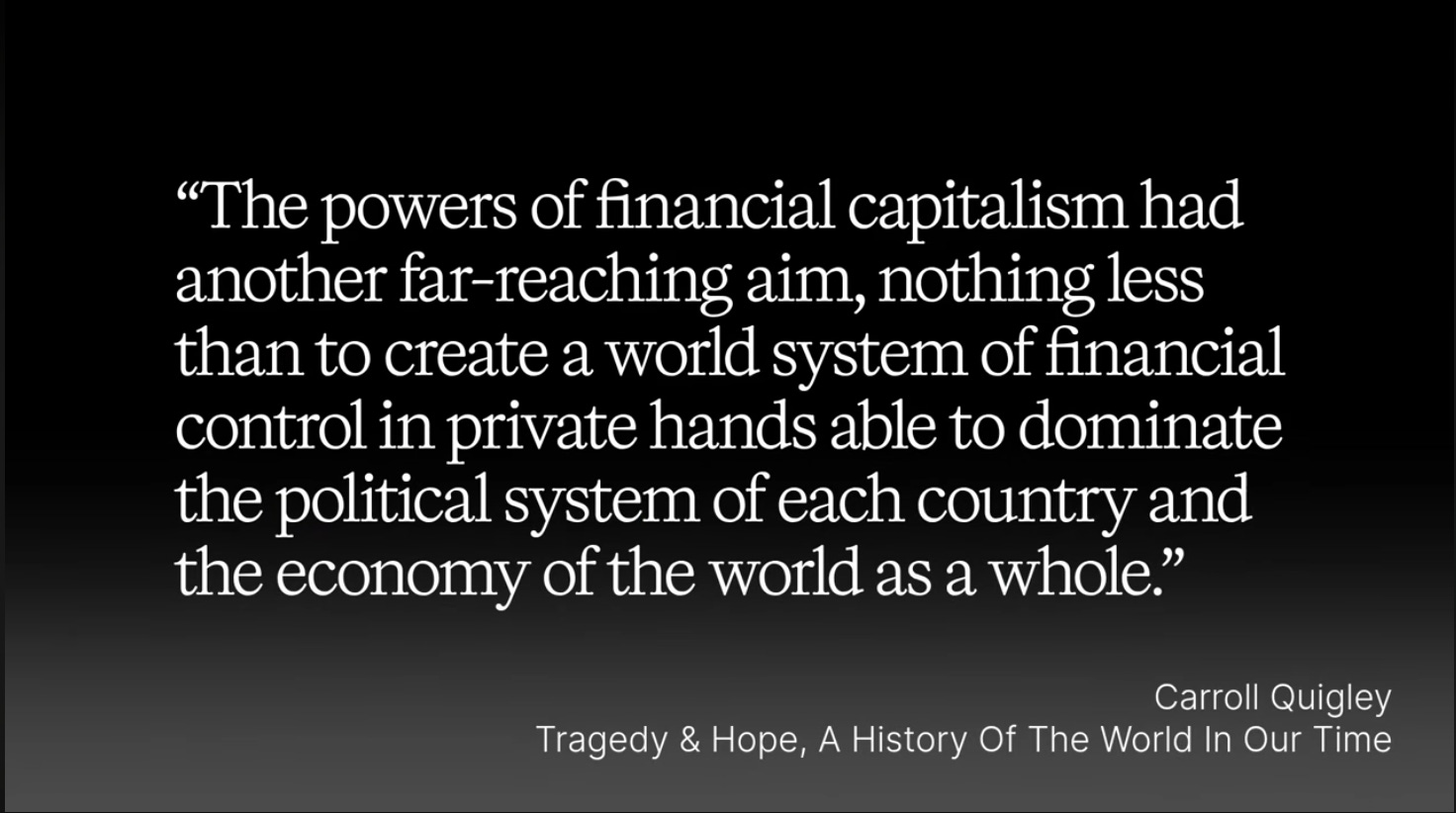
That conspiracy came close to achieving its final success under Joe Biden’s presidency.
You might remember that the policies of the Globalist World Economic Forum became our policies - everything from eating bugs, to climate hysteria, to renting everything and owning nothing.

According to Chatham House’s current director, Trump has wrecked everything by
taking Putin’s side on Ukraine
calling out Europe for censorship and thought control prosecutions
imposing tariffs to benefit the United States and
similar direct actions against the empire
She closed her list yesterday of Trump’s crimes by defending the drug lord Maduro and venting that Trump’s desire to acquire Greenland violates all international law.
Here’s your money quotes ...
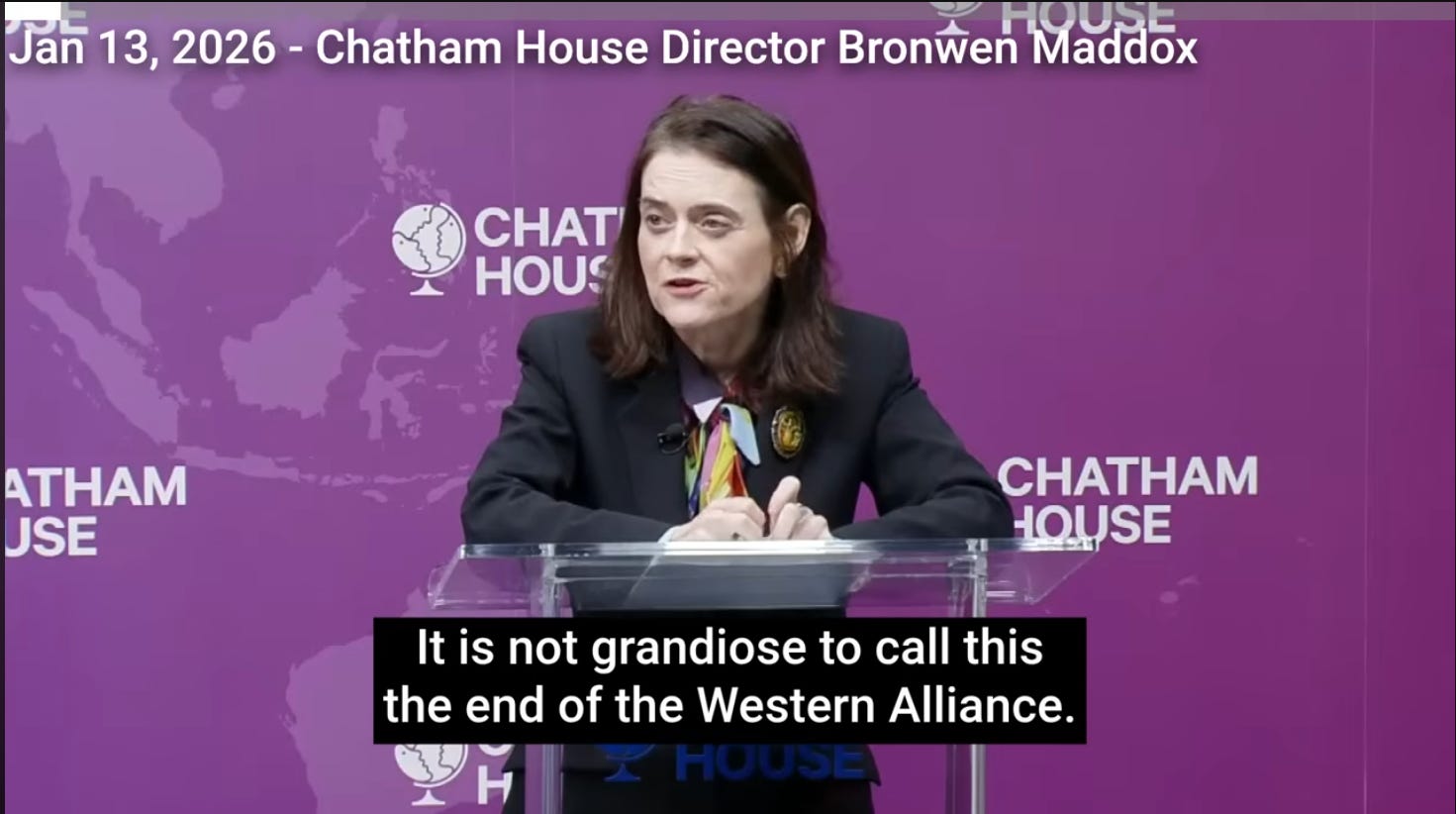
“It is not grandiose to call this the end of the Western alliance.
“We’ve heard from President Trump what amounts to a revolution.
“He’s given the US a radically new role in the world.
“In the case of the US’s allies, they must now contemplate what was unthinkable to have to defend themselves against the US itself in trade and perhaps security.”
She is apparently in a state of shock as she was late in her death declarations.
President Trump’s new national security policy already made clear that he is discarding the failed World War II post-war order, which has only brought misery to our citizens.
His only measure of political action now is whether it is in America’s workers' interest.
That’s what Chatham House rightly recognizes as a revolution - a revolution that is taking down the world order as they want it, not as the people want it.
Detroit Booming: Promises Made, Promises Kept (04:35)
The president’s report to Michigan was a review of promises made, promises kept in this critical midterm battleground - and he started it out with a dance.
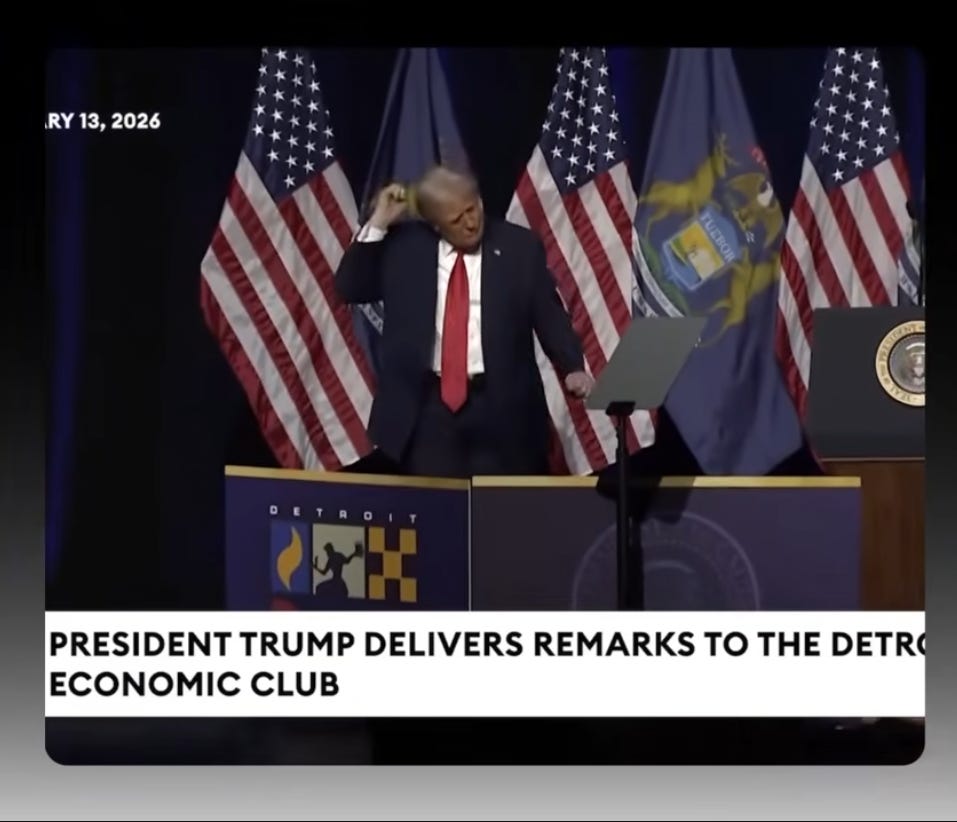
New factories are being built; cars and machine tools are back at work, building all the things a healthy economy needs.
If you’ve read the president’s new National Security Strategy, you know that the health, wealth, and productivity of the American worker are the center of everything for him.
A copy of the NSS is available in our online library; just click the image below to download a PDF.

Highlights of President Trump’s Detroit Speech
Healthcare…
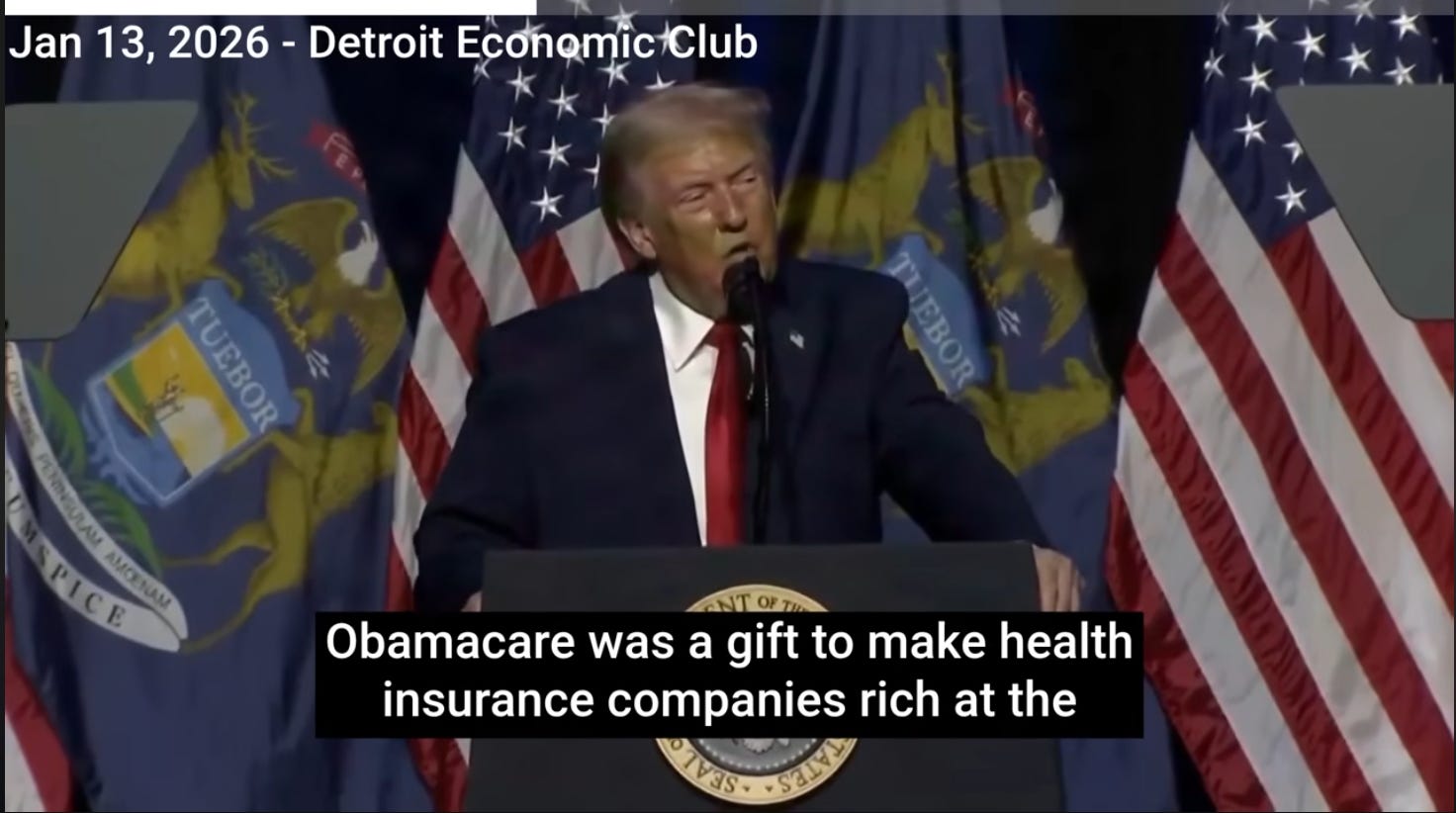
“To provide further relief to hardworking Americans, we’ll also be confronting one of the biggest factors in driving up prices, the monstrosity known as the Unaffordable Care Act.
“You know what that is, right? It’s Obamacare; it’s a great name, Unaffordable Care Act.
“Obamacare was a gift to make health insurance companies rich at the expense of the American people.
“In particular, the so-called enhanced premium tax credits were a corrupt payoff to the insurers whose stock prices went up more than 1,000% after Obamacare was signed.
“I want the same money go, I want it to go directly, very simple; I want the money, those big amounts of money paid for by the government to go directly to the people so they can buy the healthcare that’s right for them.
“They can negotiate their own deal, healthcare savings account, but they’ll buy their own healthcare and everybody loves it.”
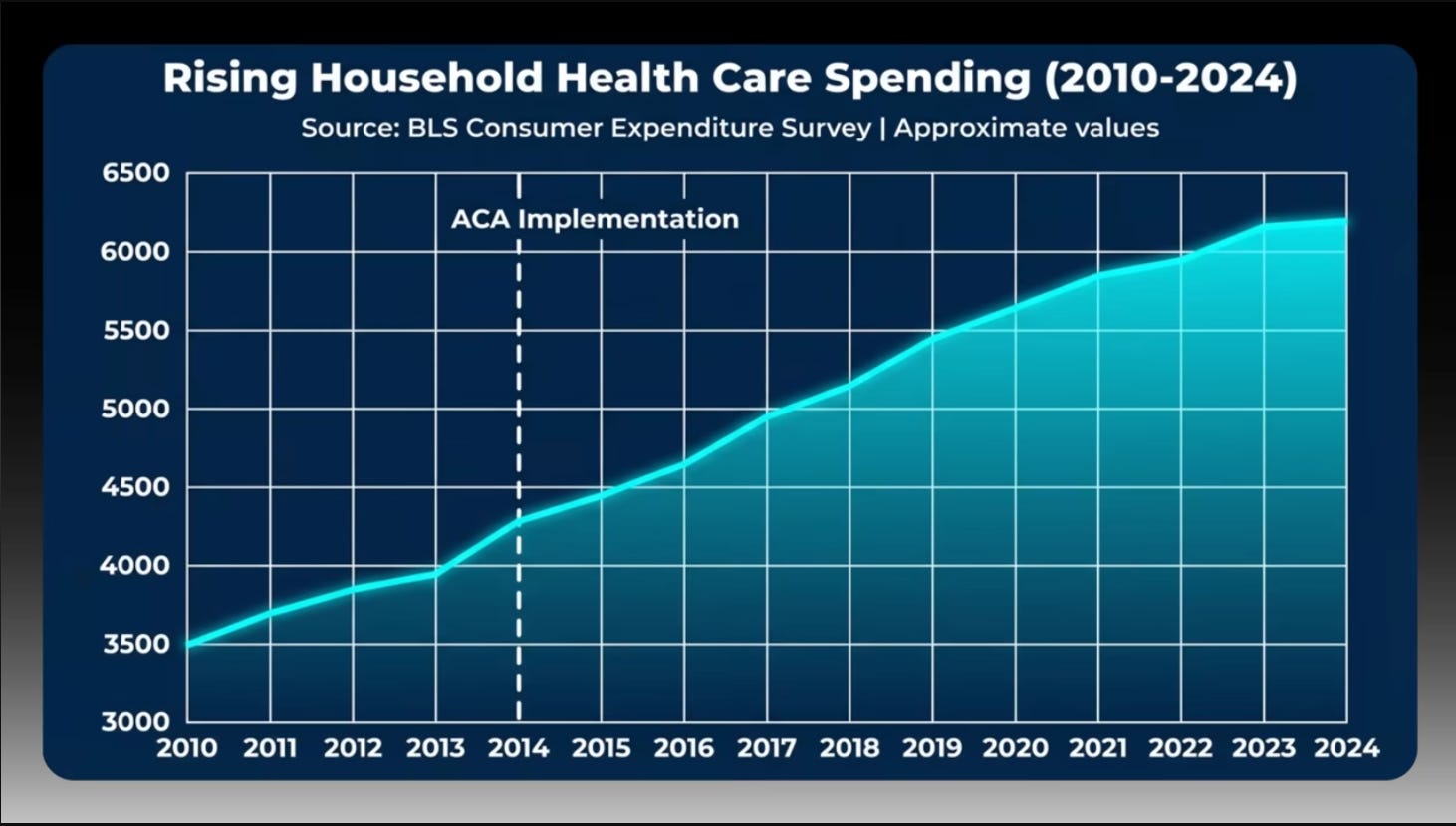
ICYMI - Obamacare for the people was terminated, the hospitals, however, kept their end of Obamacare in full operation, contributing to the continuing rising healthcare costs and the ever-decreasing level of service.
Credit card debt…
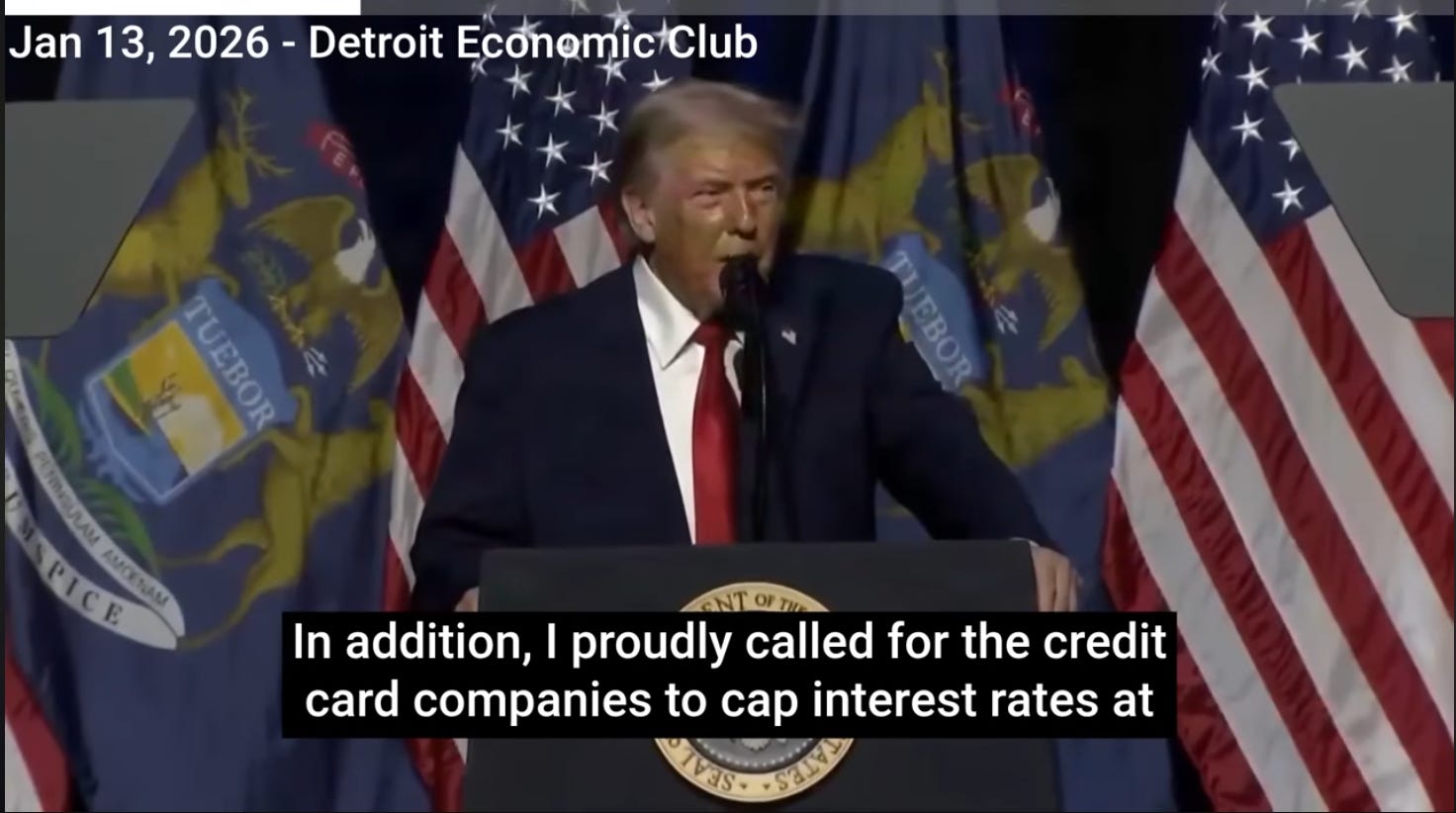
“In addition, I proudly called for the credit card companies to cap interest rates at 10% for one year because they’re getting 28 and 30% and 32%; and it’s unfair, the rates are way too high.”
Housing…
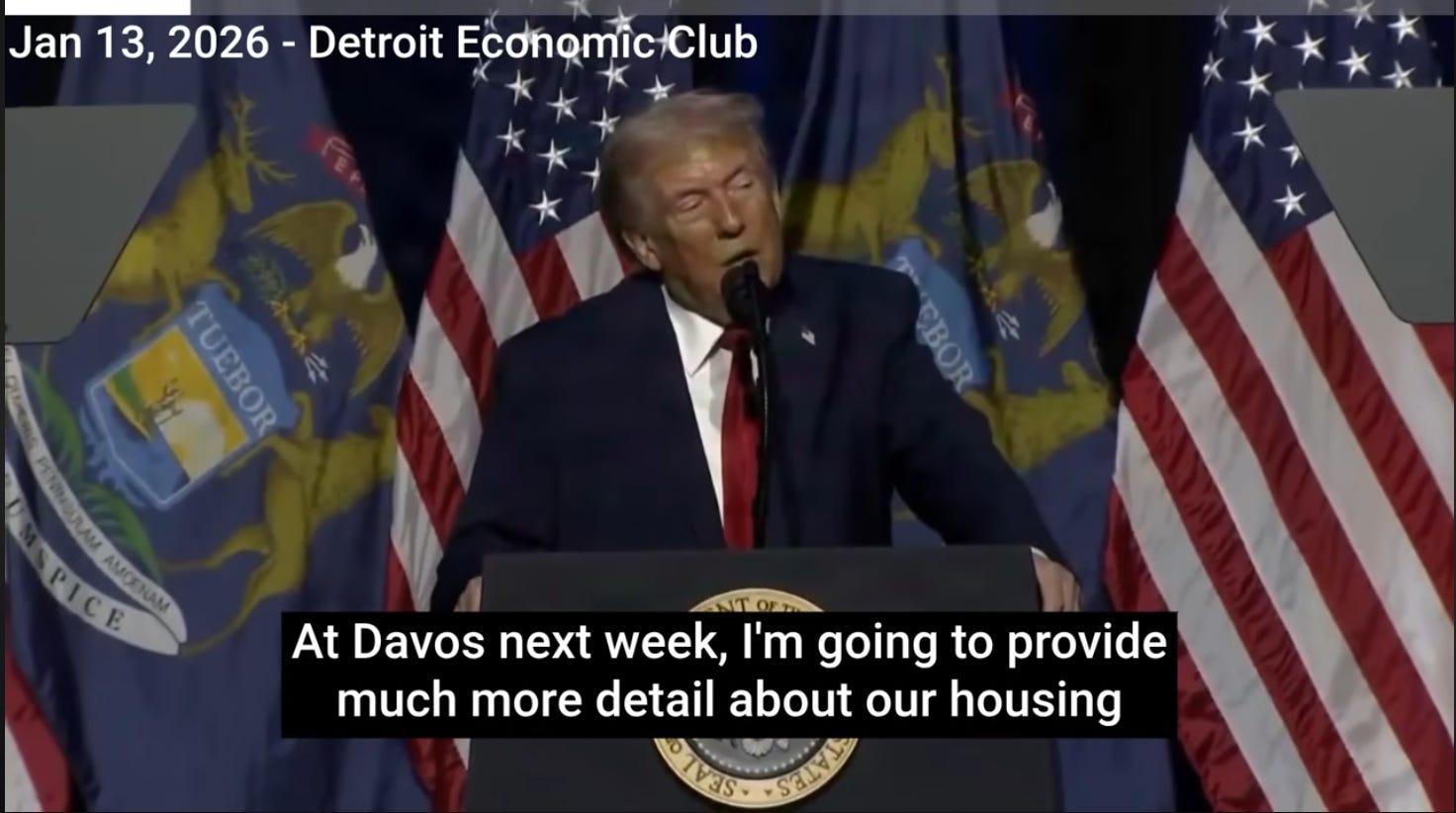
“At Davos next week i’m going to provide much more detail about our housing policies so that every American who wants to own a home will be able to afford one we have some great things happening with housing this will include a ban on large institutional investors buying up single-family homes all over the country and making it impossible for people to buy a home.
“And I’ve also announced that the U.S. government is purchasing $200 billion of mortgage bonds to bring down mortgage rates, and it’s had a huge impact.
“It’s already started, and just last week, the average 30-year mortgage dropped below 6% for the first time in many years.”
Every unfair cost is being attacked directly while building an economy that advances with new discoveries in science and technology year after year.
That was the idea of our first revolution: fundamental human progress.
Powell’s Hostage Video Backfires (07:12)
A video of Federal Chairman Jerome Powell on X.com was circulating, claiming that President Trump threatened him with a criminal indictment for not lowering interest rates and had hailed him before a grand jury with a subpoena on Friday.
Since the video had all the vibe of a hostage video, some thought it was a fake at first.
By Monday, the world’s central bankers were out in force with statements defending Powell and attacking Trump in language usually reserved for the most heinous of crimes.
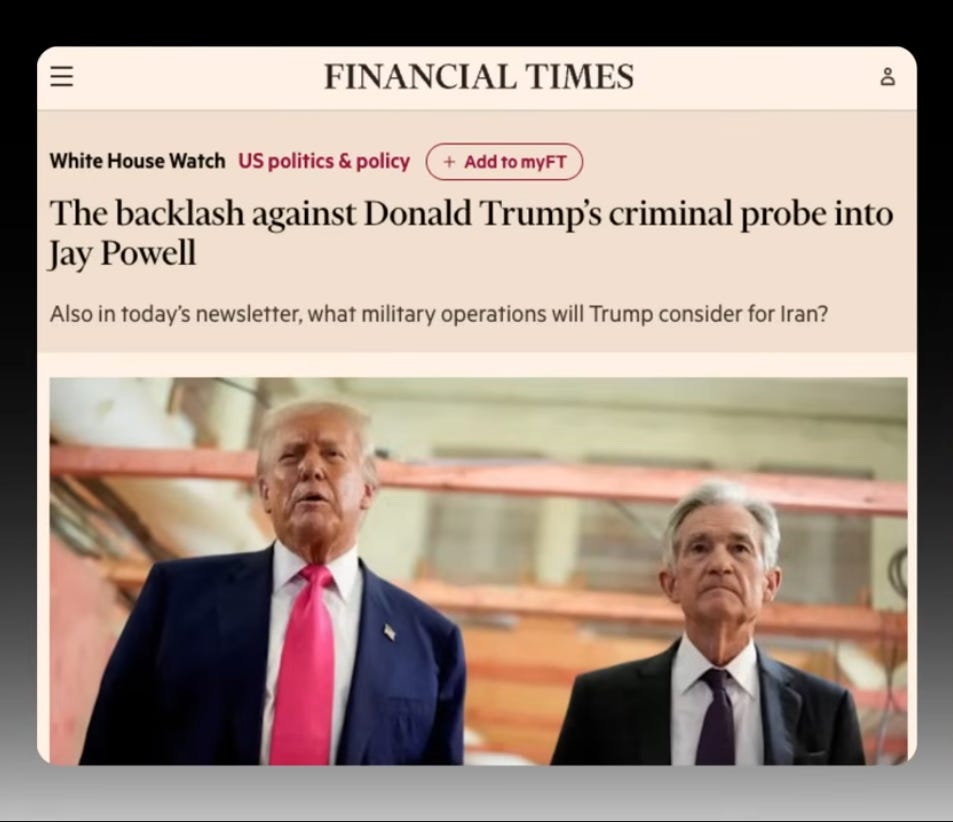
Incredible - but yet, not surprising!
The Fed has been wrong about every metric for years …
Powell said tariffs would cause inflation - they didn’t
He said Biden’s inflation was temporary - it wasn’t
He topped that off with $2.7 billion in renovations of the Fed building, which critics said amounted to a Fed Taj Mahal.
The Fed’s independence violates our Constitution by delegating the power of the purse.
The Fed was born in 1917 when the City of London’s Wall Street crew created it to serve them and not the American people, and it has functioned that way ever since.
Since the criminal 2008 bank bailout worldwide on the backs of American taxpayers, the Fed has deliberately skewed the playing field - it has rewarded billionaires, salvaged the middle of the working classes, and prevented credit from flowing to Main Street.
Powell’s subpoena came from a criminal referral from Congressman Anna Paulina Luna, not Donald Trump.
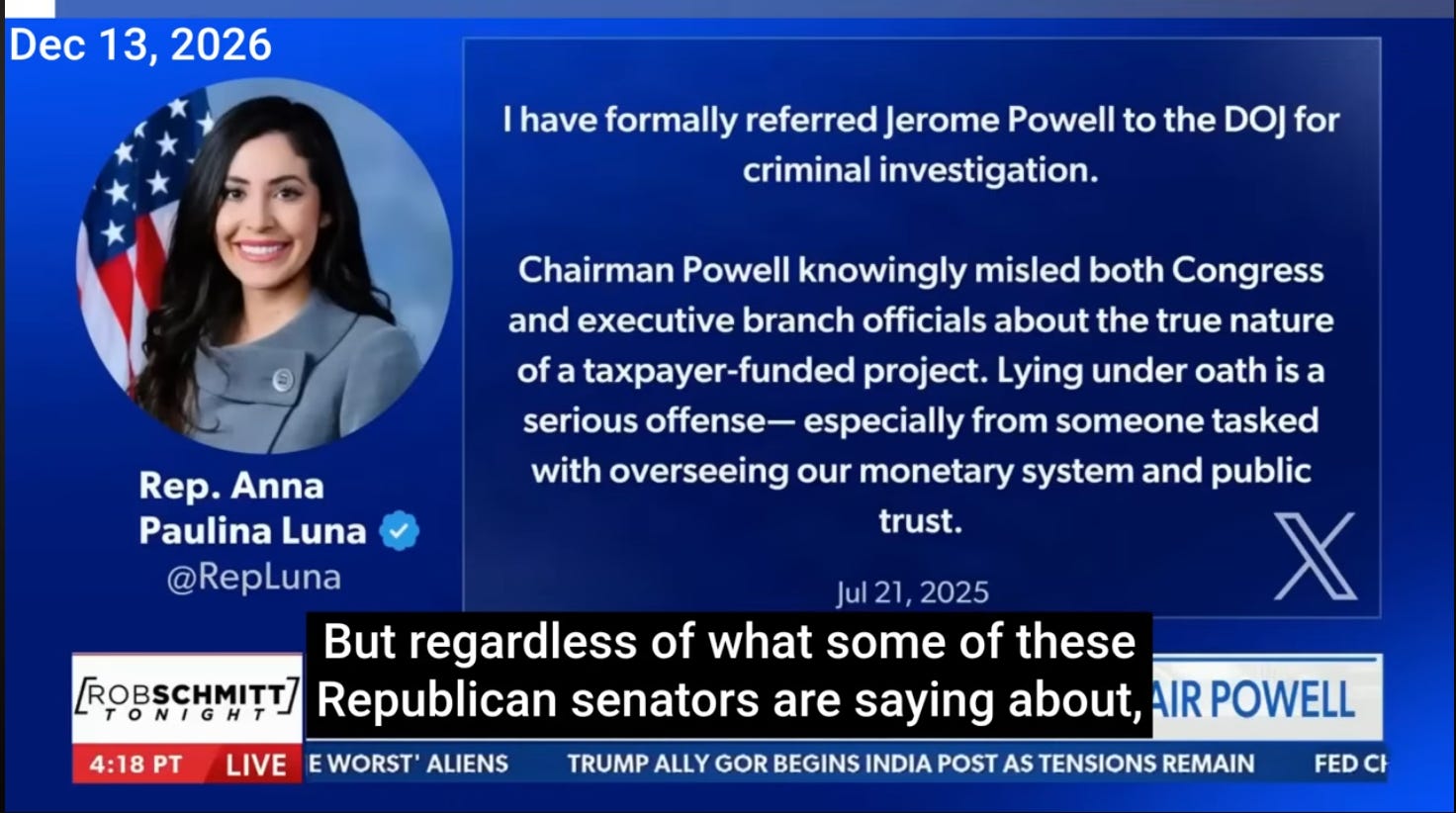
“But regardless of what some of these Republican senators are saying about, you know, this being targeted prosecution by the president, specifically Murkowski, I actually just said today, you know, this criminal referral is one that I did directly, and I sent last year.
“And so for people to say that this is somehow partisan and now somehow the DOJ is opening up this investigation, we sent that request because of his own statements, Powell’s own statements, where he perjured himself to the Senate.”
Luna said Powell lied to Congress in his June Senate testimony about the Fed Taj Mahal.
When U.S. Attorney Jing An Peeler sought information about Powell’s Senate testimony from the Fed, he blew her off - that’s why there was a subpoena.
Treasury Secretary Bessett has a plan to rein in the Fed and restore the people’s representatives to control of monetary policy - that’s what this fight is really all about.
Central banks run by the empire’s chosen bankers are the backbone of imperial control of the world.
Just asked the Chatham House director, Bronwen Maddox, about that - in her Tuesday speech, she said just this ...
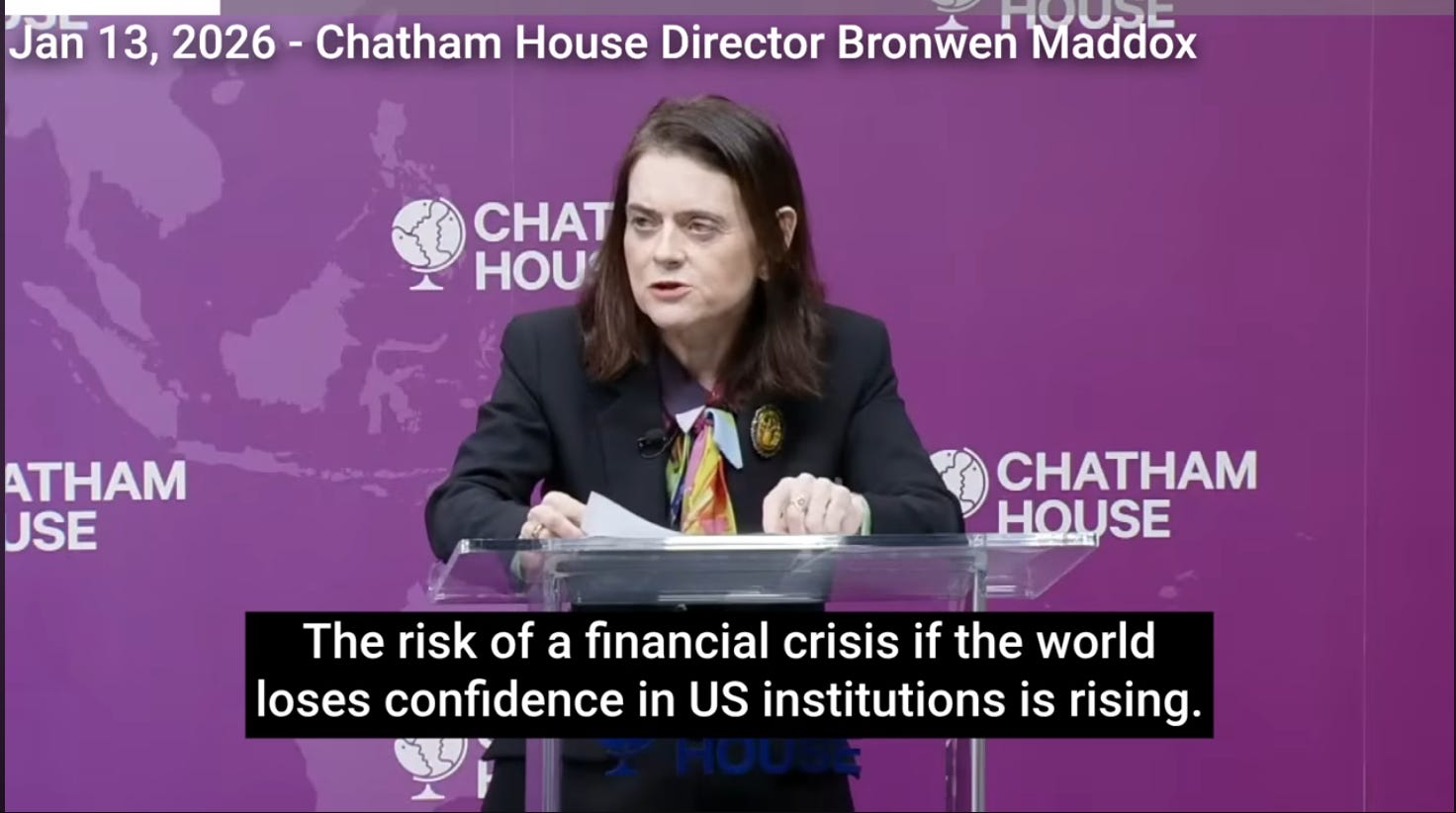
“The risk of a financial crisis if the world loses confidence in U.S. institutions is rising enormously more since the Department of Justice’s decision this week to bring a criminal case against the chairman of the Federal Reserve.”
Most people have no idea what the nature of the chessboard the president is playing on is.
The British Empire operates throughout the world.
They can use those operations as leverage in any domestic quarrel.
Taking the British Empire out involves identifying and neutralizing the real players behind the curtain while turning the entire chessboard in your favor.
That’s what Trump is doing, and the empire just said he is winning.
More Content on the British Empire Elite
Many of you recall the terms Illuminati, the Establishment, the Elite, and others referring to the Deep State.
Myron Fagan first exposed all this in a 3-vinyl record set in 1967, and though his work has never had to be corrected, he never named who is controlling what, save for the Rothschild family.
Very few people had even that much information - his records blew the doors open and started a movement that has taken decades to expose the Elites, the Royal families, and the bloodlines of the closest of rich families.
That hardly means his work is worthless or outdated - it is the most concise and condensed history of what has been happening since the 18th century, when Mayer Amschel Rothschild started controlling governments through banking and a great starting point if you are lost with all that is going down.
We have his recording available by clicking the button below.
You can listen to the entire recording at once or listen to the recordings in segments.
About the Chatham House
Trump Locks Britain Out of Peace: $1 Trillion Deal Shatters the Empire

Susan Kokinda explains how Donald Trump has effectively sidelined the British Empire from Ukraine peace negotiations, asserting a strategic shift in global power dynamics.
Footnotes
What is the Chatham House? Why Was It Formed? Why Was It Relevant to the USA?
Formation
The origins of Chatham House can be traced back to a meeting in 1919 at the Hotel Majestic in Paris, following the First World War, where British and American delegates gathered to establish an Anglo-American institute.
This meeting resolved to create an institute of international affairs to promote public understanding of global problems and contribute to a more peaceful world, yet the 20th century saw more wars than any other century.
At the time, the British Institute of International Affairs was founded separately in London in July 1920 and received its Royal Charter from King George V in 1926, becoming the Royal Institute of International Affairs.
Important figures such as Robert Cecil and Edward Grey were involved in its creation.
Colonel R. W. Leonard donated Chatham House at 10 St. James’s Square, London, to the institute in 1922, and it remains the institute’s headquarters today.
A notable aspect of the institution is the Chatham House Rule, which was established in 1927 by the Royal Institute of International Affairs to encourage open, honest dialogue in sensitive discussions, particularly in policy and diplomacy.
This rule allows participants to use information gathered during a meeting but prohibits them from revealing the identities or affiliations of speakers or other participants.
The rule has been revised over the years, including in 1992 and 2002, and is translated into multiple languages to facilitate frank conversations globally.
Definitions and Context of the Western Alliance
The Western alliance refers to a group of nations that share Western culture and values, typically characterized by democracy and market economies.
This alliance system, driven by arguments for geographic security, has historically included the United States, Europe, and allies in North America and the Asia Pacific.
NATO, formed in 1949, is considered the main military alliance in the West, and its reawakening has been observed in response to the war in Ukraine.
The Western Union, established in September 1948 by France, the United Kingdom, and the three Benelux countries (Belgium, the Netherlands, and Luxembourg), was a European military alliance that served as a precursor to both NATO and the European Union’s military arm.
The term Western Allies has been used to describe the political and geographic grouping of the Allied Powers of World War II, primarily referring to the United States and the United Kingdom, and sometimes France, in the European theatre, excluding the Soviet Union.
This term also broadly includes lesser Allied countries in the British Commonwealth, such as Canada, Australia, and New Zealand, as well as some Western European countries.
During the Cold War, the West opposed the Soviet Union and its satellites, as well as Communist China, using the term to highlight the ideological divide between democratic, capitalist societies and communist, one-party states.
Mission, Rule, and Relevance to the USA
Chatham House, also known as The Royal Institute of International Affairs, is a British think tank based in London, England.
It was founded in 1920 and granted its Royal Charter by King George V in 1926.
Its stated mission is to help governments and societies build a sustainably secure, prosperous, and just world.
Chatham House is an independent policy institute and, depending on who you are, a trusted forum for debate and dialogue, engaging governments, the private sector, civil society, and its members in discussions on international affairs.
It runs more than 300 private and public events annually.
The organization is well-known for the Chatham House Rule, which was created in 1927 and refined in 1992 and 2002.
The rule aims to foster open dialogue on public policy and current affairs by allowing participants to draw on information from discussions but not to reveal the identities or affiliations of speakers or other participants.
This rule is not legally binding but relies on mutual trust.
Chatham House conducts independent analysis on global, regional, and country-specific challenges and offers new ideas to decision-makers.
Chatham House’s work focuses heavily on the changing international role of the United States, offering analysis from an external perspective. Its research and analysis explore US foreign policy, economic issues, and the implications of the 2024 presidential election. (Are you catching all that? The U.S. has the money and the resources, but the Chatham House wants to control it all… SMH)
The institute’s experts research areas including the environment and society, the global economy and finance, health and safety, international law, and global security, with a focus on regions such as the USA, Africa, Asia, Europe, the Middle East, Russia, and the UK.
Now, who do you think the Chatham House reports to?
The Western Alliance: History and Current State
The Western Alliance refers to coalitions and military partnerships among Western nations, particularly NATO, which was created in 1949 by the United States and Western European powers as a counterweight to Soviet military power.
This alliance was built on shared values, security, and self-interest, emerging from the aftermath of World War II to rebuild Europe, prevent future conflicts, and secure democracies.
The Western Bloc, characterized by democracy and a market economy, includes the United States, Europe, and allies in North America and the Asia-Pacific, collaborating technologically and militarily, notably through NATO’s reawakening in response to the war in Ukraine.
The Western Alliance, also known as the West, has historically referred to trade, diplomatic, and military alliances among nations sharing Western civilization culture and values.
This grouping opposed the Soviet Union and Communist China during the Cold War.
In 1948, the Brussels Treaty was signed by Great Britain, France, Belgium, the Netherlands, and Luxembourg to establish collective defense, leading to the formation of the Western European Union and serving as a precursor to NATO and the European Union's military arm.
Perspectives
Concerns about the decline and collapse of the Western Alliance
Some observers express concern over the collapse of the strong relationship with Western allies, questioning the U.S.’s role as a bulwark against authoritarianism, especially given recent right-wing leadership developments in Western Europe.
The West is experiencing a decline marked by economic crises, military defeats, and moral failures, with concerns about the chaotic and authoritarian landscape that may follow.
The unity of the West, specifically the alliance between the U.S. and Europe, has fallen apart, particularly over Russia and Ukraine, and the abandonment of U.S. security guarantees.
Views on the ongoing relevance and challenges of the Western Alliance
The Western alliance system, particularly NATO, aims to deter hostile interference, enabling member states to shape their internal affairs according to their own ideas.
Preserving the Western Alliance is seen as crucial for guarding a realm of ordered liberty and responding to geopolitical competition.
Hostile regimes, including China, Russia, Iran, and North Korea, are working in combination in a more violent and unpredictable world, highlighting the need for cohesion in deterrence within the Western Alliance
Council on Foreign Relations: Overview and History
The Council on Foreign Relations (CFR) is an independent, nonpartisan membership organization, think tank, and publisher specializing in U.S. foreign policy and international affairs.
It was founded in 1921 and is headquartered in New York City, with an additional office in Washington, D.C.
The CFR aims to improve understanding of international relations and foreign policy by promoting discussions, analysis, and research.
It also publishes the bi-monthly journal Foreign Affairs, a significant forum for discussions on global affairs and U.S. foreign policy.
The CFR’s membership includes senior politicians, secretaries of state, CIA directors, bankers, lawyers, professors, corporate directors, CEOs, and prominent media figures.
The organization convenes government officials, global business leaders, and members of the intelligence and foreign-policy communities to discuss international issues.
It also sponsors Independent Task Forces that produce reports with findings and policy prescriptions on important foreign policy topics.
Perspectives
Official and Mainstream View of CFR’s Role
The Council on Foreign Relations (CFR) is an independent, nonpartisan think tank dedicated to improving understanding of U.S. foreign policy and international affairs.
The CFR promotes a range of ideas and opinions on United States foreign policy and has had a significant impact on its development in the twentieth century.
The organization’s mission is to inform U.S. engagement with the world and contribute ideas to U.S. foreign policy.
The CFR does not take institutional policy positions but instead sponsors discussion, analysis, and research from world leaders and intellectuals.
Critical and Non-Mainstream View of CFR’s Influence
Some sources suggest the Council on Foreign Relations originated in semi-secret roundtable groups established in England, linked to figures like Cecil Rhodes and supported by influential families such as the Rothschilds, and was founded in 1921.
The CFR is viewed by some as a front organization, for example, for J.P. Morgan and Company in New York, and as a significant player connected to a “deep state.”
One article claims that the Council on Foreign Relations began exerting control over the Department of State on September 12, 1939.
Critics have accused the CFR of promoting interventionist foreign policies, stating that its reports and recommendations have often supported U.S. military interventions and regime-change efforts, contributing to a consensus favoring global military engagement and the interests of multinational corporations.