
In this midweek update, Susan Kokinda argues that Kevin Warsh’s Senate Banking Committee testimony - calling for “regime change” at the Federal Reserve and blaming inflation on excessive money creation - signals a broader shift aligned with the Trump administration against what she describes as an Imperial, British-led free-trade order.
She highlights Warsh’s criticism of post-2008 quantitative easing as benefiting financial asset holders while many Americans own no assets, and contrasts this with Democrats’ focus on divestment issues.
Kokinda ties Warsh’s stance to Treasury Secretary Scott Bessent’s emphasis on raising living standards over bailing out markets and to Trump’s comments on Fed independence.
She then points to Trump’s April 20 Defense Production Act action citing market failures in energy infrastructure, including transformer shortages, as national-security threats, linking this to energy independence and Iran, and contrasts it with Mark Carney’s globalist posture and references to the War of 1812.
Chapters
00:00 The Midweek Update - Intro - April 22, 2026
01:51 "Regime Change" - Warsh Says the Quiet Part Out Loud
05:40 The Real Regime Change - Burying British Free Trade
09:44 The Empire Holds Its Inquest
Snapshots and Notes
Yesterday, everyone was watching the Iran clock and asking if bombs would fall.
Well, a bomb did fall, but it was in the Senate Banking Committee where Fed chair nominee Kevin Warsh said this….
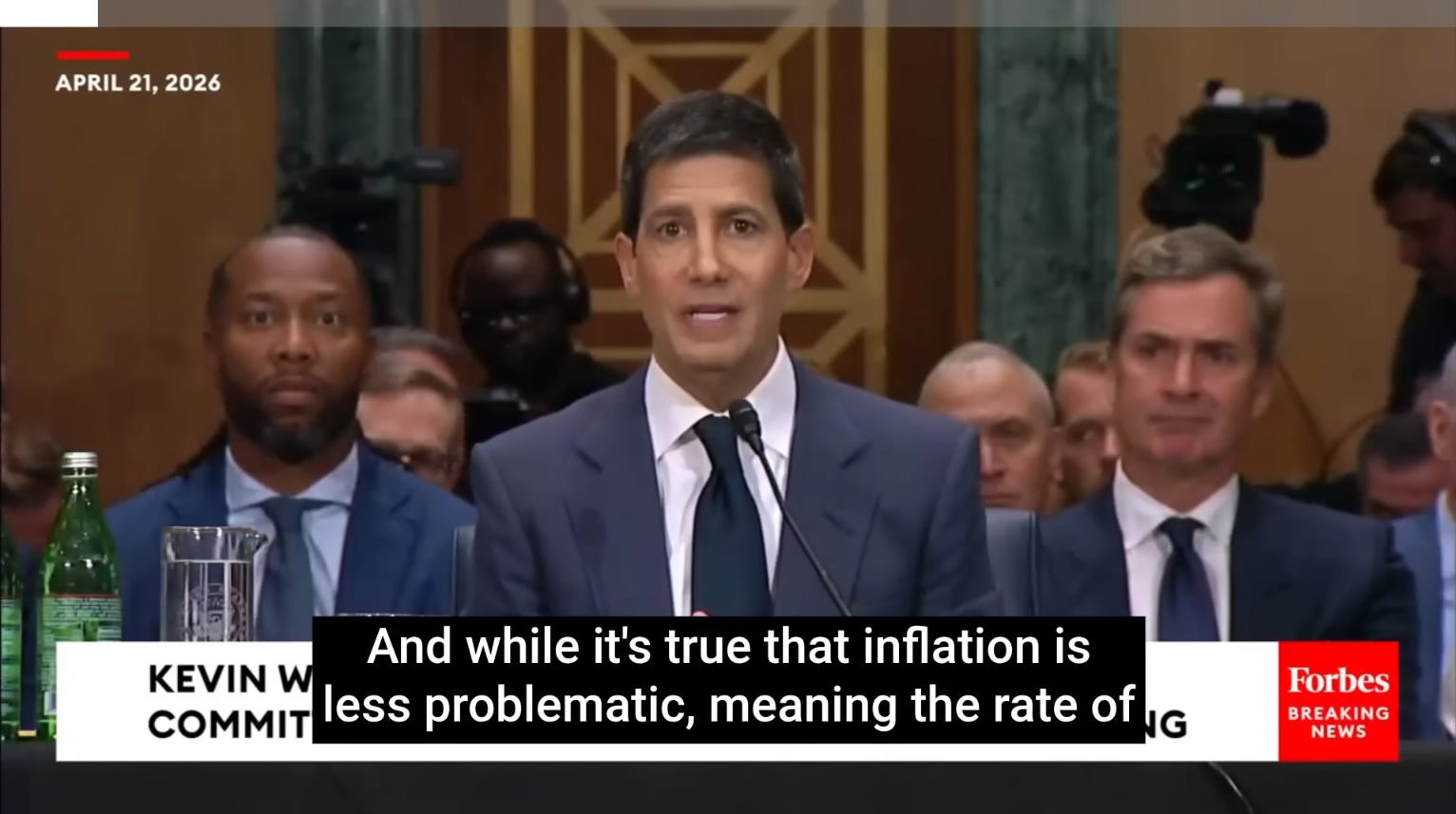
“And while it’s true that inflation is less problematic, meaning the rate of change in prices is less severe than it was some years ago, hardworking Americans are no doubt feeling it.
“I think that means a regime change in the conduct of policy.”
He wants regime change at the Fed.
Now you probably didn’t notice that because the press was focused on Senator Pocahontas calling Warsh a sock puppet for Donald Trump.
Or you were being drawn into the social media storm about how Iran has Trump over a barrel.
So you might’ve missed what is really going on, but the empire isn’t missing it.
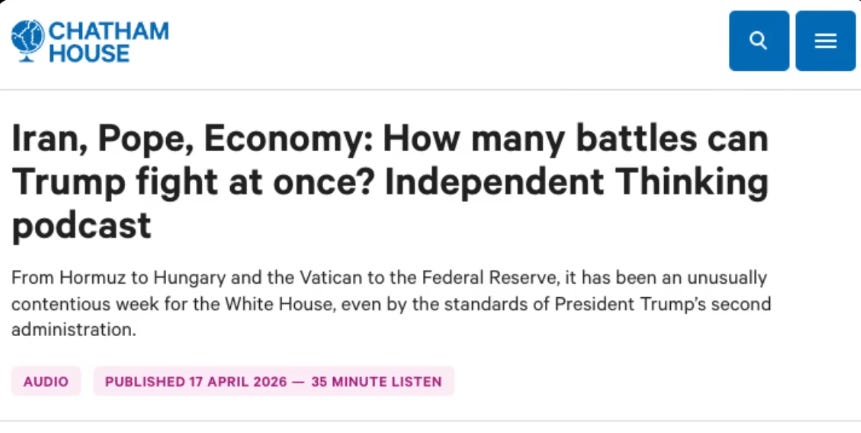
On April 17th, the executive director of Britain’s Chatham House asked this question…
link / no archive available
The answer is all of them, because they aren’t separate battles - they’re one war, a war against an imperial regime.
Donald Trump knows it, and so does the empire.
Susan Kokinda knows it too, having tracked how the modern-day British empire is the hand behind the catastrophes of recent decades.
Now, people see and feel those catastrophes, but what they don’t see is what is really behind them, and more important, how to defeat it.
Here’s what is being covered in this episode…
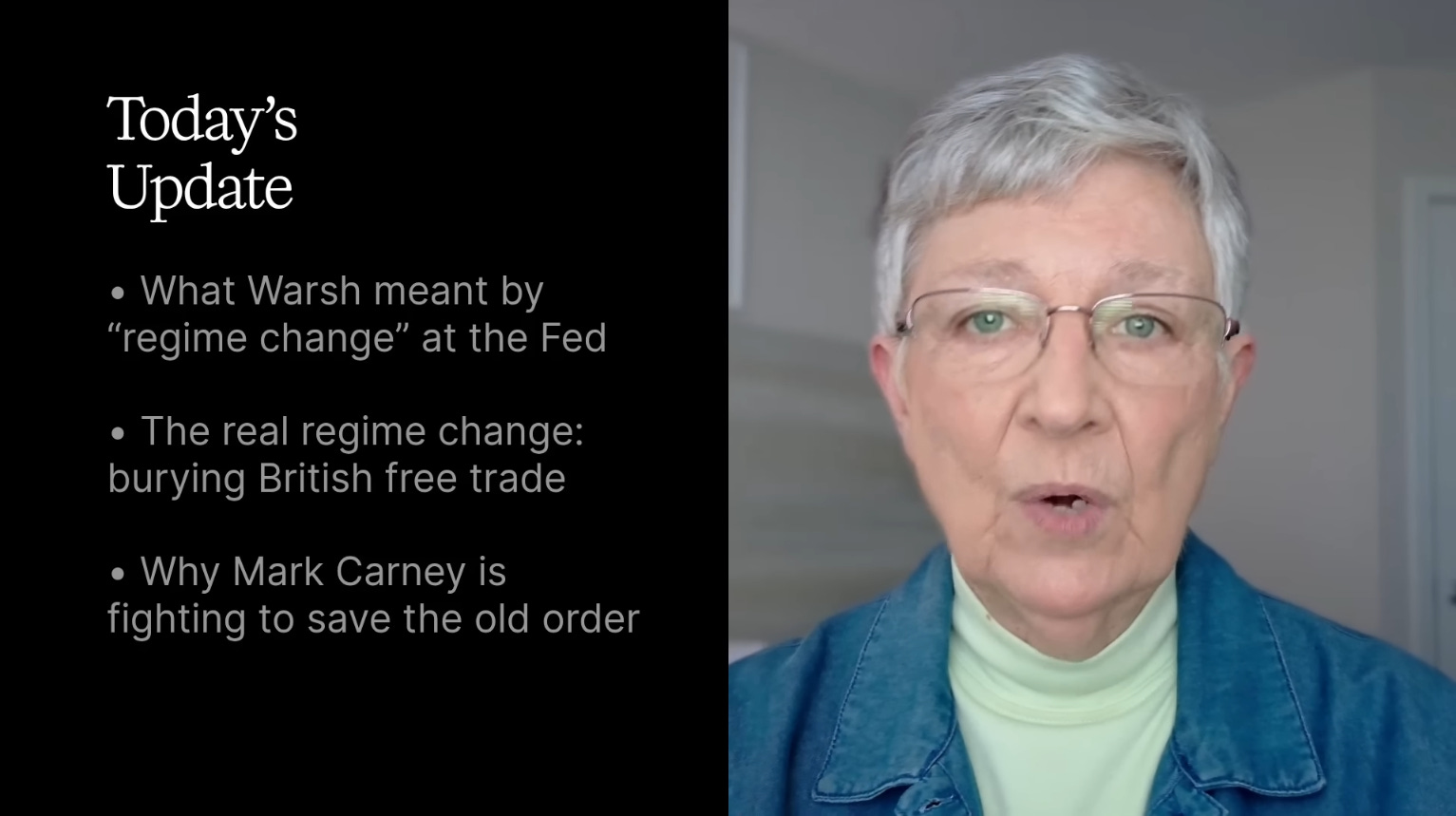
“Regime Change” - Warsh Says the Quiet Part Out Loud [01:51]
Now, Kevin Warsh was chosen by President Trump because he’s in sync with the administration’s recognition that the Fed has failed the American people…
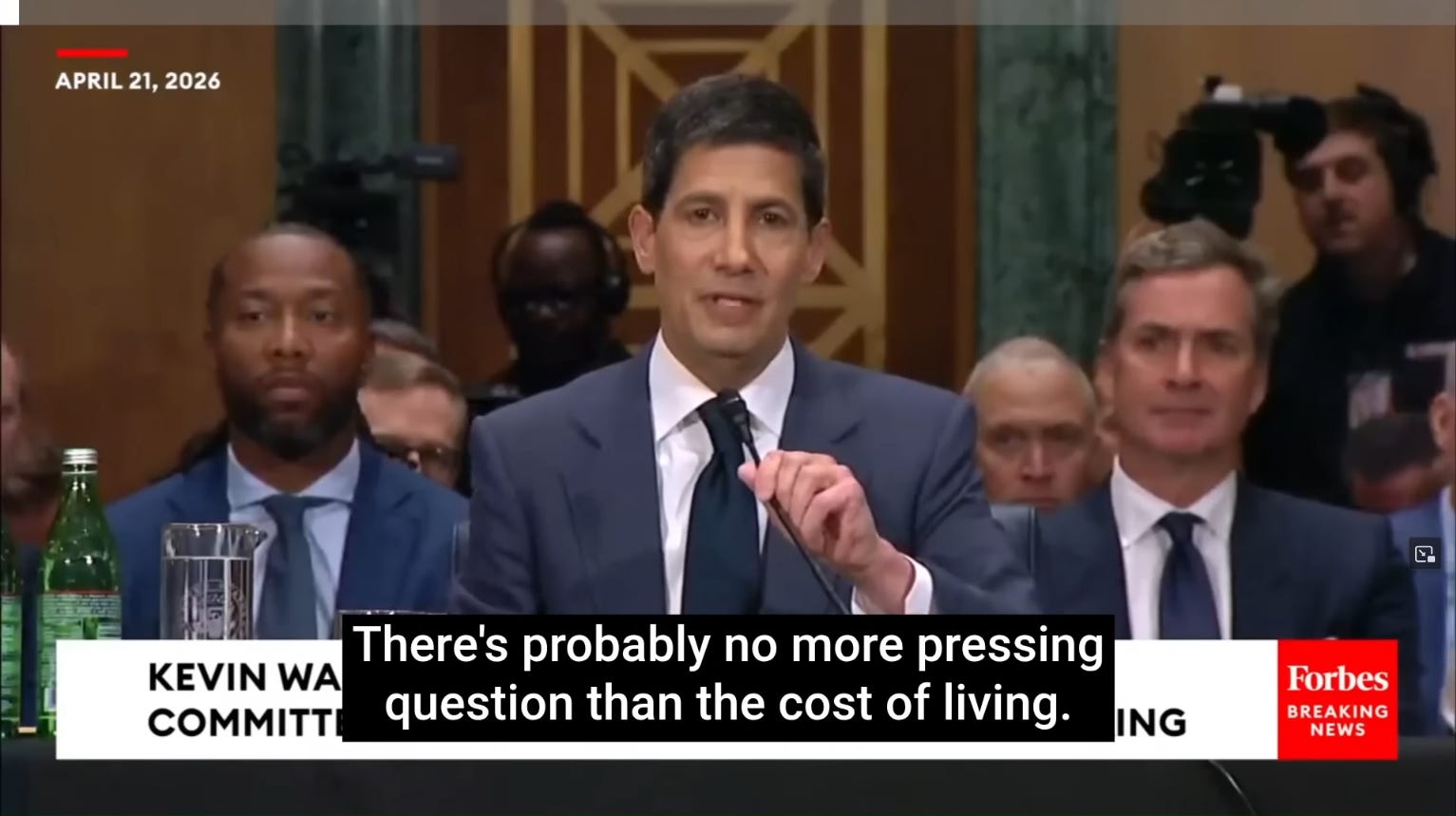
“There’s probably no more pressing question than the cost of living.
“So when over the course of the last several years, especially after the after COVID, when prices went up to the tune of 25 to 35 percent for virtually all deciles of the American people, that’s an indication that the Fed missed its mark.
“And we are still dealing with the legacy of the policy errors in 2021 and 2022.
“And so the fatal policy error going back four or five years is still a legacy that we’re dealing with.
“We need, in my judgment, fundamental policy reforms to fix it.”
Fatal policy error - that’s a pretty strong indictment of the Fed’s recent activities.
And he went on to add another charge to that indictment…
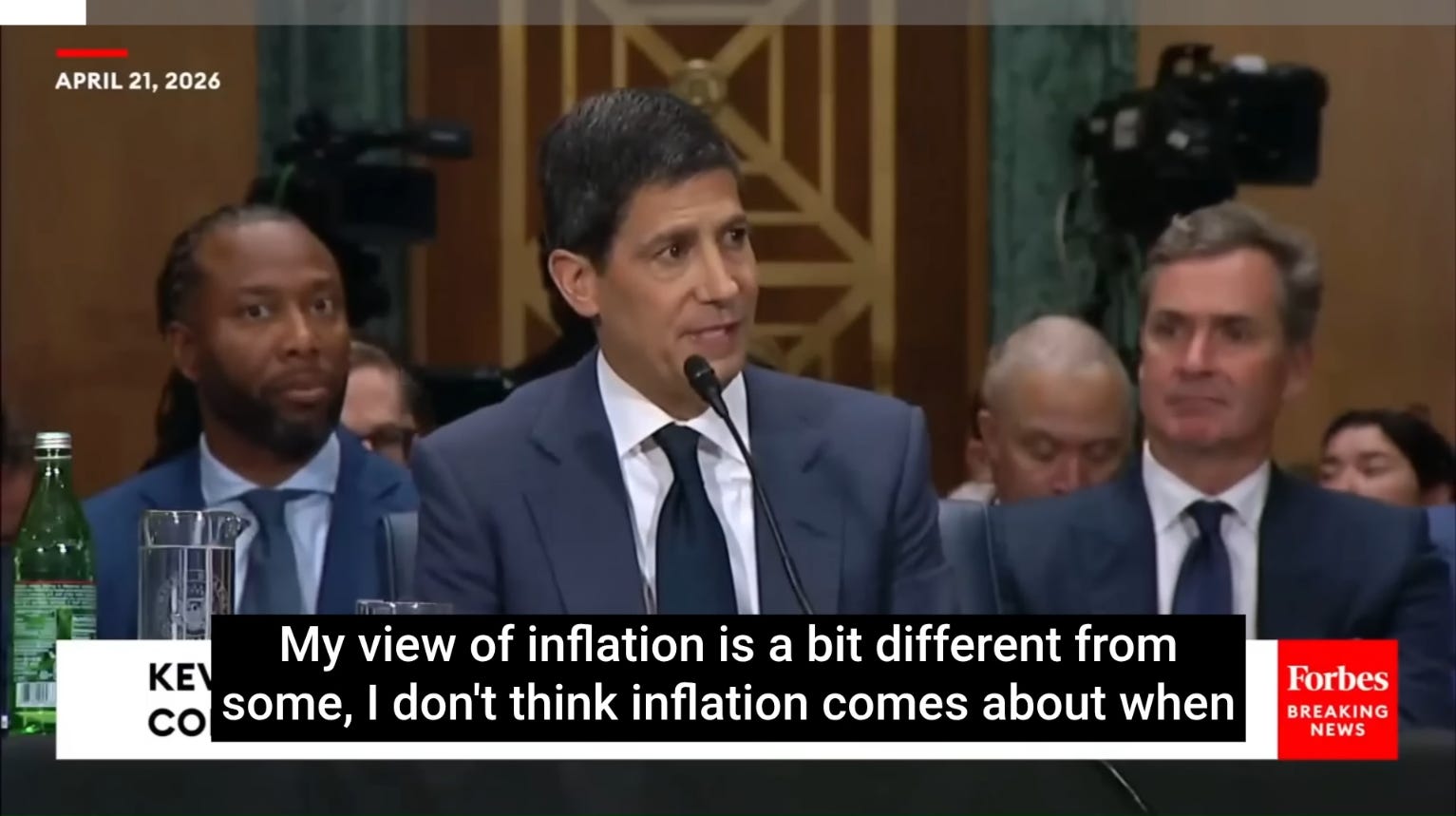
“My view of inflation is a bit different from some.
“I don’t think inflation comes about when the economy grows too much or hardworking Americans get increased in their wages.
“I think inflation comes about when the government prints too much, by which I mean the central bank.”
Now, prior to a couple of decades ago, the Democrats on the banking committee would have been happy to hear a Fed nominee defend workers’ wages, but not today’s certifiably nuts Democrat Party.
All they could do was hyperventilate over whether Warsh is properly divesting his assets.
So it’s not surprising that they missed a very different discussion of assets, where Warsh pointed out that only financial asset holders benefited by the quantitative easing bailouts of 2008.
He made this point…
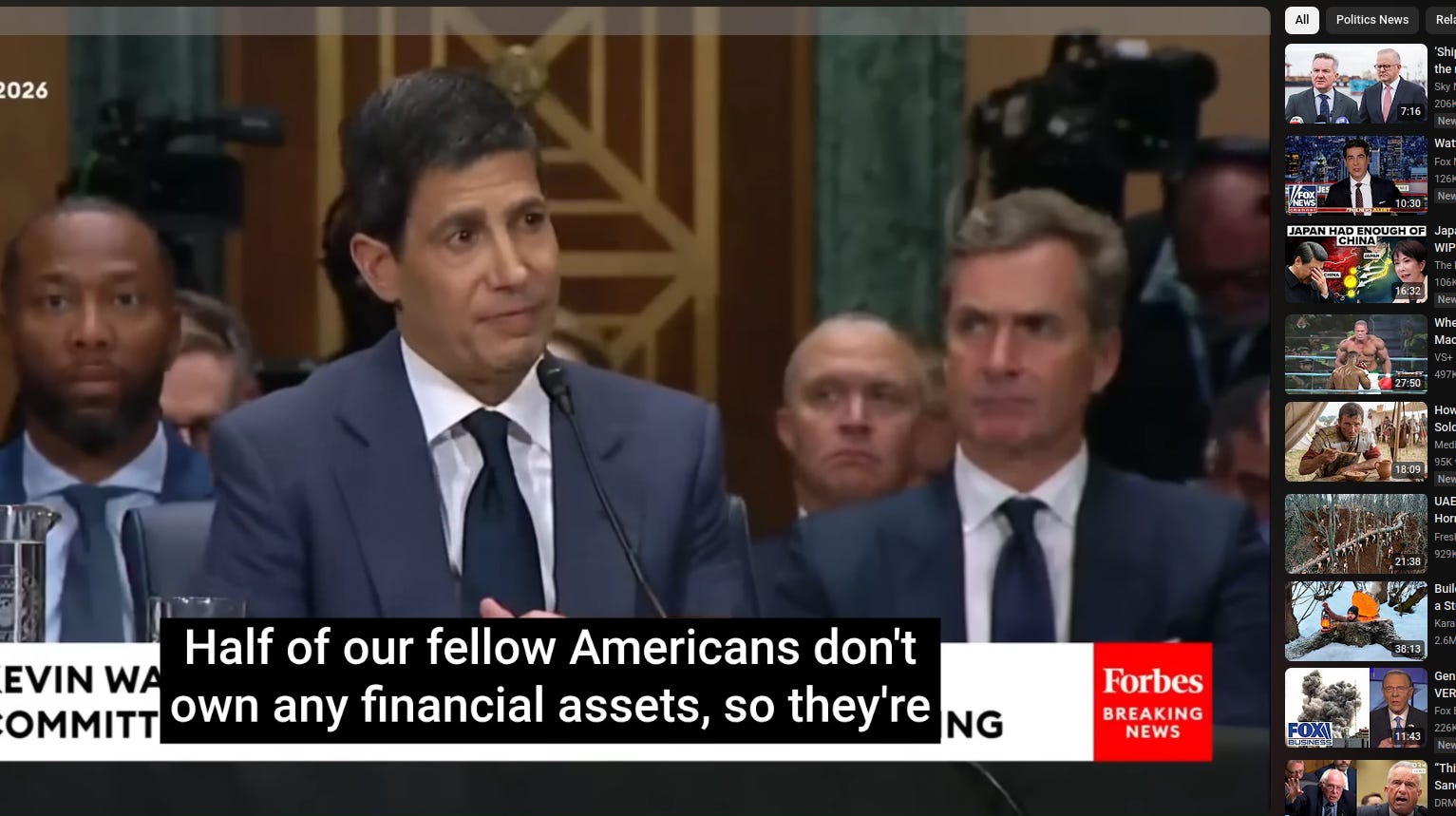
“Half of our fellow Americans don’t own any financial assets, so they’re wondering what’s in it for them.”
This syncs with what Treasury Secretary Scott Bessent declared in December. when he released the Financial Stability Oversight Committee Annual Report.
He said that the focus should be on raising living standards, not bailing out markets - and Warsh echoed that throughout his testimony.
Now, the other theme which dominated the hearings was the question of Fed independence.
Kevin Warsh is not gonna lead a charge to change that provision, which is encoded in the Fed’s legislation.
But he is now on record saying he’s gonna narrow the role and scope of the Fed’s activities.
But someone who can go on the record expressing his feelings on the question of Fed independence is President Trump.
In a CNBC interview yesterday, the president said this about where Warsh’s office might end up, given the fact that the Fed remodel is a giant fiasco...
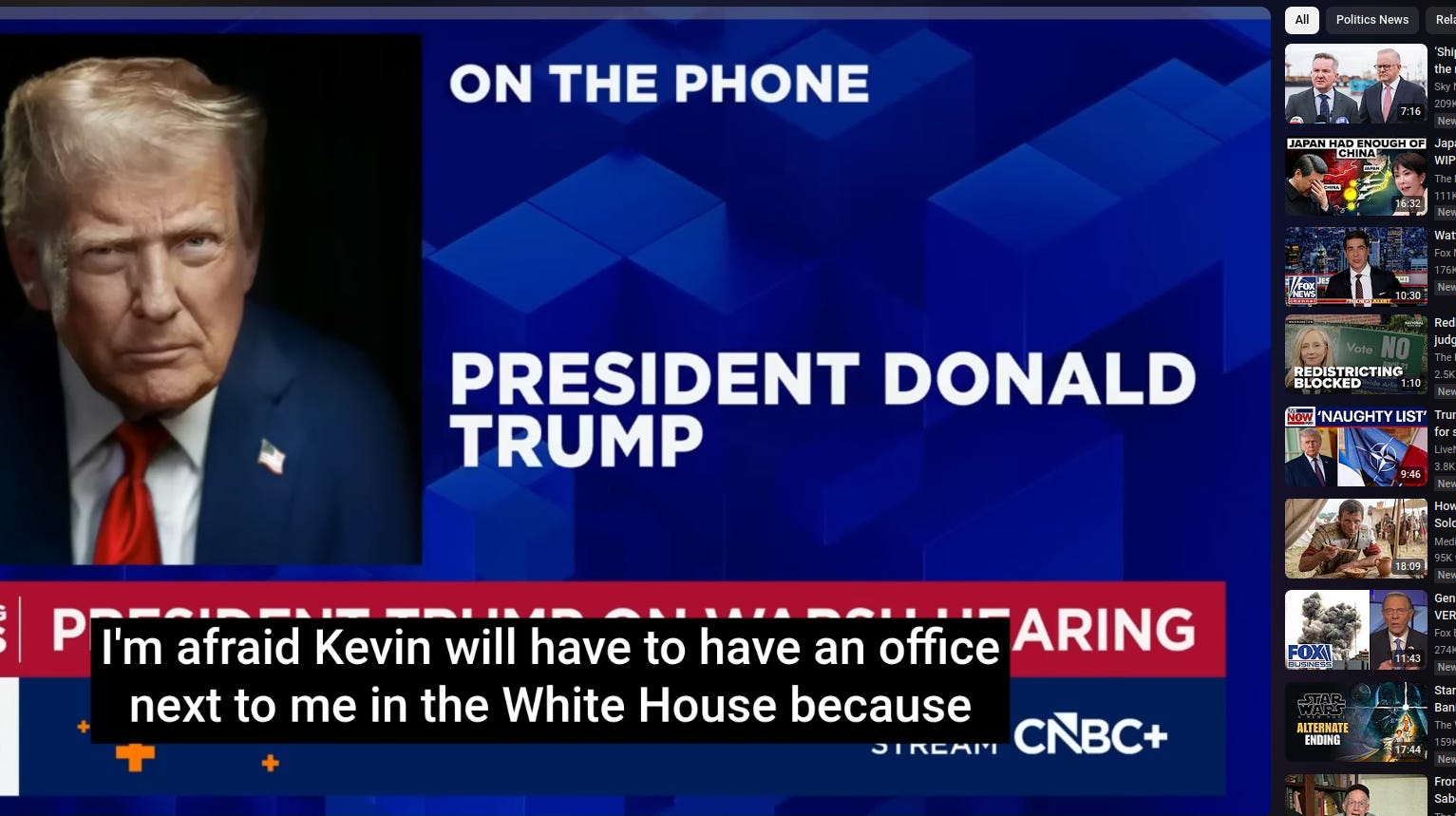
“I’m afraid Kevin will have to have an office next to me in the White House because that building’s not going to be done.
“He’s not going to be able to use that building for a long time.
“Maybe I’d like him next to me; actually, it’s not a bad idea.
“Maybe... Maybe Jay Powell did us a big service.”
Now, the president said that while Warsh’s nomination hearing was going on, so the Democrats didn’t have the opportunity to freak out about that.
But here’s the real issue.
The Fed’s independence was never meant to be independence from the empire - it was independence from the American people.
It was born in 1913 to serve the city of London and its Wall Street partners, and it has functioned that way pretty much ever since.
Walsh just admitted that, and Trump just said he wants the man who said it sitting next to him.
That’s not a threat to the system - that’s the system being put on notice.
But you won’t understand that if you don’t know that the battle is and has been against the British imperial system.
The Real Regime Change - Burying British Free Trade [05:40]
But Warsh’s two words don’t just describe what’s happening at the Fed; they describe the entire economic offensive, regime change, and it’s against the entire free market system itself.
On April 20th, Trump invoked the Defense Production Act, and he signed his name to a formal legal finding that markets left to their own devices have made this country economically defenseless.
Here’s the language…
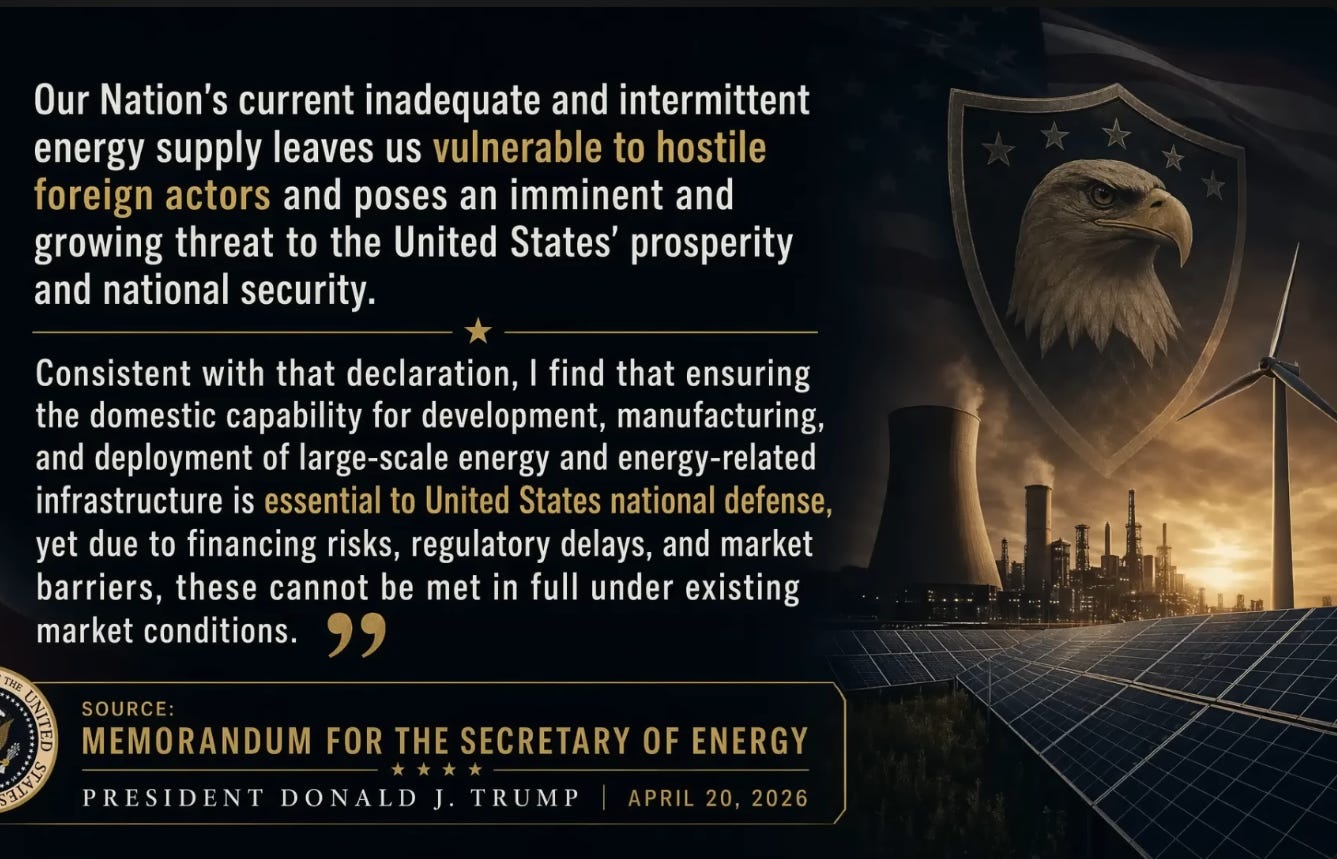
Now, this was one of several executive orders that address the entire gamut of America’s energy production and distribution.
No one noticed that, but they should have, because this points to one of the key vulnerabilities of our free trade gutted economy.
The president pointed to transformers specifically, the large power transformers that make the whole U.S. economy run.
And the nation’s capacity to produce them, as the president said, is dangerously limited.
Over-reliance on imported equipment, years-long production lead times, leaves us vulnerable in the event of war, disaster, or economic disruption.
That’s the indictment, not just of a single policy failure, but of a system.
The most powerful nation on earth can’t manufacture enough of the basic equipment that makes its entire economy run.
That’s the result of the British system.
And that’s why we fought the American Revolution, Hamilton’s system was the explicit rejection of this.
It protected our domestic manufacturing, the British wanted a captive market and a dependent system.
Hamilton said no, other presidents like Lincoln and McKinley carried that policy forward.
And for a century and a half, the American system built the most productive nation in the history of the world.
And then we forgot the British 18th century methods repackaged as globalization, free trade, that did in 70 years what the British couldn’t do back at our founding.
They stripped this country of the industrial sovereignty of the American system.
So the president’s Defense Production Act determination, which cites market failures as a national security threat, puts on record the disaster of that system and calls for the government to play its proper American system role in defending our economy.
That’s the regime change that’s underway, not just at the Fed, in the entire economic architecture.
Now, nowhere is that clearer than in energy.
American energy independence isn’t a bumper sticker slogan; it’s why President Trump can prosecute the Iran confrontation without flinching.
Every previous administration blinked at the critical moment; no one would take on the imperial choke point in the Strait of Hormuz because we were dependent on imported oil and gas.
That was the trap and the empire built it that way.
Trump changed the variable.
When the United States produces, refines and distributes its own energy, the choke point loses its leverage over Washington.
So we had to get energy independence first, then the Iran confrontation could follow.
So the regime is changing and the empire can feel it.
The Empire Holds Its Inquest [09:44]
Which brings me to Mark Carney, Canada’s Prime Minister, and the Central Banker’s Central Banker.
He’s the man who went to Davos in January.
He declared that the post-war rules-based order was finished because of Donald
Trump, and he positioned himself as the leading statesman of globalism 2.0.
Well, last week he held up a toy soldier…
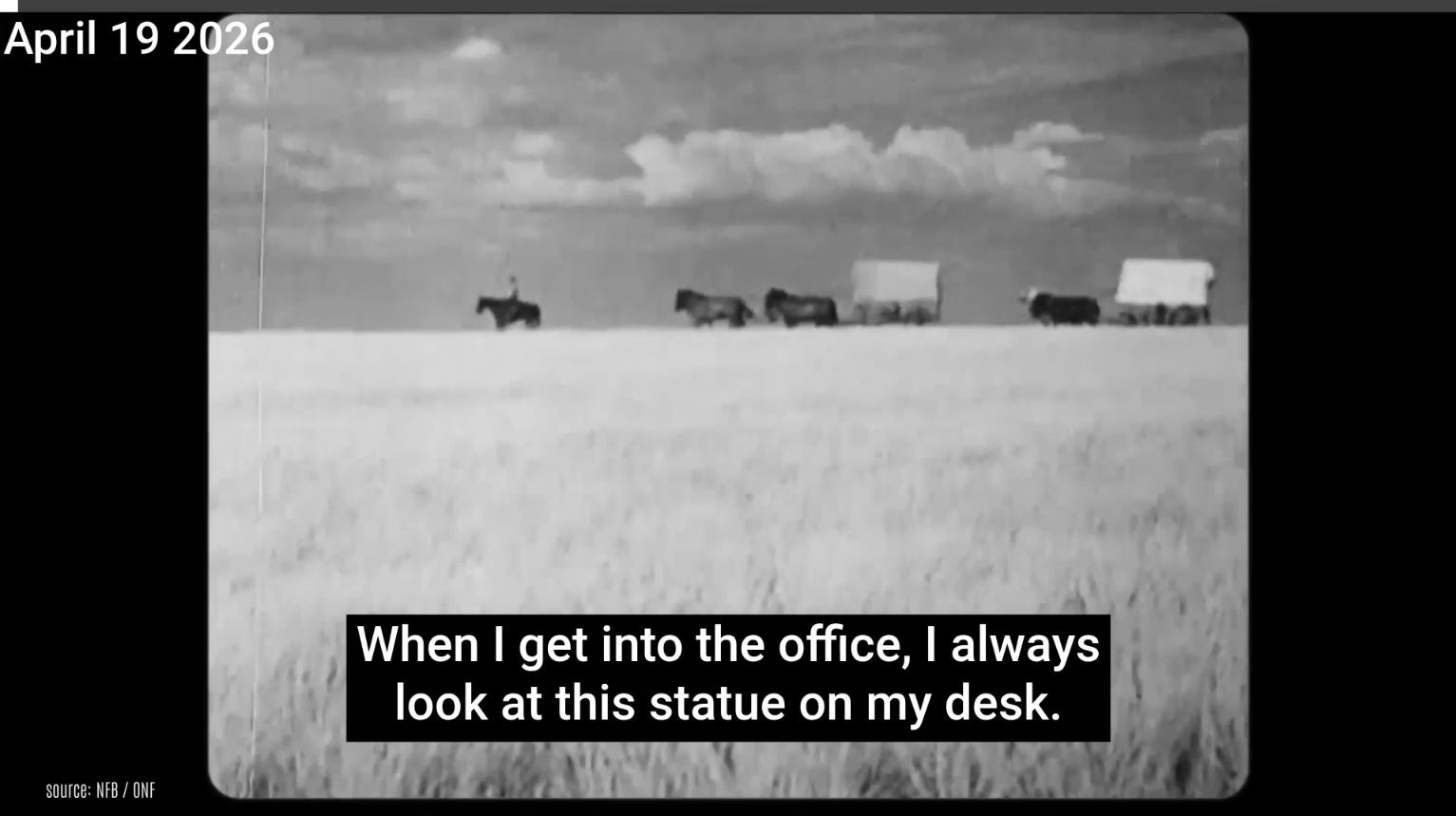
“When I get into the office, I always look at this statue on my desk.
“It was given to me by Mike Myers just over a year ago, and this is General Isaac Brock.
“Brock was a hero who fought and gave his life for our forbearers in the War of 1812.
“Before Canada even existed on paper, it had a shape in Brock’s imagination.
“Faced with the threat of an American invasion, Brock built alliances across our land and inspired what would eventually become Canada.”
So there was the Prime Minister of Canada invoking the War of 1812, going back over 200 years to find a British general defending Canada from the United States.
So look at what has happened between Carney’s Davos speech and today - since Davos, where the Trump administration put the globalist system on notice, they’ve taken dramatic steps to shut it down.
And the Iran operation is now clearing the board of one of the empire’s key economic choke points.
… and all Carney can do is hold up a toy soldier.
Now, as this show is being recorded, Chatham House is broadcasting a live hearing with the House of Lords entitled…
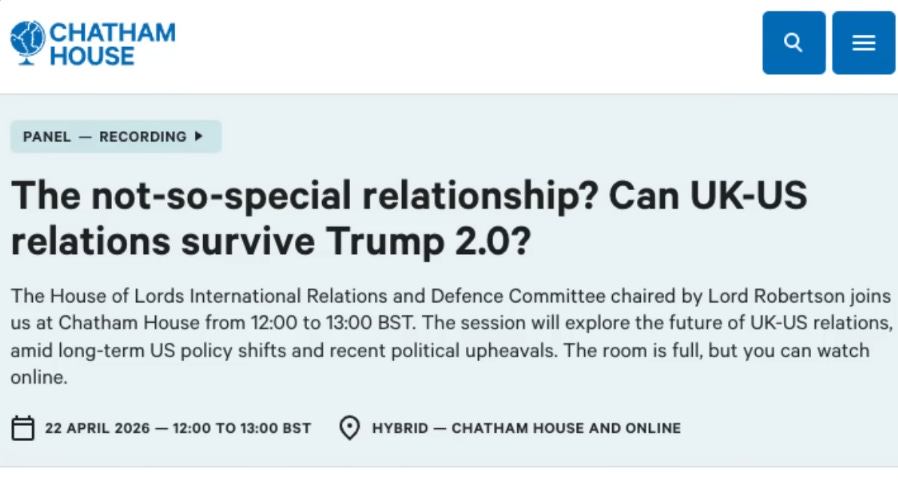
link / no archive available
The answer is no.
So let’s go back to the other question that Chatham House Director Bronwyn Maddox asked earlier.
They do seem to be asking a lot of questions.
How many battles can Trump fight at once?
All of them.
Because he knows it’s one bore.
Regime change at the Fed, executive orders that name the free market as the enemy, energy independence that defangs Hormuz.
Every front is the same front.
Warsh called it regime change.
That’s exactly what it is.
Promethean Action is doing more than exposing what the empire is losing.
They’re building a movement that understands what Trump is building.
The American system rebuilt institution by institution and policy by policy.
To be part of that fight, join us at Promethean Action as a supporting member or a contributor.
Promethean Action is just one of several resources Decisive Liberty follows closely so to provide you nothing but signal, and if possible, no noise.