
Barbara Boyd from Promethean Action explores the dramatic geopolitical shift as European nations deploy military personnel to Greenland in response to President Trump's ambition to acquire the island.
She discusses the implications of NATO's Article Five, the strategic significance of Greenland, and the potential economic repercussions for European countries.
Boyd also delves into Trump's unprecedented approach at the World Economic Forum in Davos, breaking down how his policies are dismantling the Globalist agenda and establishing new economic institutions.
As Trump negotiates and possibly dictates terms with global elites, Boyd argues that a new world order led by sovereign nation-states focused on economic growth and peace is emerging.
Chapters
00:00 The Monday Brief - Europe Declares War on Trump? The Greenland Suicide Mission - January 19, 2026
02:00 "Europe's 34-Troop 'Invasion': The Greenland Bluff Exposed"
06:31 Davos 2026: The Last Gasp of the Globalist Order
09:52 Trump's Board of Peace: Building the Post-Davos World
Snapshots and Notes
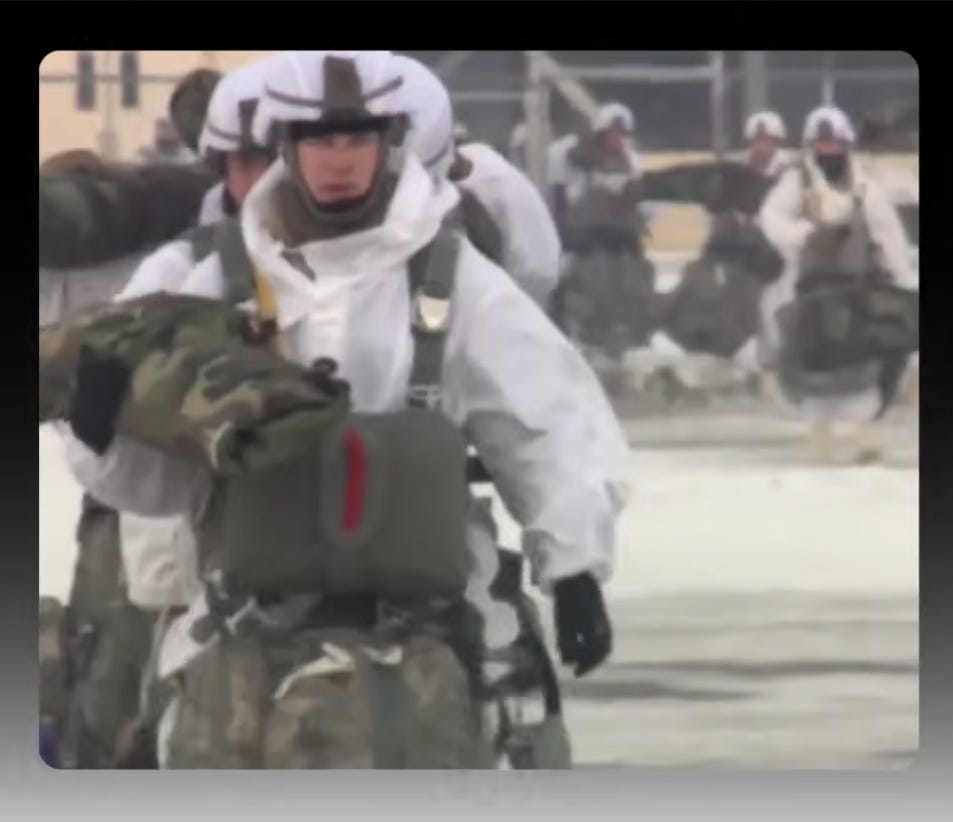
European nations have officially deployed military personnel to Greenland, and this isn’t a drill.
All of 34 troops...
It is a direct, desperate signal to President Trump that they are willing to fight to stop his acquisition of the island.
Canada’s Mark Carney has pledged military support against the United States through NATO’s Article 5 to defend Greenland...
“The future of Greenland is a decision for Greenland and for the Kingdom of Denmark.
“We are NATO partners with Denmark, and so our full partnership stands.
“Our obligations on Article 5, Article 2 of NATO stand, and we stand fuller square behind those.”
If you think this display of force will intimidate the new administration, you’re making a fatal miscalculation.
Because while the media blows this way out of proportion by calling it a standoff, the reality is much simpler.
The old order is collapsing.
Today, the World Economic Forum meets in Davos, but the champagne isn’t flowing like it used to.
Donald Trump is arriving with the largest U.S. delegation in history, not to negotiate with the globalists, but to dictate their terms of surrender.
What is happening in Davos right now is the end of that era.
In this update, we are breaking down three things the mainstream media is terrified to tell you.
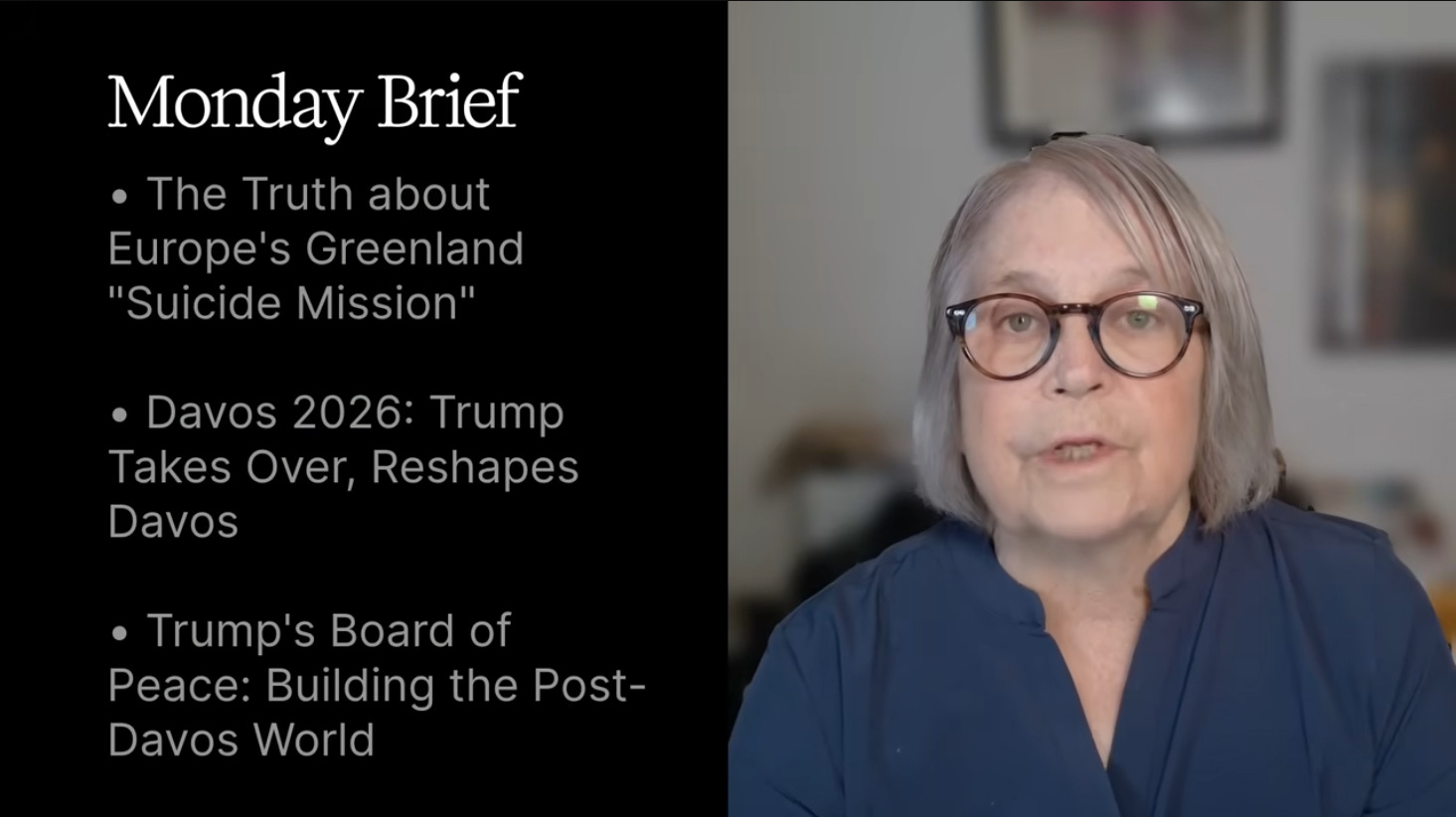
“Europe’s 34-Troop ‘Invasion’: The Greenland Bluff Exposed” (02:00)
The Truth about Europe’s Greenland “Suicide Mission“
In his negotiations with Denmark to secure Greenland as a U.S. possession, President Trump is offering to buy it outright and has not ruled out military force if that is necessary to achieve this vital national security goal.
As of midweek last week, the Danes and the Brits organized European NATO members to fly into Greenland, trying to signal to the United States that significant NATO partners would be willing to militarily defend Greenland against the United States if it came to that.
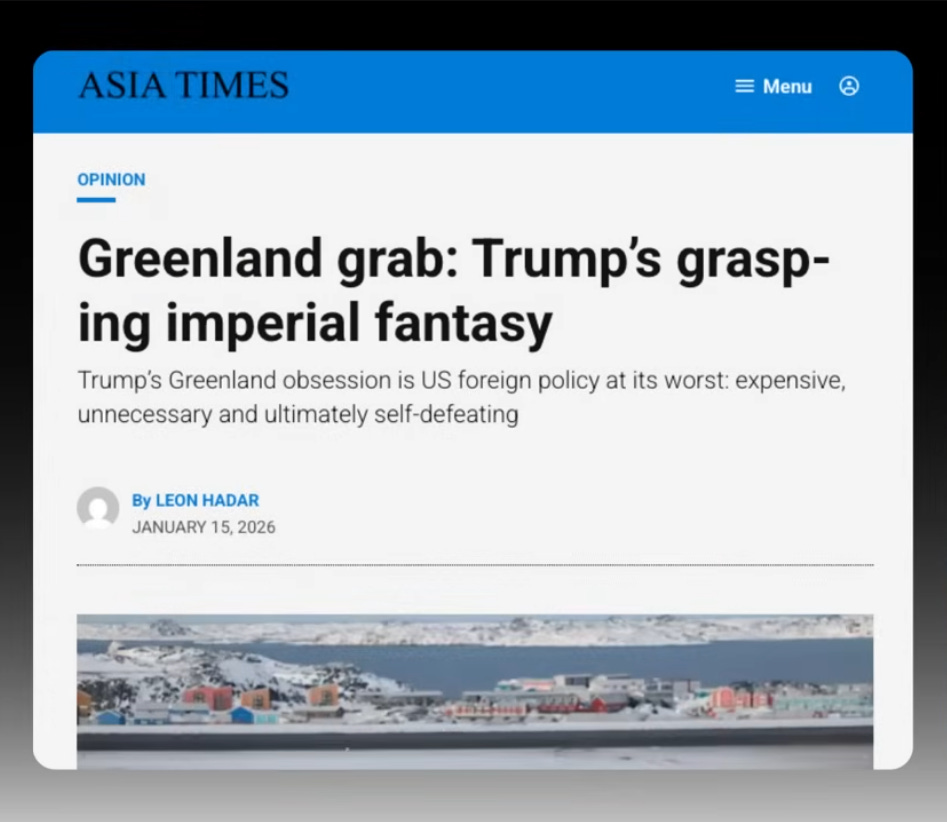
As usual, the major effort was a propaganda assault on Donald Trump’s character - he was portrayed worldwide as a modern-day gunboat imperialist, robbing the 57,000 inhabitants of Greenland of their chosen destiny.
Now, Greenland is still owned by the Danes due to a historical accident known as the Danish Empire.
President Trump responded to the military deployment by noting that the U.S. has subsidized the Danes and all other European countries involved for decades.
Our Note: if it weren’t for Trump, MATO would have collapsed financially during his first term - but eh, who remembers stuff like that?
Not only that, but the Danish Empire ceased to exist in 1953.
We never charged these countries tariffs before providing them with military defense at no cost.
Here is more of what the president said ...
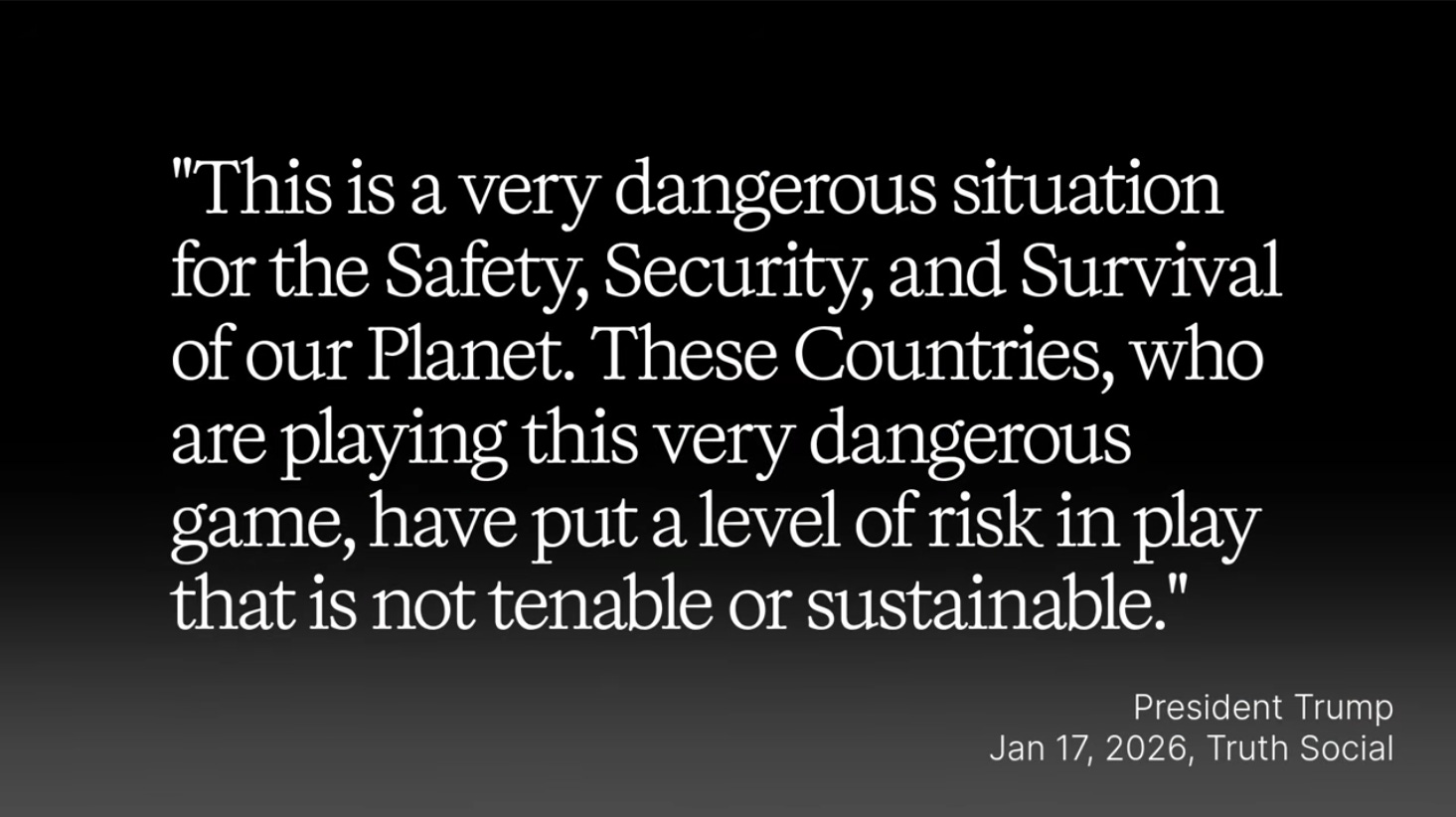
The President also announced that the militia dealers would secure Greenland for the United States by February 1st.
Denmark, Norway, Sweden, France, Germany, the UK, the Netherlands, and Finland will see a 10% tariff on their exports to the US, a new one.
If there’s no deal by July 1st, the tariff will increase by 25%.
These are, of course, the very same countries that are fighting to keep the Ukraine war going and its slaughter going, despite Trump’s best efforts at peace.
Let’s listen to Secretary Scott Bessett yesterday on Greenland’s strategic location and its irreplaceable role in defending the U.S. from an attack from the North.
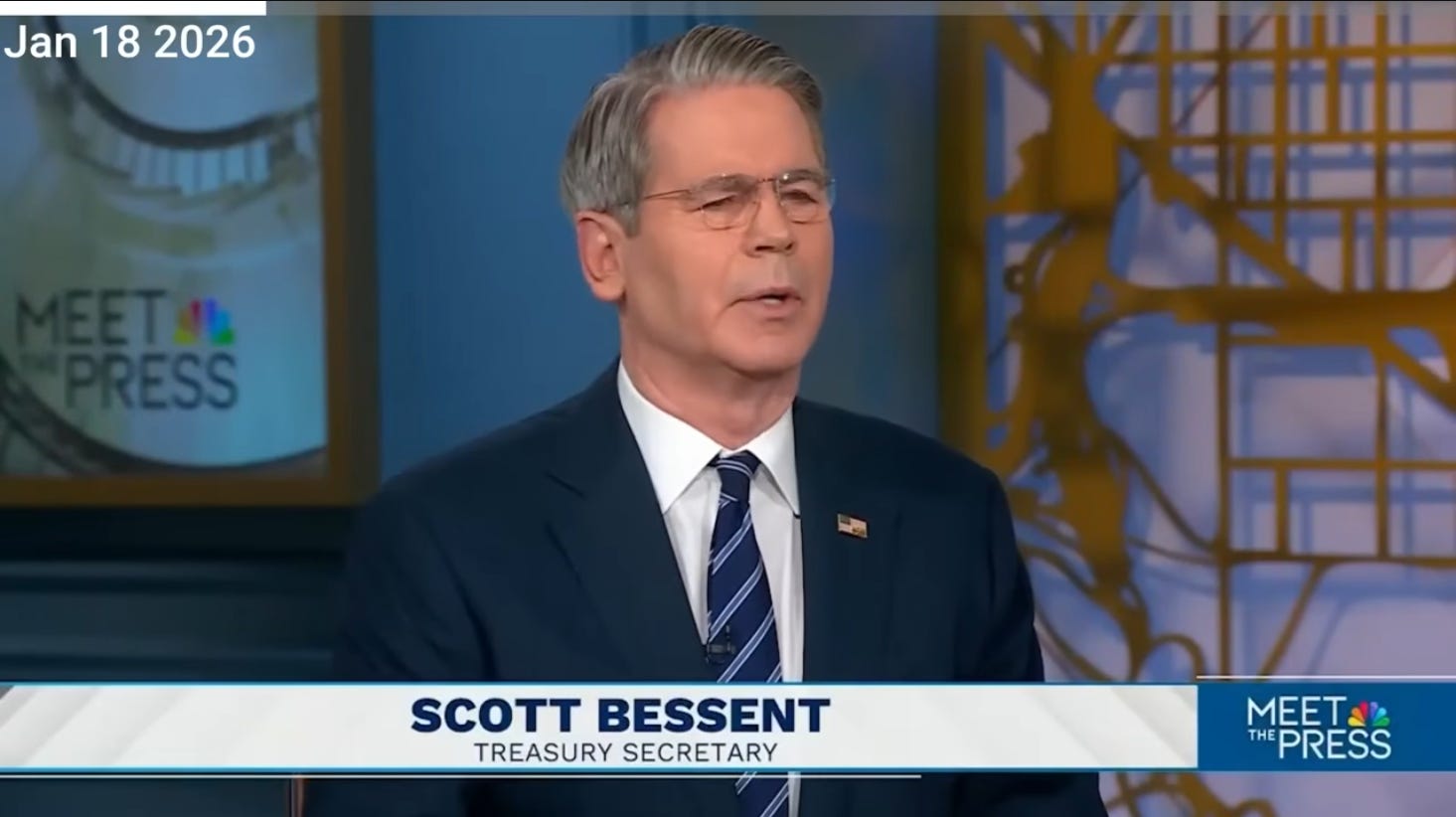
“President Trump strongly believes that we cannot outsource our security because, Kristen let me tell you what will happen and it might not be next year might not be in five years but down the road this fight for the Arctic is real and if there were an attack on Greenland from Russia from some other area we would get dragged in so better now peace through strength Make it part of the United States and there will not be a conflict because the United States right now, we are the hottest country in the world.
“We are the strongest country in the world - the Europeans project weakness, the U.S. projects strength.”
United States military planners have sought to acquire Greenland ever since the Civil War.
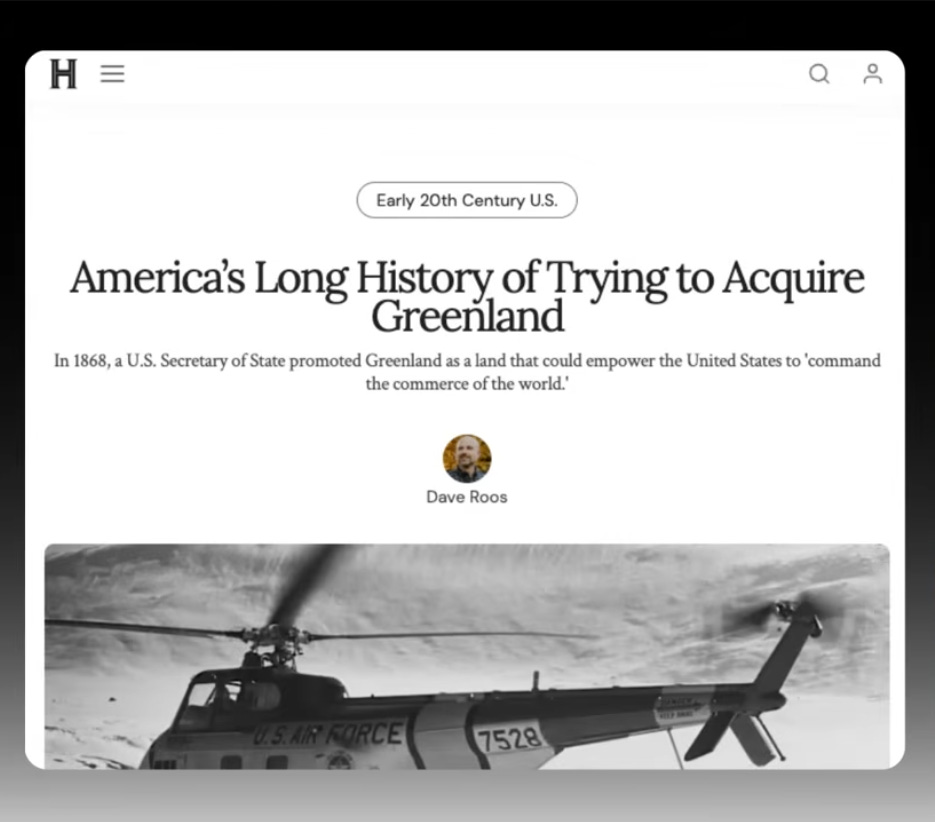
Its strategic location is central to repelling any attack from the North, and Europe’s current anti-American stance underlines why the acquisition is now even more critical.
They just told us they are willing to go to war with the United States to save Greenland for them.
Just as our War Department did at the end of World War I, any sane military planner today must assume that Canada and Greenland are potential adversaries and plan accordingly.
War Plan Red: The Last Time the Military Knew Our Real Enemy

Susan Kokinda explores the historical and modern implications of War Plan Red, a 1920s US military plan for war against Britain and its proxy, Canada.
Does Europe presently have the capability to make a serious military challenge to the United States?
Well, this expose tells that story humorously and well (click the image to view on Instagram)…

But we’re not talking about kinetic warfare immediately.
The war that has been waged on us since 1971 is hybrid warfare, a concerted effort to destroy our culture, our institutions, and foster continuous unrest of the type we are presently seeing in Minneapolis and elsewhere.
Davos 2026: The Last Gasp of the Globalist Order (06:31)
So Trump will ride into Davos tomorrow (Jan 20th) with a huge portion of his cabinet and invited American corporate chiefs - an unprecedented delegation of 300 people.
They’re ready to make deals on Trump’s America First transactional basis.
What can you give me that will benefit America’s builders and producers?
In turn, how can I service your market with America’s products?
Recognizing who has the cards here, even the Guardian is calling this meeting, “the last chance saloon to save the old order.”
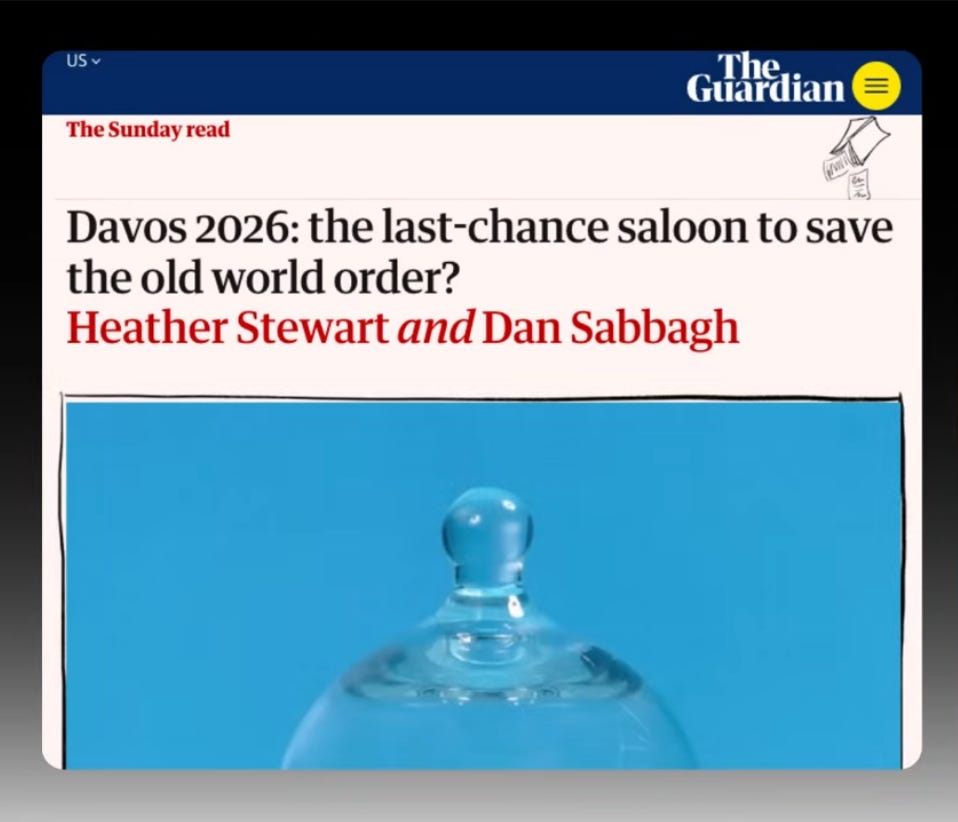
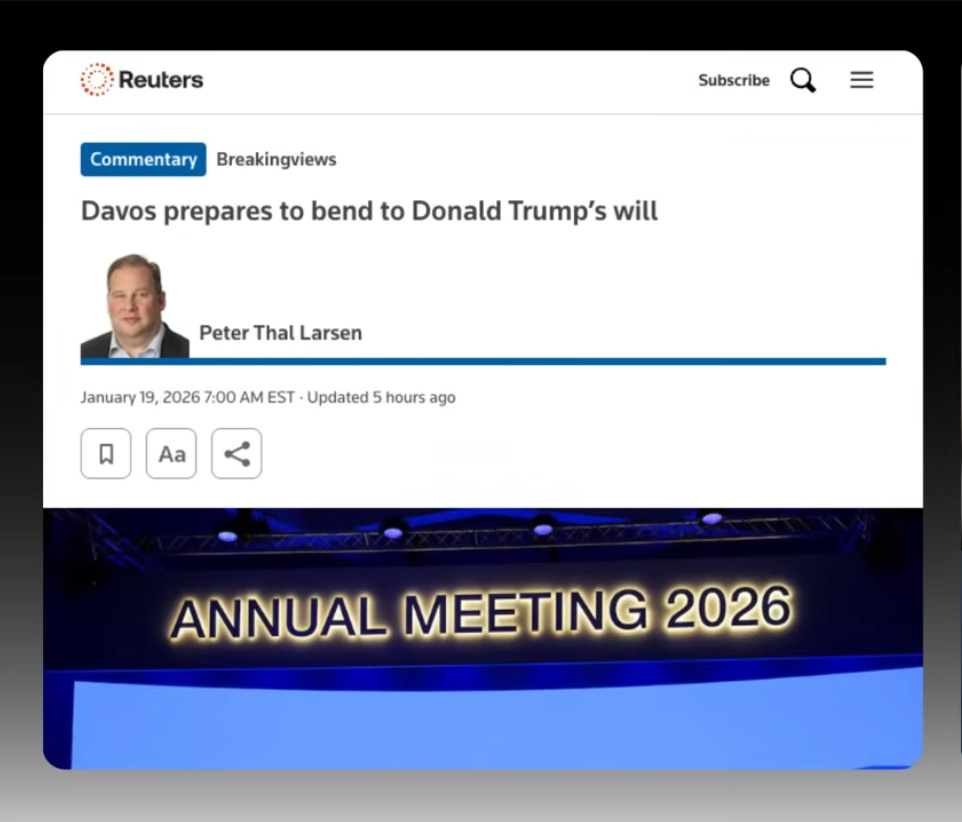
Reuters is even more glowing, describing the forum as the world’s elite bending to Donald Trump’s will.
To understand their significance, a little bit of history is helpful.
The World Economic Forum was founded in February 1971.
Six months later, on August 15th, President Richard Nixon abolished the Bretton Woods monetary system1.
Earlier, on April 22nd, 1970, the first nationwide Earth Day was held across America, ushering in an onslaught of green Malthusian policies2.
This triumvirate of globalization, financial speculation, and green genocide has reigned supreme since those days, now almost 55 years ago.
It has defined the policies of the British and allied oligarchs for more than half a century, and it has been imposed to one degree or another on every nation on earth.
The driving force behind its creation was the oligarchical Club of Rome3, which provided all the key manpower and money to bring the Forum into existence.
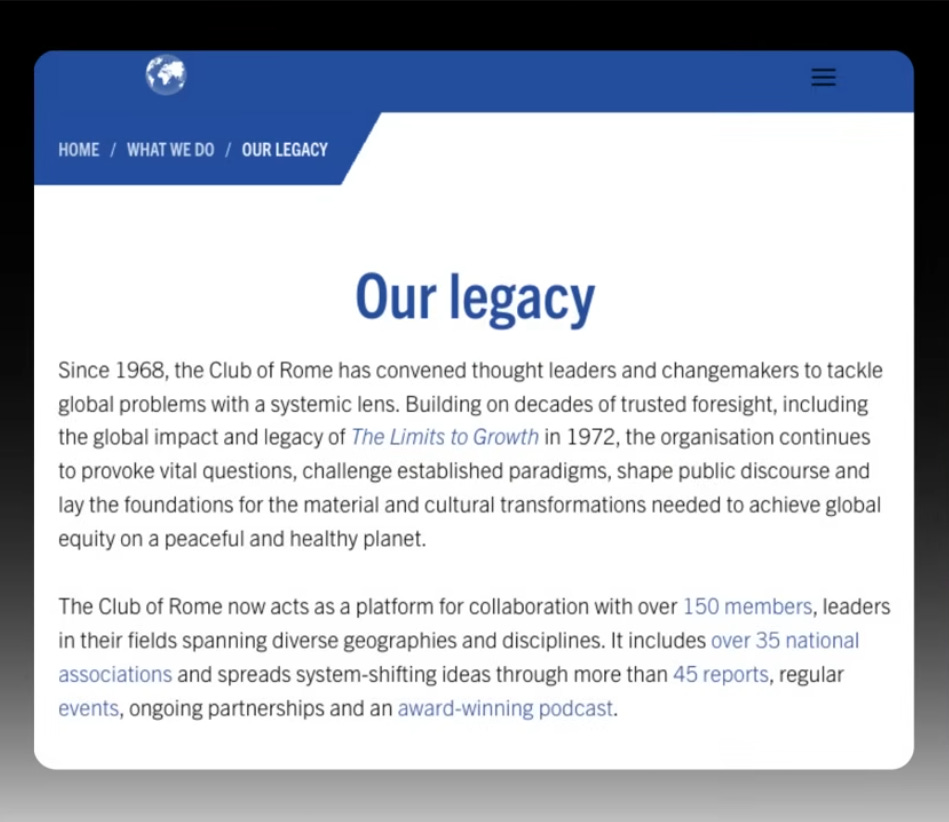
In 1972, the Club of Rome published the notorious book The Limits to Growth, calling for a reduction in human population and an end to scientific and industrial progress.
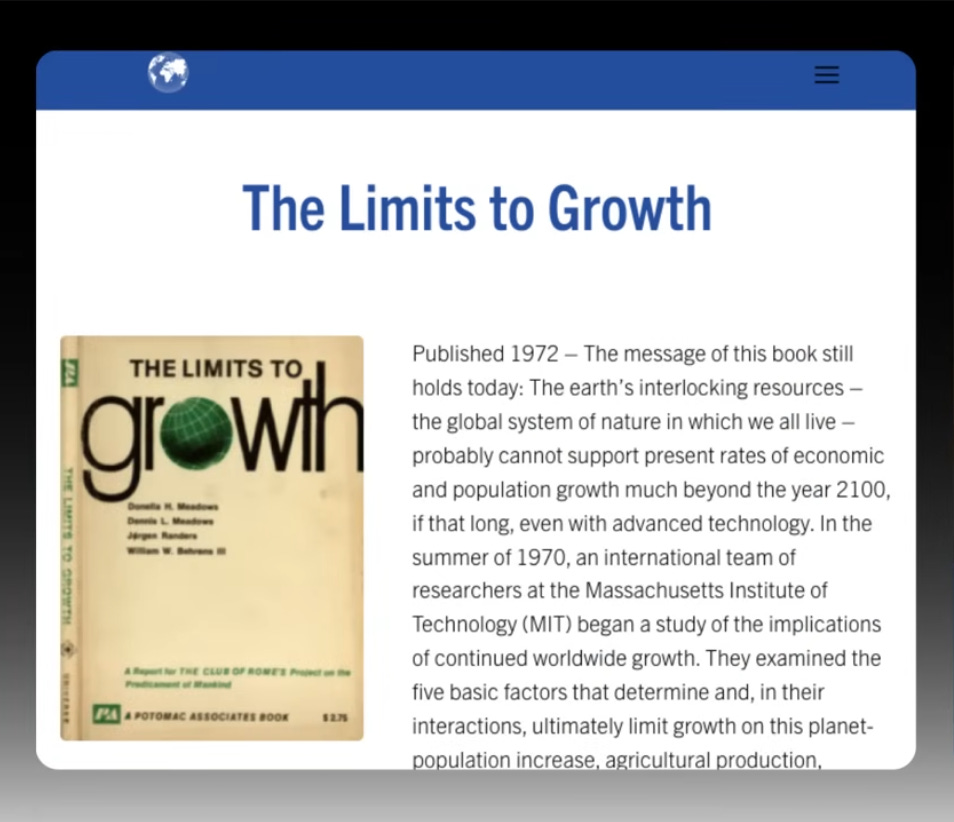
This became the World Economic Forum’s Bible.
Klaus Schwab, who headed the WF until recently, was a student of Henry Kissinger at Harvard in 1966-67.
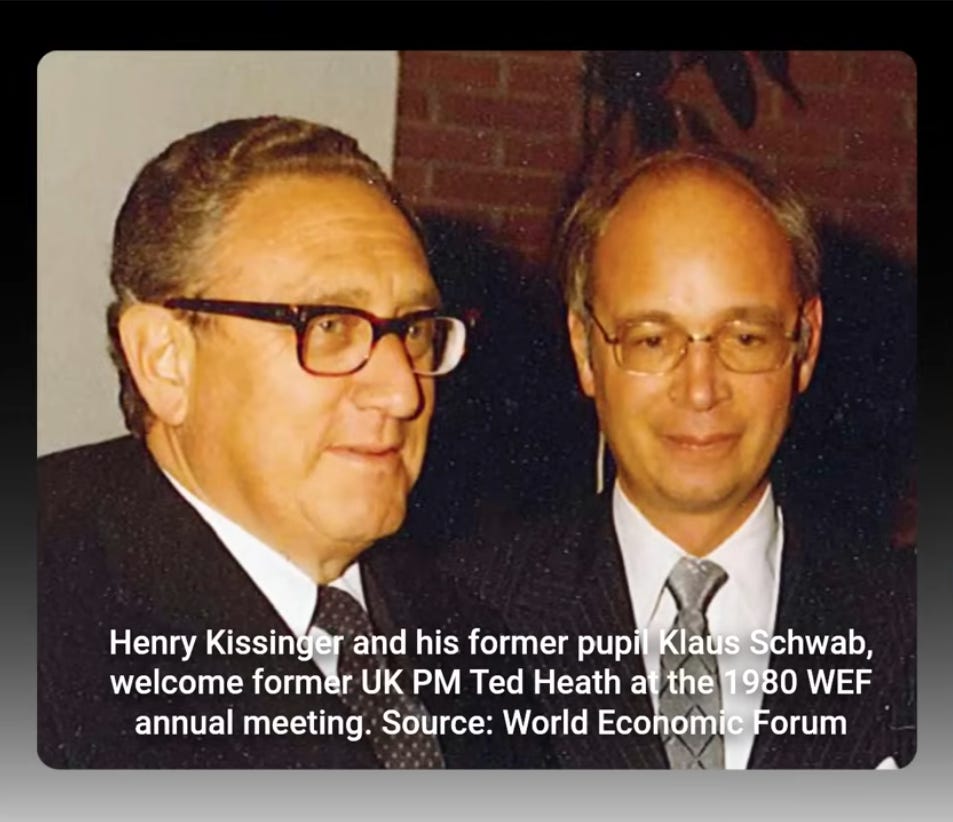
Kissinger recruited Schwab to the CIA-funded Harvard International Summer Seminar, which Kissinger led.
The summer seminar was founded in 1951 by Kissinger and his professor, William Yandel Elliott.
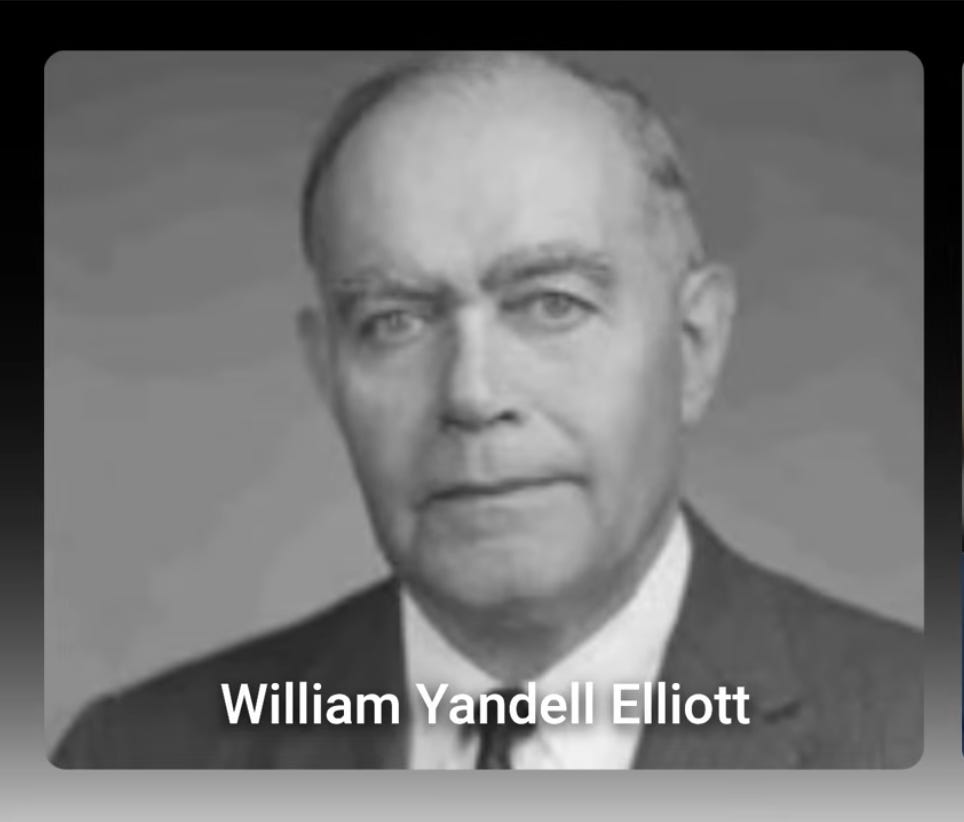
Eliot was a British agent of Alfred Lord Milner’s Roundtable Group.
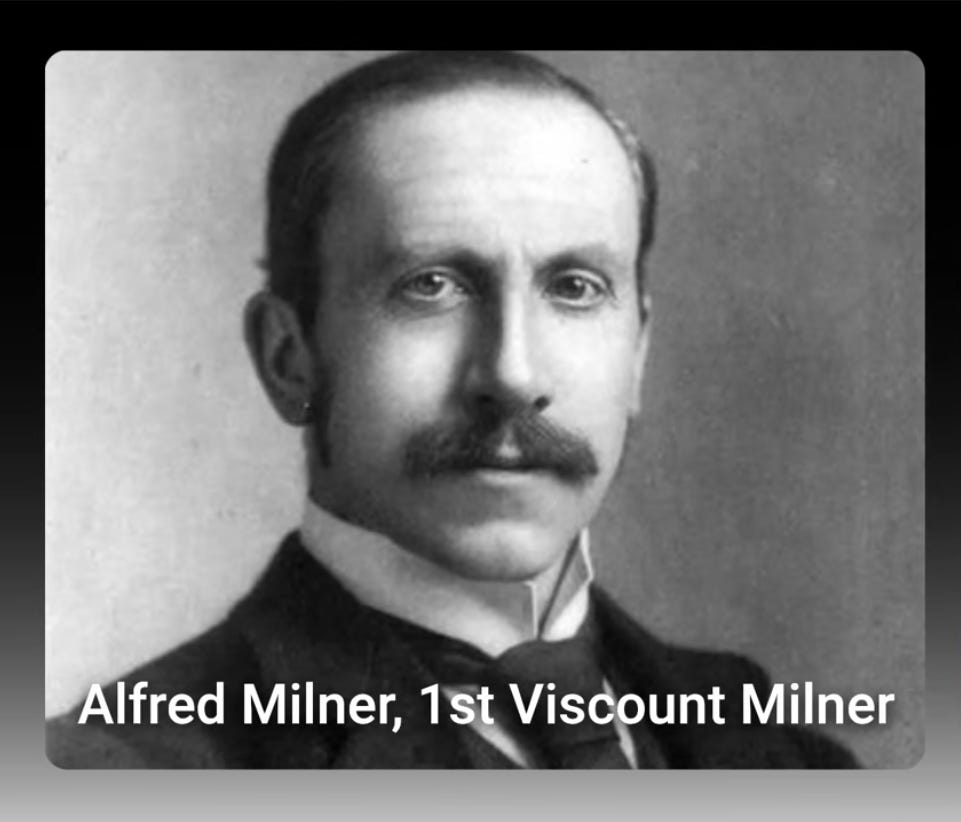
The Roundtable Group itself was dedicated to rebuilding the British Empire and reabsorbing the United States after the British defeat in our Civil War.
So, before now, the globalist WVF had been showing itself as a viable opponent of Donald Trump.
All the WF sponsor schemes from 1971 forward, global warming, climate hysteria, and climate finance, the great COVID world reset, were meant to end sovereign nation states and replace them with a global government led by the elite so-called experts.
All of those schemes are abject failures.
Trump’s world is one in which sovereign nation-states trade with each other to their benefit and promote continuous scientific and technological progress.
Now Trump is on the verge of rendering these guys has-beens.
They can join the Trump world, or they can continue to carp, moan, and shoot from the sidelines.
Trump’s Board of Peace: Building the Post-Davos World (09:52)
European coverage of the president’s Wednesday speech says he will emphasize his plans to lower housing costs in the United States, celebrate U.S. economic growth, and argue that the U.S. is leading the charge away from a stagnant, dying world order.
The BBC says that Trump’s speech might be called the Great Global Disruption, with the president playing the role of the Great Disruptor.
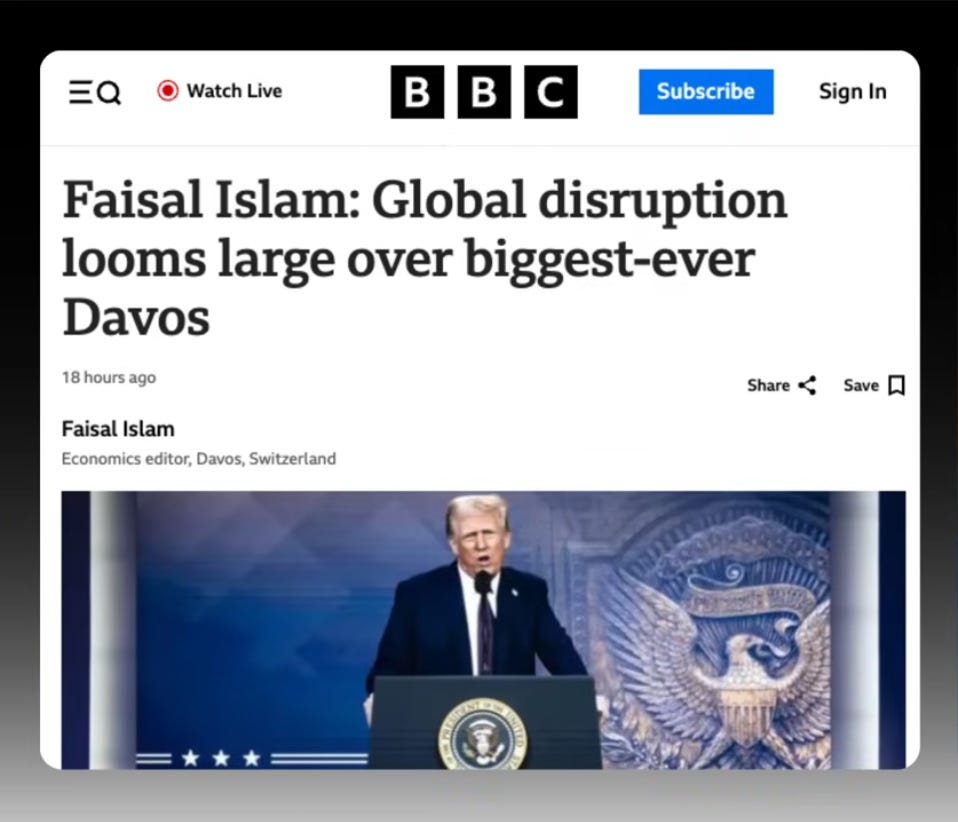
The U.S. delegation plans to operate out of a house on Davos’s Main Street called USA House, which is festined right now with Freedom 250 banners celebrating the 250th anniversary of our Declaration of Independence from the very same British Empire.
Trump plans to launch his Board of Peace through a focused diplomatic push at this event.
That new institution is tasked with rebuilding and economically developing Gaza, and phase two of Trump’s Gaza peace plan is now very much underway.
President Trump’s idea, however, is far broader than settling the Israeli-Palestinian conflict and fostering economic prosperity.
His Board of Peace will eventually resolve conflicts as they arise, providing a much more agile and pragmatic basis for doing so than the United Nations.
That’s another institution that deserves to be rendered a has-been.
Invitations to join have been extended to 60 nations, including even Mark Carney’s Canada and thankfully, Vladimir Putin’s Russia.
Permanent membership on the board will require a $1 billion fee with all funds collected, dedicated to peace and economic development.
In settling all the recent wars he has settled, Trump has relied on outside parties of goodwill, providing new perspectives to age-old conflicts.
Egypt and Turkey, for example, have played major roles in the Gaza ceasefire and will play major roles in the Gaza redevelopment operation along with the Gulf states.
Israel objects to Turkey and Qatar being involved, but Trump is proceeding anyway over their objection.
So the media is right in saying that Donald Trump has killed the old order.
The year of the Davos consensus is over.
For 50 years, the world’s future was decided behind closed doors by this self-appointed elite.
Today, that door has been kicked down and opened.
The great reset has met the great disruptor.
The old order is pleading for its life while a new order of builders, producers, and sovereign peace is being born in real time.
Footnotes
Bretton Woods Monetary System: Establishment, Operations, and Collapse
The Bretton Woods system was an international monetary system forged by delegates from 44 nations at a conference in Bretton Woods, New Hampshire, in July 1944, at the height of World War II.
Its purpose was to establish a new system of economic order and international cooperation, aiming to help countries recover from the war and foster long-term global growth, replacing the pre-war Gold Standard. The system became operational in 1958.
A key feature of the Bretton Woods system was the pegging of the U.S. dollar to gold at a fixed price of $35 per ounce, with other participating currencies maintaining fixed, but adjustable, exchange rates to the dollar.
This arrangement positioned the dollar as the world’s reserve currency and made it the only currency convertible to gold for foreign governments and central banks.
The conference also led to the creation of the International Monetary Fund (IMF) and the International Bank for Reconstruction and Development (IBRD), now known as the World Bank, which were intended to monitor exchange rates, lend reserve currencies, and aid in post-war reconstruction.
The Bretton Woods system eventually collapsed in 1971, when U.S. President Richard Nixon suspended the convertibility of the dollar into gold, marking America’s default on its international obligations.
Attempts, such as the Smithsonian Agreement in December 1971, sought to preserve the system, but it was officially declared dead by 1973 as nations began floating their currencies.
Perspectives
Critiques of U.S. advantage and system sustainability
The Bretton Woods system allowed the U.S. to take advantage of the system by creating a lot of dollars and buying up the world, leading to the exploitation of the fixed exchange rate system.
The excessive printing of dollars by the U.S. under Bretton Woods led to increasing risks and potential financial instability, with the system facing necessary realignment.
The dollar-based reserve currency system, in the context of the Bretton Woods legacy, is threatened by de-dollarization and a crumbling world economic system with an inflationary spiral.
The U.S. is losing control of the modern economic system due to Triffin’s dilemma, which has led to currency devaluation, and a new Bretton Woods framework is emerging, with reduced foreign central bank demand for U.S. Treasuries and increased gold purchases.
System’s stability, goals, and factors in its success and demise
The Bretton Woods system successfully operated due to low international capital mobility, tight financial regulation, the United States' dominant economic and financial position, and the dollar's dominance.
The system was designed to prevent currency manipulation and competitive devaluations, promoting international economic growth and stable exchange rates for trade.
Strains began to show in the 1960s, and the system could not be sustained amid rising inflation and monetary expansion, leading to its collapse due to both structural flaws and the unwillingness of key sovereign members to follow its rules.
Malthusian theory, introduced by Thomas Robert Malthus in 1798, posits that population growth is exponential, while food supply grows linearly, leading to a potential Malthusian catastrophe such as famine or war when population growth outpaces agricultural production.
The theory suggests that any temporary improvement in living standards can trigger population growth, which then returns society to a subsistence level, a concept known as the “Malthusian trap” or “subsistence trap.”
This fundamental tension between population growth and resource constraints continues to influence discussions on sustainability, economic development, and global resource allocation.
The Green Revolution, which occurred in the mid-20th century, dramatically increased agricultural yields through improved seeds, fertilizers, pesticides, and farming methods.
This expansion of the world’s food supply, coupled with lower food prices, accelerated the world’s population growth rate, prompting various experts to predict an imminent Malthusian catastrophe.
Despite its influence, Malthusian theory has faced substantial criticism for underestimating the potential of technological innovation to increase food production, with many modern economies demonstrating that food production can keep pace with, or even exceed, population growth.
Perspectives
Support for Green Malthusianism and its influence on policy
Neo-Malthusianism played an important role in shaping environmental concerns at both the scientific and governmental levels in the Post-WWII era, as seen in the texts of 1960s and 1970s exponents such as Garrett Hardin and Paul Ehrlich.
Environmental Malthusianism provides scientific legitimacy for policies that control the reproduction of vulnerable populations while ignoring other causes of environmental devastation, despite research showing a more complex relationship between population growth and environmental degradation.
Modern environmentalists often refer to Malthusian principles when discussing planetary boundaries, carrying capacity, and the ecological footprint of human populations, noting that larger populations typically produce more greenhouse gases.
Neo-Malthusian thinking has influenced population policies globally, with some Green parties opposing nuclear energy to preserve the neo-Malthusian argument that energy capacity should not increase to control human population growth.
Critiques of Green Malthusian Policies and their impact
Malthusian arguments have been used to legitimize Western interests, development theories, and strategies, including the Green Revolution and genetic engineering in agriculture.
Policies rooted in Malthusian beliefs have had negative consequences, such as the severe curtailment of the English Poor Law in 1834, based on the reasoning that helping the poor would encourage more children and exacerbate poverty.
The Green New Deal, while aiming to address ecological and economic crises through public spending, is criticized for potentially leading to increased environmental destruction, social inequalities, and corporate profit motives through government intervention.
Critics like Lula have pointed to “green neocolonialism,” in which trade barriers and protectionist policies, disguised as environmental protection, harm developing countries without providing the necessary financial support or technology transfer.
Opposition to Malthusian premises and a focus on human ingenuity
Environmental optimists argue that human ingenuity, technological progress, and economic/political institutions can counter emerging resource scarcities and that environmental change is not a major driver of human violence.
The Malthusian premise is incorrect because population growth tends to slow and even decline as general welfare rises, as observed in modernized countries with improved standards of living.
The Green Revolution and other agricultural innovations have enabled food production to keep pace with, and even exceed, population growth in many regions, demonstrating that Malthus underestimated human adaptive capacity.
Project 2025 proposes reducing environmental and climate change regulations to favor fossil fuels, stopping NIH funding for embryonic stem cell research, and preventing the EPA from using what they consider unrealistic climate change impact projections.
The Club of Rome is an international think tank and informal organization of intellectuals, business leaders, and former politicians.
It was founded in April 1968 in Rome, Italy, by Aurelio Peccei, an Italian industrial manager and economist, and Alexander King, a Scottish scientist.
The organization’s goal is to critically discuss and define solutions to pressing global issues, known as the “world problematique,” which includes environmental degradation, poverty, overpopulation, and resource scarcity.
The Club of Rome draws on its members' collective expertise to address complex, interconnected global challenges.
It conducts research, hosts debates, conferences, and lectures, and publishes “Reports to the Club of Rome,” including “The Limits to Growth,” one of its most famous publications.
The organization is committed to promoting understanding of global challenges and proposing solutions through scientific analysis, communication, and advocacy, focusing on areas such as the climate and planetary emergency, economics and finance, and youth leadership.
Perspectives
Promotes understanding and solutions for global challenges
The Club of Rome was formed by an Italian industrialist and a Scottish scientist in the late 1960s to address global issues such as pollution, resource scarcity, and overpopulation.
It is a non-profit, informal organization of intellectuals and business leaders whose goal is to foster critical discussion of pressing global issues and identify holistic solutions.
The Club of Rome publishes reports such as “The Limits to Growth” to highlight the unsustainability of global demographic and economic trends and to advocate for solutions to humanity’s challenges.
The organization’s current priorities include the climate-planetary emergency, reframing economics, rethinking finance, emerging new civilizations, and youth leadership.
Aims to undermine industries and establish global governance
The Club of Rome is described as an insidious, baneful organization created under the direction of the Committee of 300.
Its main objective was to undermine the United States' industries and agricultural development through a Zero Growth Plan, which was eventually adopted as U.S. policy.
The organization’s long-term plan includes dividing the world into ten regions and gradually shutting down the U.S. economy as part of a broader agenda for global governance.
The Club of Rome is connected to climate change initiatives, the World Economic Forum, and figures like Al Gore, and has plans that raise concerns about their implications for ordinary citizens.