
Susan Kokinda explores the historical and modern implications of War Plan Red, a 1920s US military plan for war against Britain and its proxy, Canada.
She argues that Donald Trump is reviving this strategic clarity to end 80 years of British influence over American foreign policy, discussing his recent moves regarding Greenland and NATO.
Kokinda connects this stance to broader economic and political actions Trump is taking to dismantle monopolies and financial cartels, with the aim of restoring American sovereignty.
Chapters
00:00 The Monday Brief - War Plan Red: The Last Time the Military Knew Our Real Enemy - January 12, 2026
02:04 NATO Leaders Now Discuss Protecting Greenland FROM the U.S.
05:25 War Plan Red: When America’s Military Planned for War Against Britain
07:45 Breaking the Cartels: Trump Takes On Housing, Healthcare, and the Military-Industrial Complex
There was a time about 100 years ago when the United States military knew exactly who the real enemy was.
And it wasn’t Russia, and it wasn’t China - it was Britain.
In the 1920s, the US military developed a detailed contingency plan, War Plan Writ, for war with the British Empire, with Canada as Britain’s proxy.
And right now, Donald Trump is dusting off a modern version of that same plan.
FYI: War Plans and Operational Statements
Post continues after this section
The United States military has a history of developing color-coded war plans for hypothetical scenarios against various adversary nations, with systems for identifying countries by colors and standardized abbreviations.
These plans were created for preparedness and training, evolving through the 1920s and 1930s.
The Joint Army and Navy Board, a predecessor to the Joint Chiefs of Staff, was responsible for reconciling conflicts in planning.
Notable historical examples include War Plan Red, a contingency plan for a hypothetical conflict with the British Empire, including scenarios involving Canada, which was approved in 1930 and updated in 1934–35.
There was also War Plan White, developed to address domestic insurrections and civil disturbances, with parts of it used in 1932.
A military operation plan, historically referred to as a war plan before World War II, is a formal plan for military armed forces to conduct operations to achieve objectives.
These plans are drawn up by commanders during the combat operations process and address tactical, operational, and strategic considerations at various levels of war.
Perspectives
Distinction between ‘War Plans’ and ‘Operational Statements’
Civilians often misunderstand military terminology, incorrectly equating ‘war plans’ with ‘operational statements.’
A ‘war plan’ is a broader strategy that identifies resources and military units for a potential contingency, such as a nuclear incident in Pakistan.
‘Operational statements’ or ‘execution orders’ contain sensitive details about how strikes are carried out and rules of engagement, which should not be publicly discussed due to security risks.
Defining ‘War Plans’ and Leaked Information
Some military experts indicate that texts containing sensitive operational details about military action are akin to a plan.
Reports indicate that Defense Secretary Pete Hegseth said, “Nobody was texting war plans” regarding the leaked information.
Journalists reportedly received “precise information about weapons packages, targets, and timing” in a chat that was described as “war plans.”
Absence of a Formal ‘War Plan’ Definition
The Department of Defense lacks a formal definition for “war plan” within its doctrine.
The U.S. does not possess true war plans that encompass the entire national effort required for conflict with a major power.
While the DOD has Unified Command Plans, campaign plans, and regional theater strategies, a direct “war plan” for the U.S. is not defined.
Grok
War Plan Red (officially known as the Joint Army and Navy Basic War Plan Red, or the Atlantic Strategic War Plan) was one of the United States’ color-coded war plans developed during the interwar period (roughly 1918–1939).
These plans were hypothetical contingency strategies created by the U.S. military to prepare for potential conflicts with various nations, each assigned a color (e.g., Orange for Japan, Black for Germany).
War Plan Red specifically outlined a scenario for war against the British Empire (”Red,” referencing the traditional red color for British territories on maps, such as the Red Ensign or redcoats).
It was primarily a defensive plan anticipating a British invasion of the United States, likely using Canada (code-named “Crimson”) as a staging ground, given Britain’s naval superiority at the time. Key elements included:
Rapid U.S. preemptive invasions of Canadian territory to seize critical ports (e.g., Halifax, Nova Scotia), railways, and resources (such as Niagara Falls hydroelectric plants and Ontario nickel mines)
Blockading British-Canadian supply lines
Preventing British reinforcements from arriving
In extreme versions, even considering poison gas to secure strategic points like Halifax
The plan was developed as a training exercise for mid-level officers to practice calculating logistics, manpower, and mobilization needs.
It was never intended as an aggressive blueprint for unprovoked war, and relations between the U.S. and Britain were generally improving during this era (despite tensions over naval treaties and war debts from World War I).
The likelihood of actual implementation was considered very low.
It was created after the 1927 Geneva Naval Conference (which highlighted naval rivalries), approved in May 1930 by Secretary of War Patrick J. Hurley and Secretary of the Navy Charles Francis Adams III, and updated in 1934–1935.
It fell under the oversight of the Joint Army and Navy Board (predecessor to the modern Joint Chiefs of Staff), with drafting handled by the War Department’s War Plans Division and Navy planners (primarily mid-level staff officers).
No single individual author is prominently credited in historical records—such plans were collaborative institutional efforts.
The plan was declassified in 1974, long after it became obsolete with the start of World War II in 1939 (when the U.S. shifted to the new “Rainbow” series of plans for multi-front wars).
Interestingly, Canada had its own earlier counterpart: Defence Scheme No. 1 (1921), drafted by Canadian Lieutenant Colonel James “Buster” Sutherland Brown, which outlined a preemptive Canadian invasion of the U.S. in case of war with Britain.
In hindsight, War Plan Red is often viewed as a quirky historical curiosity reflecting the era’s cautious military planning mindset—preparing for even improbable scenarios—rather than any serious hostility toward Britain or Canada.
sources
https://www.amazon.com/War-Plan-Red-United-Canadas/dp/1616893524
https://grok.com/c/195c7ecc-7f37-4437-8e25-648624bcb33a?rid=d3da9e31-5cd2-40b5-837e-97cb35e2289d
https://historycollection.com/war-plan-red-the-forgotten-u-s-plot-to-battle-britain/
https://www.historyextra.com/period/20th-century/war-plan-red-secret-invasion/
https://military-history.fandom.com/wiki/United_States_color-coded_war_plans
https://www.sciencedirect.com/topics/social-sciences/military-planning
You will notice that all the anti-Trump organizations involved in communications of any form are going to be creating illusions of what could happen if this, if that, Donald this, Donald that - that is a psyops that has been used in the past, you should be recognizing it by now.
If you don’t, you will be listening to the wrong voices…
So, let’s start with the Chatham House, the premier foreign policy mouthpiece for the U.K., published this, exposing their nervousness about what President Trump is planning…

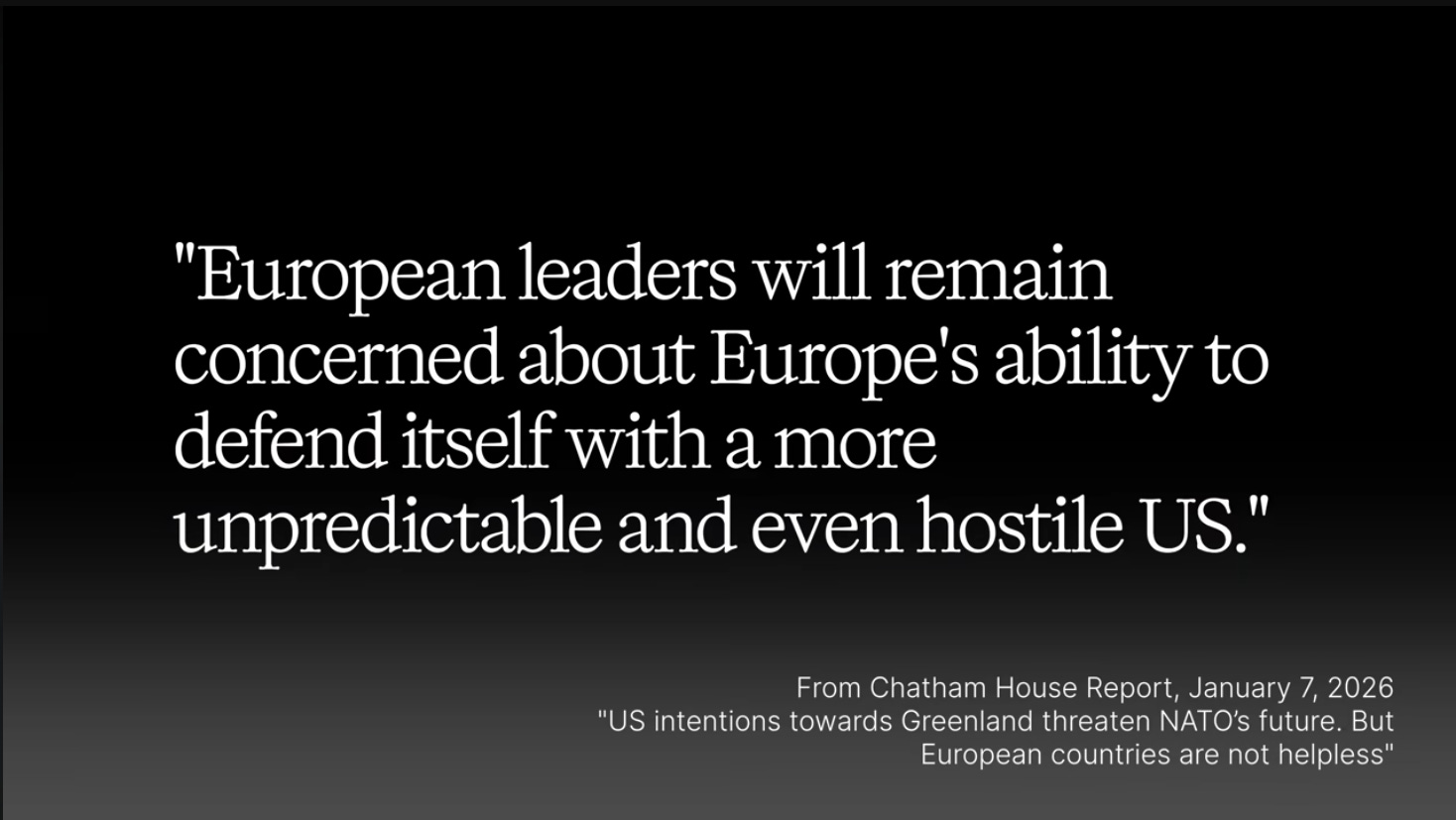
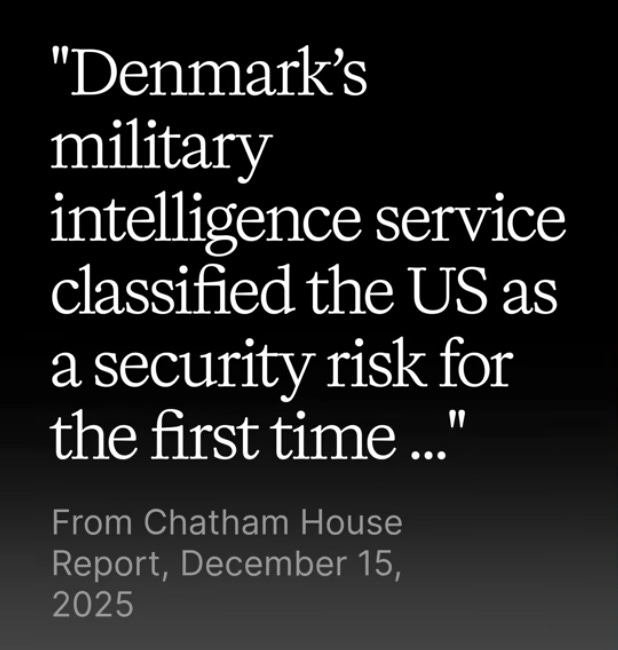
Notice there are 3 assumptions in both quotes...
When has the U.S. ever been unpredictable? To our enemies…
When has the U.S. ever been hostile? To our enemies…
When has the U.S. ever been a security risk? To our enemies…
So the proper questions to a layman would be why the defensiveness?
Why are they posturing themselves as enemies of the U.S.?
Trump isn’t threatening our alliances - he is, however, ending 80 years of British control over American foreign policy, and he’s doing it by reviving the strategic clarity that our military once had when they created War Plan Red.
NATO Leaders Now Discuss Protecting Greenland FROM the U.S. (02:04)
If you’re watching the mainstream media, they’re telling you Trump wants Greenland for its minerals or its military bases, or it’s about Russia and China.
There are elements to some of that, but there’s so much more - look at what the foreign policy establishment is actually panicking about.
The Atlantic Council, NATO’s outpost here in the United States, just published a piece titled, Trump’s quest for Greenland could be NATO’s darkest hour…

And Bloomberg reported that the United Kingdom and Germany are now discussing deploying NATO forces to Greenland to protect it from the United States.
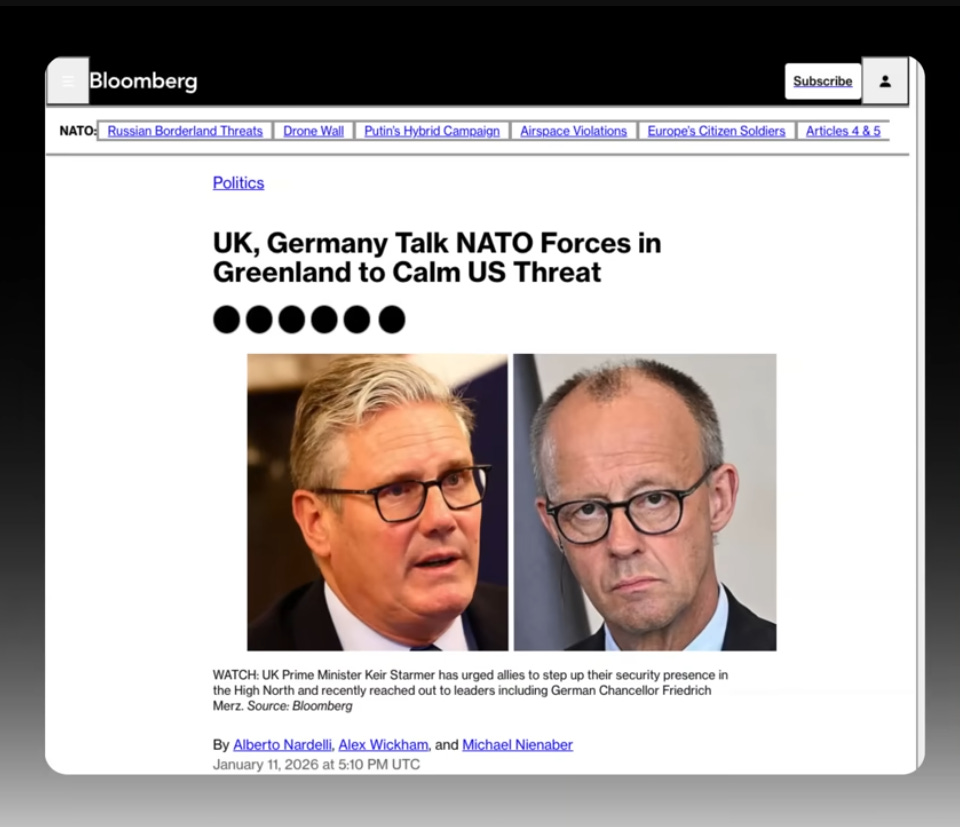
link (paywall) / archive (no paywall)
Are you seeing what you are reading? Are you understanding all this?
NATO allies are discussing how to protect a NATO member from the United States, the supposed leader of NATO.
FYI: Understanding NATO’s Article 5 …
Article 5 of the North Atlantic Treaty states that an armed attack against one NATO member shall be considered an attack against all members, triggering an obligation for each member to come to its assistance.
This principle of collective defense is at the core of NATO’s existence and has been invoked only once in its history: after the September 11, 2001, terrorist attacks on the United States.
Article 5 is consistent with Article 51 of the United Nations Charter, which recognizes the right to individual or collective self-defense.
The language of Article 5 also specifies that assistance should be rendered “in accordance with their own constitutional processes.”
This means that while an attack on one is an attack on all, each member decides what measures it deems necessary, which can include military force or other actions, to restore and maintain security in the North Atlantic area.
The treaty is silent on where a military or other response can take place.
What Chatham House is really worried about: The cornerstone of NATO policy, Article 5, which triggers US military support for NATO members.
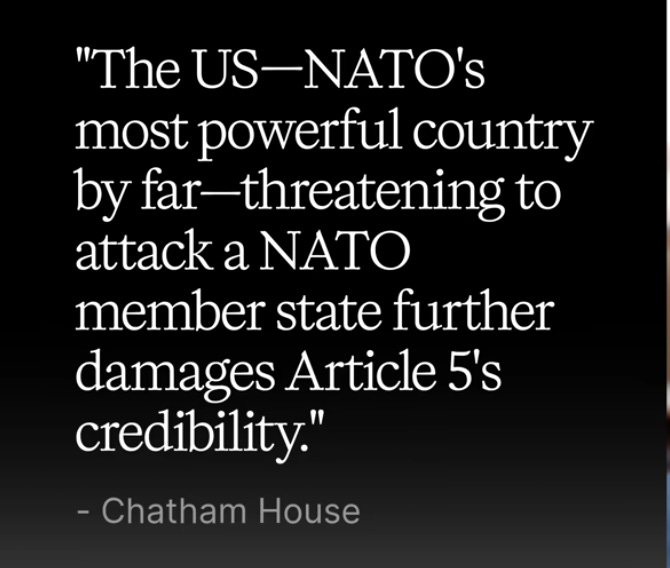
Yes. It. Does.
But it gets even more interesting, they continue…
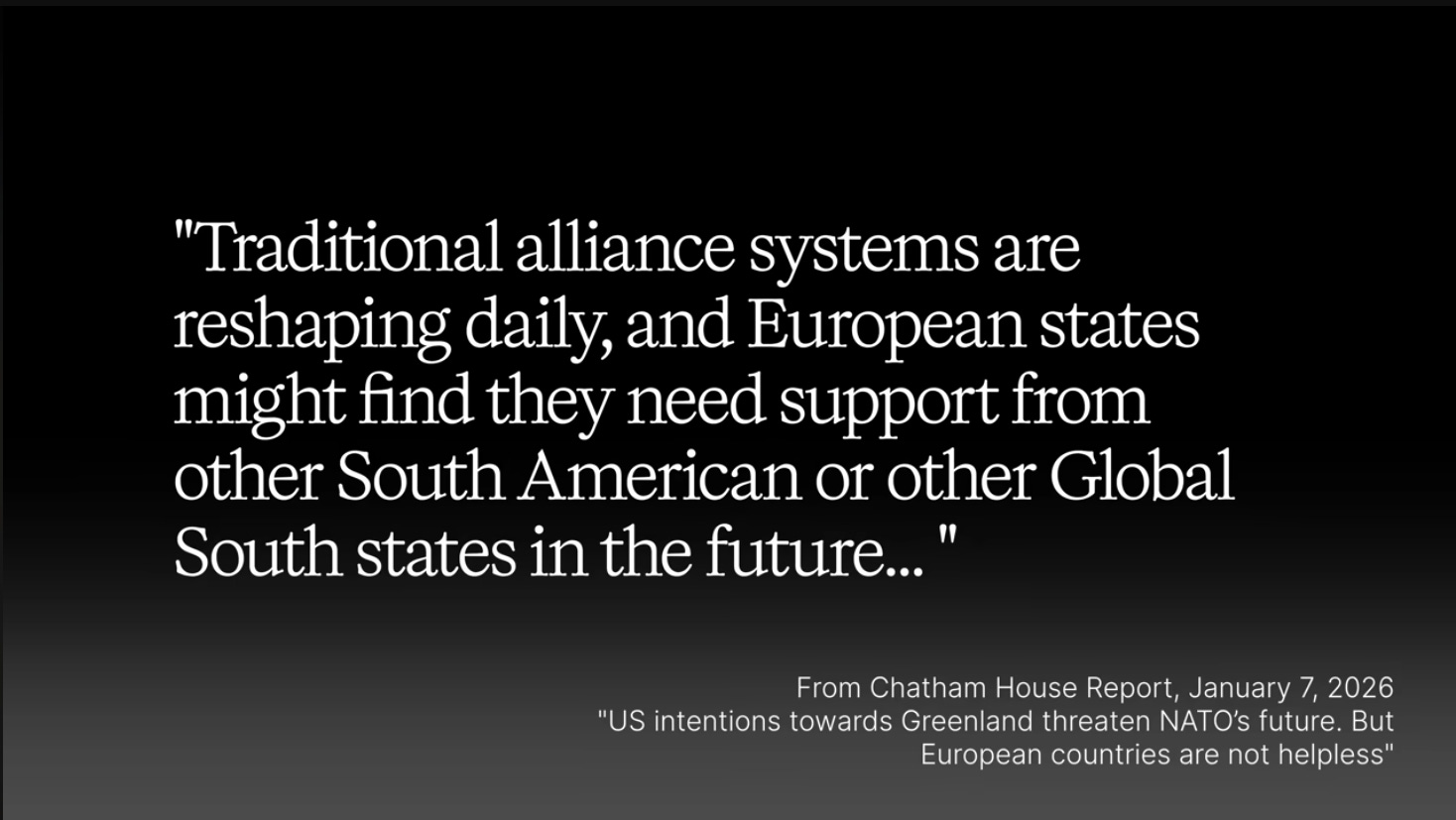
The folks at Chatham House are very worried about the reports of a potential U.S. cooperation deal on Arctic energy projects, and they got even more nervous in November with the 28-point peace plan, which includes joint Russian-U.S. plans for rare earth mineral extraction in the Arctic

Europe may have to realign with the global south while the U.S. is working on Arctic economic deals with Russia.
This is the British establishment admitting that Trump has broken their carefully crafted post-World War II Atlantic system.
Greenland talking points...
The idea that Greenland belongs to Denmark is purely an artifact of imperial policy
Greenland didn’t even get self-government until 2009
It still has no power over its own foreign policy, currency, or defense
Denmark is still controlling all of the above
According to the Danish media, those tensions recently broke out between Greenlandic and Danish parliamentarians, with one Greenlander accusing Denmark of neo-colonial methods.

And opposition leaders in Greenland are now saying they want to negotiate directly with the United States, not through Copenhagen.

So when Trump talks about Greenland, he’s really talking about dismantling one of the last vestiges of European colonial control in the Western hemisphere.
And NATO, the military arm of that old imperial system, knows that if Greenland goes, the whole structure starts to crumble.
War Plan Red: When America’s Military Planned for War Against Britain (05:25)
Digging deeper into why Greenland matters strategically, there is SOME truth to the claim that it’s about Russia and China.
But what if neither is your main enemy?
What if the real concern is Britain and Canada?
Now we’re getting into geopolitics…
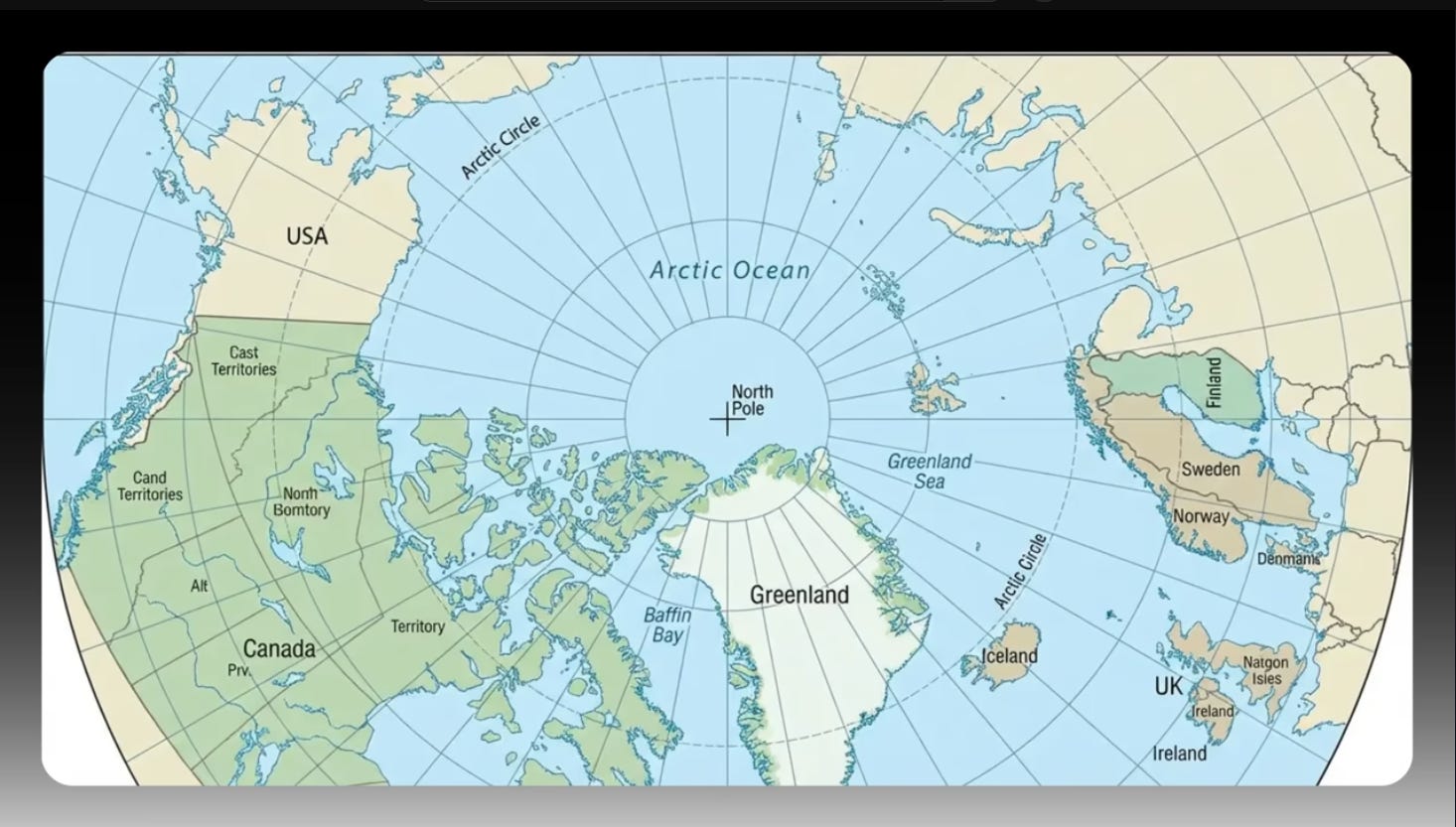
Looking down at the North Pole, you can see that Greenland sits between Canada and Europe, including the U.K.
War Plan Red was a contingency plan for war with Britain, and Canada was the key proxy.
This plan was approved and updated under the tenure of Navy Secretary Charles Francis Adams III.
This is where names matter…
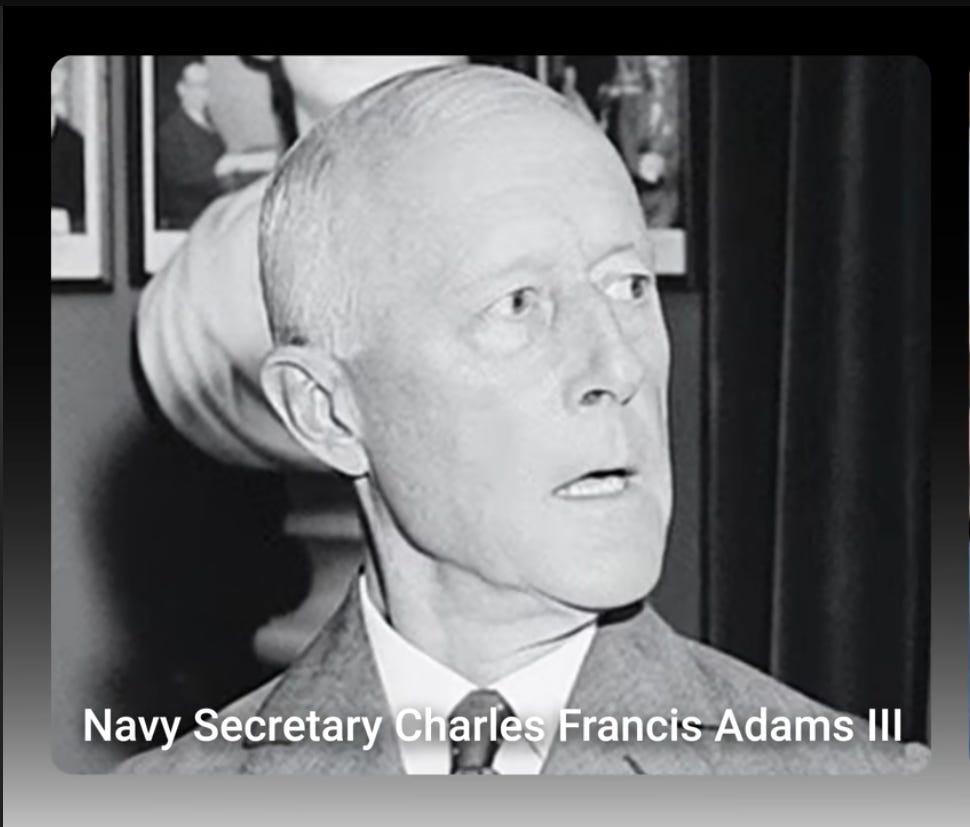
Charles Francis Adams III was not just a bureaucrat; he was the great-grandson of President John Quincy Adams, and he was the grandson of Charles Francis Adams Sr.
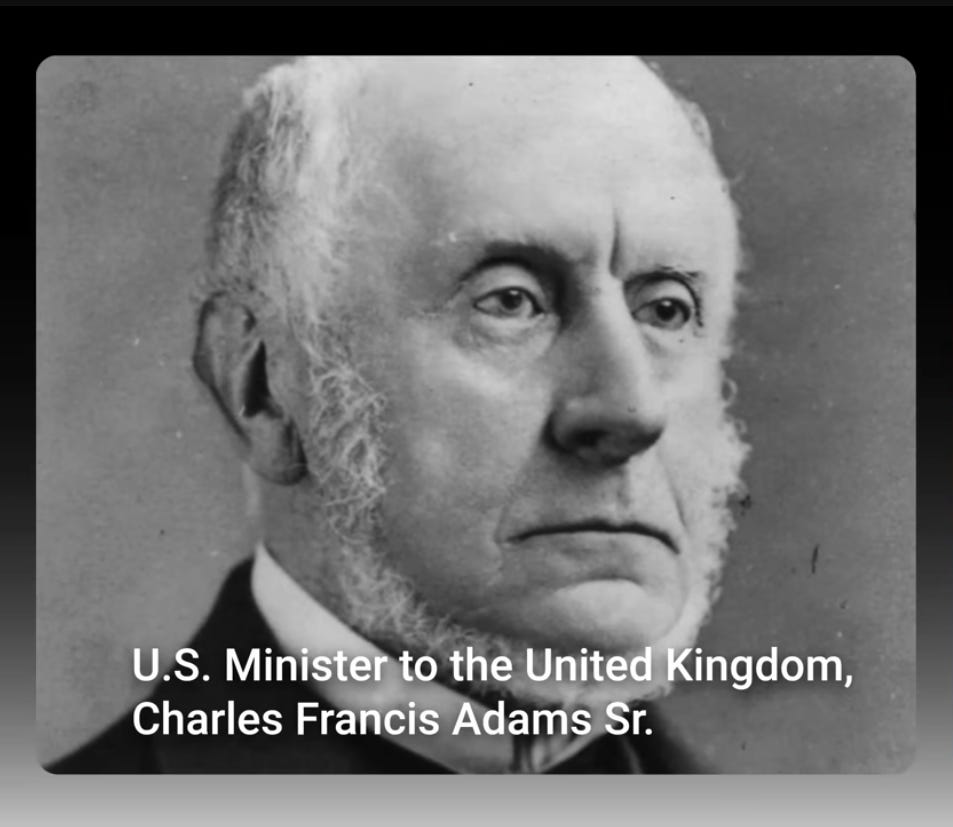
This is significant because Charles Francis Adams Sr. was Abraham Lincoln’s minister to Britain during the Civil War; he was the man on the ground in London and the key figure who prevented the empire from diplomatically recognizing the Confederacy (remember, this is only 40 years after the War of 1812).
This family understood the game.
The grandfather spent the 1860s preventing the British from diplomatically destroying the Union.
The grandson spent the 1920s preparing contingencies for a British attack on the US.
They understood that the Republic and the Empire are incompatible forms of government - and for the last 80 years, we’ve forgotten that lesson.
Donald Trump is simply dusting off a modern version of War Plan Red, a war for political and economic sovereignty from empires and monarchies.
Breaking the Cartels: Trump Takes On Housing, Healthcare, and the Military-Industrial Complex (07:45)
While President Trump dismantles the empire’s rules-based order, he hasn’t forgotten the domestic one.
The same British financial interests that shaped the post-war strategic landscape run the monopolies right here in our own backyard.
The empire doesn’t just operate through monarchies and NATO, it operates through monopolistic cartels right here at home, protecting the financial interests that have strip mined the American middle class.
(00:08:16):
This week, Donald Trump targeted the two biggest burdens crushing the American people, especially young families: housing and health care.
From his TruthSocial update…
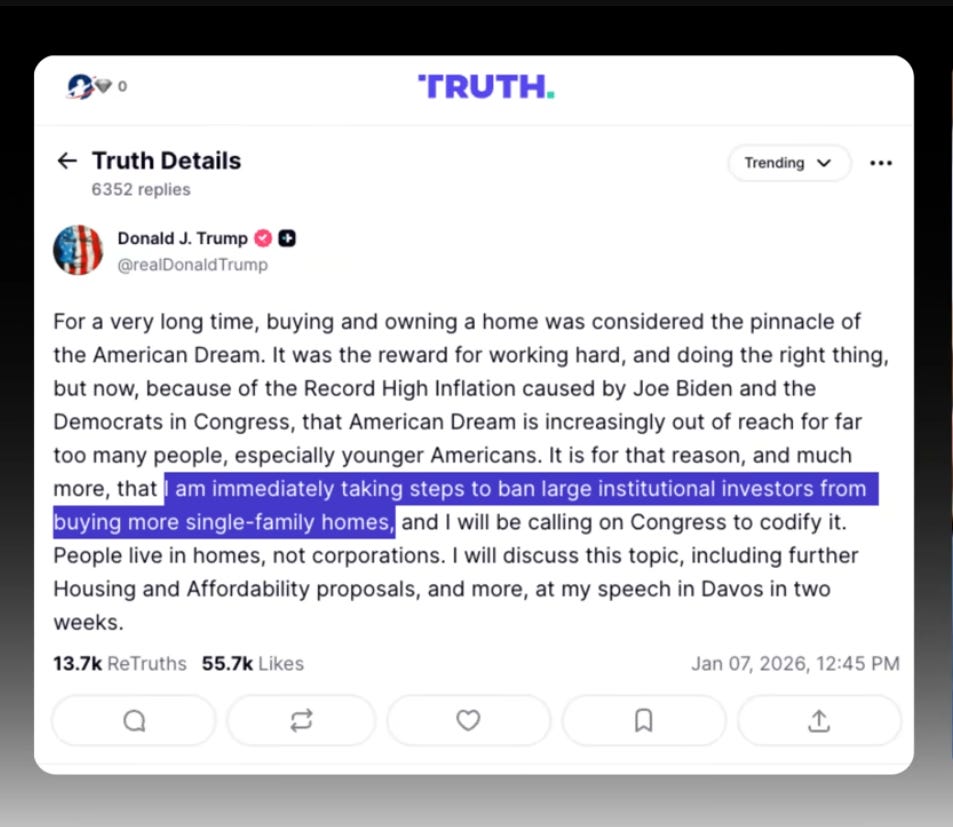
For the last decade, these giant institutional investors, the Blackstones, the Vanguards, the State Streets, they’ve been gobbling up single-family housing stock.
They swoop in, outbid young couples and other Americans, and turn what should be a family’s primary asset into a permanent rental stream for a hedge fund.
This was fulfilling the WEF’s playbook of turning us into a nation of renters, owning nothing, and supposedly being happy.
By forcing these institutions to divest, the administration aims to flood the market with supply and bring prices back down to reality, and the markets aren’t too happy with Trump’s announcement.
From Barron’s…

Federal Housing Finance Director Bill Pulte called this investor ban just the first punch.
He said the second punch was the direction to Fannie Mae and Freddie Mac to purchase up to $200 billion in mortgage-backed securities to begin to drive down mortgage rates.
The effect of both actions was to immediately begin bringing some mortgage rates below 6%.
The other huge burden: the cost of healthcare.
We discussed that in the Wednesday briefing (January 7th) when Trump challenged Republicans in Congress to join him in the simple revolutionary concept of no money to the insurance companies, give it directly to the American people.

The biggest cartel of all is the one Eisenhower warned us about, the Military Industrial Complex.
In a series of blistering posts, President Trump demanded that major defense contractors end their stock buybacks and cap their salaries.
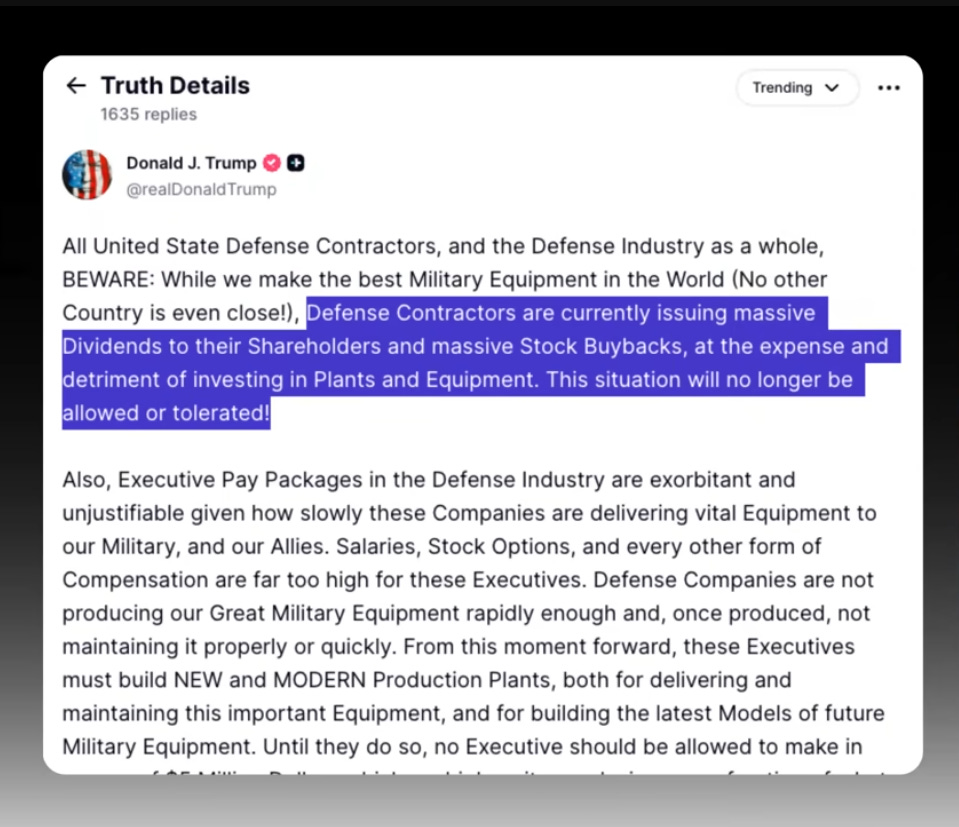
These companies took taxpayer money meant for defense and used it to pump up their own stock prices instead of building ships or fixing planes.
President Trump is demanding that they stop being financial institutions and start being industrial ones.
And the president has said that this economic message is the one he’s going to deliver at Davos in a week and a half - break the financial parasite so the real economy and real families can grow.
Connecting the dots…
Trump’s moves on Greenland aren’t about territorial expansion; they’re about ending NATO as an instrument of imperial control and securing the Western Hemisphere against countries that still operate under monarchies, such as Britain, Denmark, and Canada
The War Plan Red Framework shows us that the American military leadership once understood who the real enemy was, and Trump is reviving that clarity
And domestically, from Wall Street’s housing grab to the Pentagon stock buybacks, Trump is dismantling the cartels that have turned American citizens into serfs in their own country
When you understand the game, and the real game goes back centuries, you can see exactly what Trump is doing and why it terrifies them.
And when you understand the game, you can fight it effectively.
Because we have to build this fight now in 2026.
There’s no better way to celebrate the 250th anniversary of our independence than by finishing off the British Empire once and for all.