
WHO, Gates, Fauci Have Been Sly About the Hantavirus - What We Now Know...
Are they planning another Plandemic before the elections?

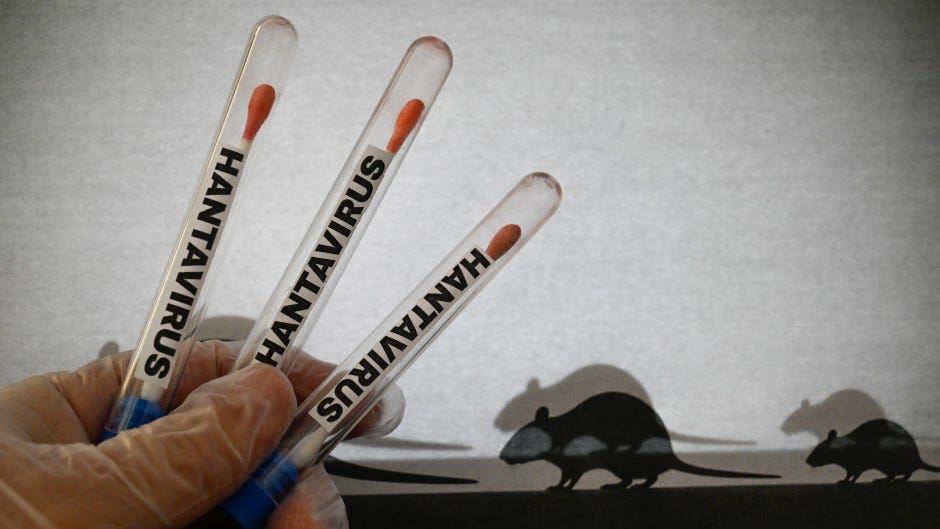
via MJTruth on X
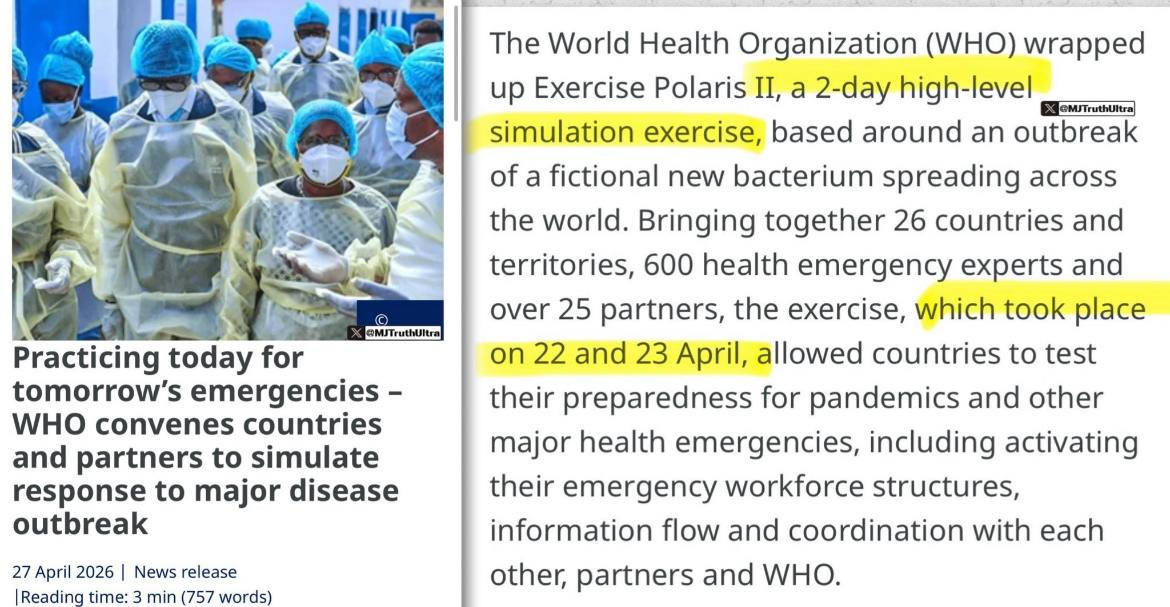
link to above news release / archive
Since COVID, there have been a few scenarios where a new scary virus came out and we were all like, “Here we go again”… but eventually ended up dead in the water.
Now the Hanavirus thing happened and I originally thought the same thing.. but now I’m seeing the very same playbook playing out, exactly as it did with COVID...
Let’s look at a Quick Timeline of Events based on media reports:
April 6, 2026: A 70-year-old Dutch passenger gets sick (fever, headache, stomach issues) on the MV Hondius
April 11: He died on board
April 12–24: Ship stops at St. Helena. The man’s wife and about 29–40 other passengers disembark and fly home. The wife later collapses in Johannesburg and dies - confirmed hantavirus.
Mid-to-late April: Two more passengers (British man and German woman) fall ill. The British man is evacuated critically ill; the German woman dies on May 2.
Early May: Ship’s doctor gets very sick and is evacuated. More people on board show symptoms. Then Tests confirm Andes hantavirus — the supposed only strain that can spread person-to-person in close proximity.Now (May 7, 2026): At least 7–8 cases total (some confirmed, some suspected), 3 deaths. The ship is anchored off Cape Verde with medical teams on board.
Let let a lot of these passengers off the boat, and put them back into society. And now… “Contact tracing” is underway for everyone who left the ship early throughout Europe…
And What is around the corner?
The 2026 FIFA WORLD CUP… where millions from Europe will flood into the US. from June 11 - July 19.
All 16 Host Cities (across USA, Canada, and Mexico):
Canada
Toronto
Vancouver
Mexico
Guadalajara
Mexico City
Monterrey
United States
Atlanta
Boston (Foxborough)
Dallas (Arlington)
Houston
Kansas City
Los Angeles (Inglewood)
Miami
New York / New Jersey (East Rutherford)
Philadelphia
San Francisco Bay Area (Santa Clara)
Seattle
The tournament will bring millions of fans traveling between these cities and around the world.
Bill Gates, Anthony Fauci, and others.. have all “predicted” there will be another global pandemic soon.
Just before the election…
Then There Is This…
Neatly planned and prepared for this year (credit to Laura Aboli on TG)…
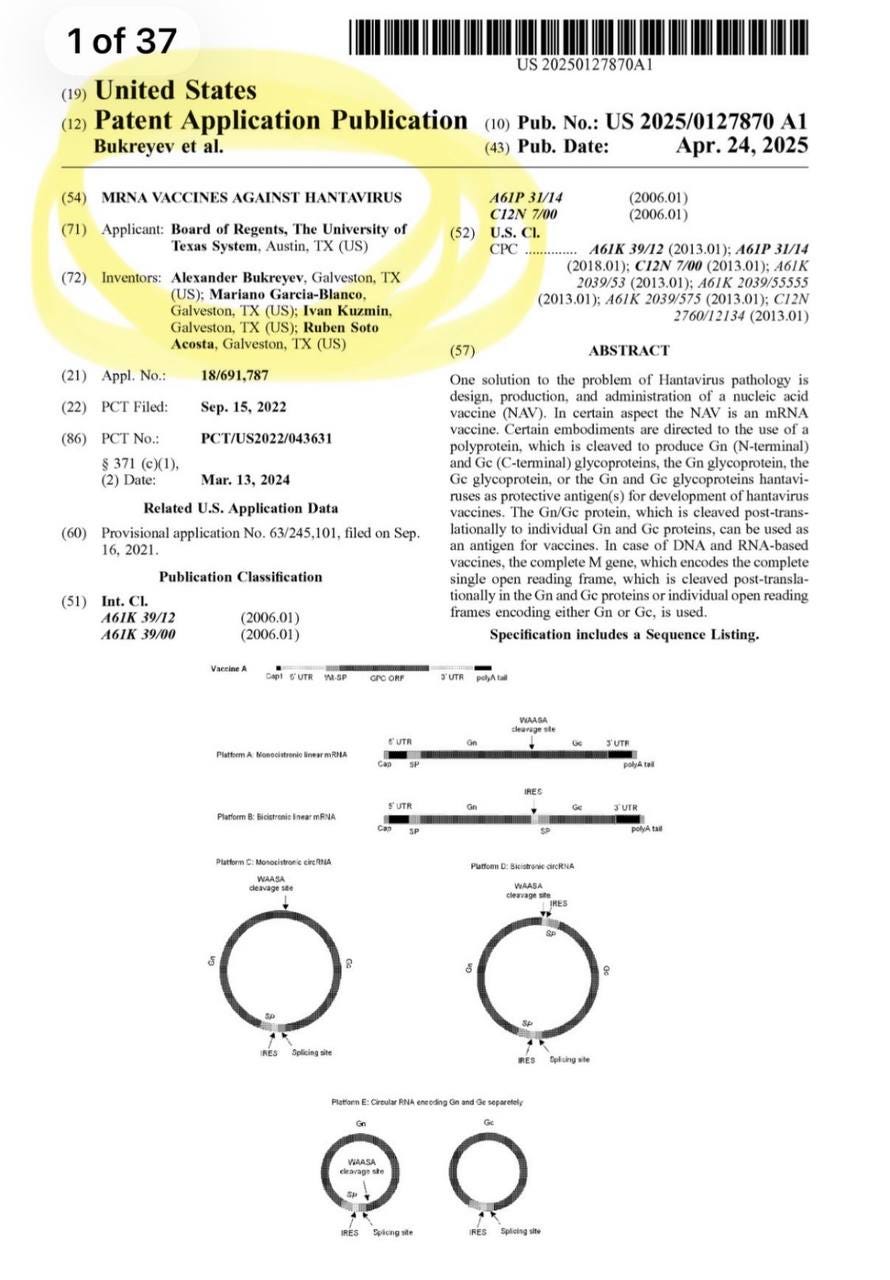
What We Know So Far About Hantaviruses…
Hantaviruses are a family of viruses that can cause serious illness and death in humans.
These zoonotic1 viruses are primarily carried by rodents and are transmitted through contact with their urine, feces, or saliva.
The diseases caused by hantaviruses include hantavirus pulmonary syndrome (HPS) and hemorrhagic fever with renal syndrome (HFRS), with symptoms that can range from mild to life-threatening.
HPS is more common in the Western Hemisphere, including the U.S., affecting the lungs and heart, while HFRS primarily impacts the kidneys and blood vessels in Europe and Asia. Each hantavirus type is generally associated with a specific rodent species.
Human hantavirus infection is most commonly acquired by breathing in air contaminated with virus particles from dried rodent excretions.
Less common transmission methods include contaminated food, rodent bites, and scratches.
While human-to-human transmission is rare, the Andes virus strain of hantavirus is known to transmit between people, primarily through close contact with symptomatic individuals.
Early diagnosis of hantavirus infection can be challenging due to symptoms that resemble other illnesses like the flu or COVID-19, and there is currently no specific cure, though early supportive medical care improves survival.
In early May 2026, the World Health Organization (WHO) reported a cluster of severe respiratory illnesses on a cruise ship carrying 147 passengers and crew.
As of May 4, 2026, 7 cases were identified, including 3 deaths, one critically ill patient, and 3 individuals with mild symptoms.
Two cases were laboratory-confirmed as hantavirus, with samples testing positive for the Andes strain.
This outbreak initiated an international response involving in-depth investigations, case isolation, medical evacuation, and laboratory testing, with health officials in multiple countries monitoring passengers who disembarked from the cruise ship.
The ship, MV Hondius, was off the coast of Cape Verde and later headed to the Canary Islands
From Dr Vladimir Zelenko
Dr. Vladimir Zelenko, also known by his Hebrew name Zev, was an American family physician born in Kyiv, Ukrainian SSR, on November 27, 1973.
His family moved to the United States when he was three, settling in Brooklyn, New York City.
He received his medical degree from the State University of New York at Buffalo in 2000 and was an Orthodox Jew.
Dr. Zelenko passed away on June 30, 2022, at the age of 48, due to cancer.
During the COVID-19 pandemic, Zelenko gained significant attention for promoting a specific treatment protocol.
This protocol, known as the Zelenko Protocol, originally involved a three-drug combination of hydroxychloroquine (HCQ), zinc sulfate, and azithromycin (AZM).
Shortly after sharing the protocol, he modified it to a maintenance mode and it involved Invermetin, zinc sulfate, and either hydroxychloroquine or Quercetin - the reason for the either/or was the result of hydroxychloroquine being intentionally made scarce in many areas and Quercetin is seen as a economic alternative to HCQ; AZM is to be added tot he protocol if someone cam down with COVID-19, including doubling the dosages of the maintenance protocol.
He claimed this treatment was effective for COVID-19 and presented it as an experimental outpatient treatment, initially in a video addressed to then-President Donald Trump on March 21, 2020.
This protocol has been studied in international, multicenter, randomized trials to assess its effectiveness in reducing the severity and duration of COVID-19 symptoms.
Our own experiences and research of the Zelenko protocol was far more positive than most of the naysayers downplaying it.
Do note at the time of COVID-19, anything and everything that redirected a person away from the recommended vaccines was always promoted by Big Pharma, WHO, Fauci, Birx, Collins, and Gates as something untried and not recommended - yet they had no problem pushing vaccines that were only recently concocted where the drugs in the Zelenko protocol have been around for decades.
Independent doctors and medical associations such as Dr William Makis (now in Florida), Americas Frontline Doctors, and the Independent Medical Alliance all report excellent results with using the Zelenko protocol as well as offshoots from his protocol.
Perspectives
Efficacy and Support for the Zelenko Protocol
Dr. Zelenko was considered a ‘true hero’ for his work during the pandemic, particularly for his early and direct stance on the dangers of COVID-19 vaccines.
DarkHorse Podcast
He developed his treatment protocol after finding himself in the epicenter of a large COVID-19 outbreak in upstate New York in March 2020, where thousands were getting sick and dying without treatment.
The Zelenko Protocol, which included hydroxychloroquine, zinc, and azithromycin, was promoted as an effective treatment that reduced mortality rates and improved patient outcomes by preventing severe immune reactions.
A black-tie gala was planned to honor Dr. Zelenko’s legacy with the first ‘Zelenko Freedom Award,’ celebrating his contributions to medical therapeutics and his fight for medical freedom.
Concerns and Scrutiny Regarding the Zelenko Protocol
Dr. Zelenko promoted his three-drug combination as an ‘unfounded’ or ‘unproven’ COVID-19 treatment, and some medical professionals pointed out that he only had anecdotal evidence to support his claims (of the thousands of patients he treated, only 3 died - mostly due to waiting too long to be treated).
Research that emerged after Zelenko began promoting his protocol indicated mixed results or no benefit for hydroxychloroquine as a COVID-19 treatment, leading to negative attention - those tests were found to be biased later on.
Federal authorities investigated Dr. Zelenko due to his claims, particularly regarding the approval of a study of his promoted drugs by the Food and Drug Administration.
“There’s a category of virus called ssRNA. It includes all the covid strains, all the Flus, RSV, Ebola, Marburg, Hantavirus and many more. They can all be treated with the same protocol using zinc ionophores (HCQ, Ivermectin, quercetin, EGCG) taken together with supplemental zinc.”
OUR RECOMMENDATION
This is not medical advice, it is for informational purposes only… Consult your physician (preferably one that practices in natural healing) before starting anything new and/or making any dietary changes…
ZINC is one of the better supplements to take when you are sick or when someone you know and have been in contact with is sick.
Zinc is an essential trace mineral present in every cell of the body and is the second most abundant after iron.
The body cannot produce zinc on its own, so it must be obtained daily from food or supplements.
It plays a crucial role in various bodily functions, including supporting the immune system, aiding wound healing, and contributing to gut health.
Zinc is also involved in the synthesis and release of neurotransmitters like serotonin and helps regulate serotonin receptors, potentially improving GABA function to calm the nervous system.
Additionally, zinc is vital for hormone balancing, muscle recovery, and energy production, and it acts as a trigger for over 200 different enzymes in the body.
It is also essential for RNA, DNA, and protein synthesis, as well as maintaining vitamin A levels.
For adult males, the recommended dietary allowance (RDA) is 11 milligrams per day, and for females, it is 9 milligrams per day.
While most people can obtain sufficient zinc through a balanced diet, certain individuals may benefit from supplementation, including endurance athletes, postmenopausal women, vegetarians, vegans, and those with restricted calorie intake or gastrointestinal issues affecting nutrient absorption.
Signs of zinc deficiency can include poor wound healing, thinning hair, white spots on nails, frequent infections, or a reduced sense of taste or smell.
Zinc supplements are available in various forms, such as capsules, tablets, lozenges, powders, syrups, and drops, and can contain different types of zinc, including zinc sulfate, zinc acetate, zinc gluconate, and zinc picolinate.
Oral zinc supplements may help shorten the duration of a cold if taken early after symptoms appear, and they can also ease diarrhea symptoms in children with low zinc levels.
However, intranasal zinc sprays are not recommended due to their association with the loss of the sense of smell.
Supplementation should ideally be done with a healthcare provider’s guidance, as high doses of zinc can interfere with the absorption of other minerals like copper and may interact with certain medications.
Recommended daily supplemental dosages vary, with some suggestions ranging from 15 to 30 milligrams, and up to 50 milligrams for individuals experiencing burnout or those with low immunity.
When taking higher amounts of zinc over extended periods, it is often recommended to combine it with copper in approximately a 10:1 zinc-to-copper ratio to prevent copper depletion.
Foods rich in zinc include oysters, red meat, poultry, seafood like crab, beans, nuts, whole grains, seeds (such as pumpkin seeds), lentils, cheese, and fortified cereals.
QUERCETIN should be take with Zinc as it opens the cells to allow internal permeation. Without Quercetin, most supplements, minerals, and vitamins will only coat the cells as opposed to entering them.
Quercetin is a bioflavonoid, a type of plant pigment found in various fruits, vegetables, and herbs.
It is present in foods like apples, berries, cherries, grapes, onions, kale, broccoli, and green tea.
It is also available as a dietary supplement in capsule and powder form and is sometimes combined with other ingredients in multivitamins or supplements.
The typical daily intake of Quentin from food varies depending on diet, with some countries reporting intakes from 50 to 800 mg per day.
It is generally recognized as safe when consumed as food.
Quercetin has antioxidant and anti-inflammatory properties and may help reduce inflammation in the body.
It supports immune system function through these effects and helps regulate immune cell activity.
Quercetin is noted for its ability to stabilize mast cells, which reduces the release of histamine, making it potentially beneficial for managing allergic reactions and alleviating symptoms like runny nose, watery eyes, and sneezing.
It also has been shown to support respiratory health by helping to alleviate inflammation in the airways.
Some recommended supplemental dosages for Quentin range from 500 to 1,000 milligrams daily, taken once or multiple times a day.
Specific suggestions include 500 to 2,000 milligrams daily for anti-inflammatory and allergy benefits, 500 to 1,000 milligrams two to four times daily for histamine regulation, and 500 milligrams twice a day, sometimes with 30 milligrams of zinc.
Some formulations of Quentin supplements are designed for enhanced absorption, with one patented form claiming up to 52.8 times higher absorption.
It is also often found in blends with other ingredients like bromelain, stinging nettle, vitamin C, or zinc for synergistic effects.
Quercetin is often recommended when hydroxychloroquine is not readily available.
IVERMECTIN is always an option - taking it is safer than aspirin.
Though we are still gaining knowledge on hanavirus, as a result of COVID we have learned that most viruses are not viruses at all.
Keyword: MOST, meaning care must still be taken until established otherwise).
Since COVID-19, It has been discovered both viruses and cancer have been reacting positively to ivermectin, as well as fenbendazole, bedazzlement, and recombinant methioninase (rMETase)
Ivermectin is an anti-parasitic medication that was discovered in the late 1970s from a microorganism found in Japanese soil.
Its discoverers, Satoshi Ōmura and William C. Campbell, were awarded the Nobel Prize in Physiology or Medicine in 2015 for their work on the drug.
It was first approved for veterinary use in 1981 and for human use in 1987.
Ivermectin is on the World Health Organization’s List of Essential Medicines.
The FDA approved the drug in 1996 for treating several tropical diseases, including onchocerciasis, helminthiasis, and scabies.
It is used to treat parasitic infections like river blindness, intestinal strongyloidiasis, threadworm, and other worm infestations in humans.
]Topical forms of ivermectin are also approved to treat external parasites like head lice and skin conditions such as rosacea.
While ivermectin is generally considered safe when taken appropriately at correct dosages for approved conditions, taking large doses can be harmful and may lead to side effects such as nausea, vomiting, diarrhea, and low blood pressure.
The drug is available in tablet, cream, and lotion forms, with dosages typically based on body weight and the specific parasitic infection being treated.
In 2023, ivermectin was among the most commonly prescribed medications in the United States, with over 400,000 prescriptions.
Why all the push back by Big Pharma over ivermectin?
First, COVID was PLANNED and did not happen naturally - and part of that plan called for the used of vaccinations of which Bill Gates held the patent.
In order to get the vaccines out quickly, and emergency a order was needed from the Federal government and that order required they be NO alternatives available to teh drug being given the emergency order.
There was and its name was ivermectin so this had to be hid.
Only one problem - every African nation provided ivermectin to their citizens to stave off Malaria and when COVID hit, Africa was the ONLY continent to have a minimal exposure to COVID.
OOPS…
FOOTNOTES
Zoonotic diseases, also known as zoonoses, are infectious illnesses that can be transmitted between animals and humans. These diseases can be caused by various pathogens, including viruses, bacteria, parasites, fungi, and prions. More than 6 out of 10 known infectious diseases in people are zoonotic, and approximately 3 out of every 4 new or emerging infectious diseases in humans originate from animals. They can range in severity from mild to serious and can even be fatal. The Nigerian Veterinary Medical Association (NVMA) estimates that zoonotic diseases cause about 2.7 million deaths worldwide annually. Other sources cite that zoonoses are responsible for 2.5 billion cases of human illness and 2.7 million human deaths globally each year. Rabies is an example of a zoonotic disease, and the Federal Government of Nigeria is committed to eliminating it by 2030.
Zoonotic pathogens can spread to humans through direct contact with infected animals or their bodily fluids, through contaminated food or water, or via insect vectors like mosquitoes. Factors that contribute to the emergence and spread of zoonotic diseases include close human-animal interaction, habitat encroachment, rapid population growth, and the globalization of markets and travel. Wet markets, particularly in China, are considered high-risk environments for zoonotic disease transmission due to animals being kept in close quarters. The Northeast region of India accounted for over one-third of all zoonotic disease outbreaks in India between 2018 and 2023, highlighting the region’s vulnerability where people, livestock, and wildlife interact. The World Animal Protection report indicates that 72% of zoonotic diseases in humans originate from wildlife.
Major diseases like Ebola, salmonellosis, SARS, MERS, HIV/AIDS, and the 2009 swine flu are examples of zoonoses. While human infection with animal influenza viruses is uncommon, avian and swine influenza viruses have high zoonotic potential and can occasionally recombine with human strains, leading to pandemics. Vigilance and proactive measures are essential to prevent and control zoonotic diseases. A “One Health” approach, which emphasizes collaboration across human, animal, and environmental health disciplines, is considered necessary for assessing and addressing zoonotic disease risks and implementing effective prevention strategies. This approach was initiated following the 1999 West Nile Virus outbreak, when a one-sided prevention method proved ineffective.
Perspectives
Critiques of Media and Origins of Man-made Pathogens
Some man-made pathogens are designed to be zoonotic and chimeric, leading to fears of pandemics from isolated cases.
Corporate media is criticized for exaggerating risks and promoting panic over treatable health issues, such as a single dairy farmer contracting bird flu.
Effective treatments, including hydroxychloroquine, azithromycin or erythromycin, vitamin D, and zinc, exist for these illnesses.
Need for Investigation into COVID-19 Origins
An international and independent investigation is urgently needed to examine alternative hypotheses regarding the origins of COVID-19, with full cooperation from the U.S. and Chinese governments.
Both natural zoonosis and research-related infection are viable hypotheses for the origin of COVID-19 at this stage of investigation.
Those who claim a natural origin is the only viable hypothesis overlook extensive research on SARS-like viruses in places like Wuhan and the U.S.
Occam’s razor (a problem-solving principle that suggests the simplest explanation among competing hypotheses is often the best one) suggests that the early clustering of virus cases in Wuhan, near areas of close human-animal interaction, supports the theory of zoonotic spillover as a plausible explanation