
United Arab Emirates Quits OPEC, OPEC+

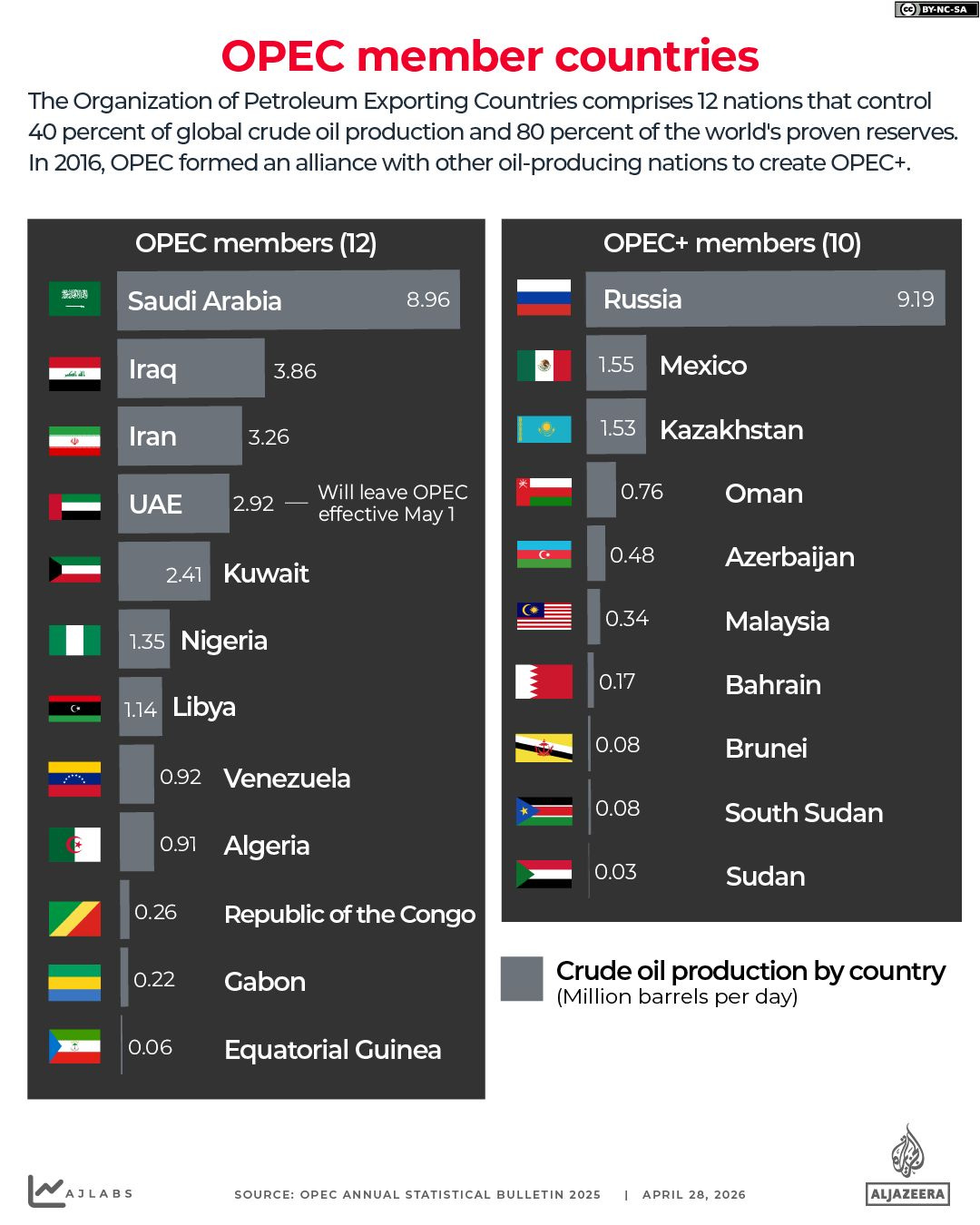
This removes 2 of the top 4 OPEC countries - Iran being the other
Iran has until late this week to resolve their dilemma of moving oil out of the ground before it all starts shutting in, making producing oil very expensive and only at 50% of their most current levels.
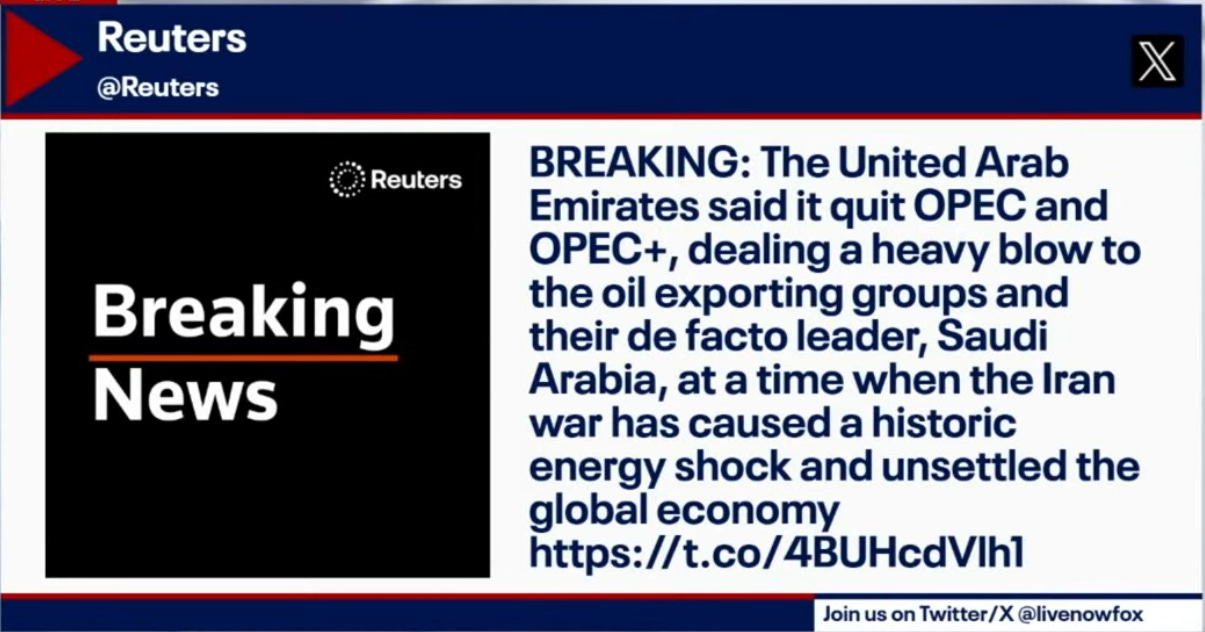
The United Arab Emirates (UAE) announced its withdrawal from OPEC and OPEC+ effective May 1, 2026, ending nearly six decades of membership in the oil-exporting groups.
This decision was formally announced by the UAE’s energy ministry and state-run news agency, WAM.
The UAE is a significant oil producer, previously ranking as the third or fourth largest within OPEC, and its departure is considered a major shift in global energy politics.
The country stated that this move reflects its long-term strategic and economic vision, evolving energy profile, and commitment to contributing effectively to meeting market needs.
The exit occurs amid a historic energy shock caused by the Iran war, which has unsettled the global economy and led to disruptions in the Persian Gulf and the Strait of Hormuz.
These disruptions have hindered oil exports, with a fifth of the world’s crude oil and liquefied natural gas normally passing through this narrow choke point.
Despite the immediate market conditions, the UAE aims to bring additional production to the market gradually, aligning with demand and market conditions, emphasizing a stable, flexible, reliable, and affordable global energy system.
President Donald Trump has criticized OPEC for inflating oil prices, accusing the organization of “ripping off the rest of the world.”
He has also linked U.S. military support for Gulf states to oil prices.
The UAE’s Energy Minister, Suhail Mohamed al-Mazrouei, stated that the timing of the exit was chosen to minimize impact on oil prices and other producing members.
The UAE’s decision to leave OPEC has been rumored for some time, as the Emirates reportedly pushed back against production quotas it considered too low, indicating a desire to increase its own output.
Perspectives
Weakening of OPEC and Global Oil Market Impact
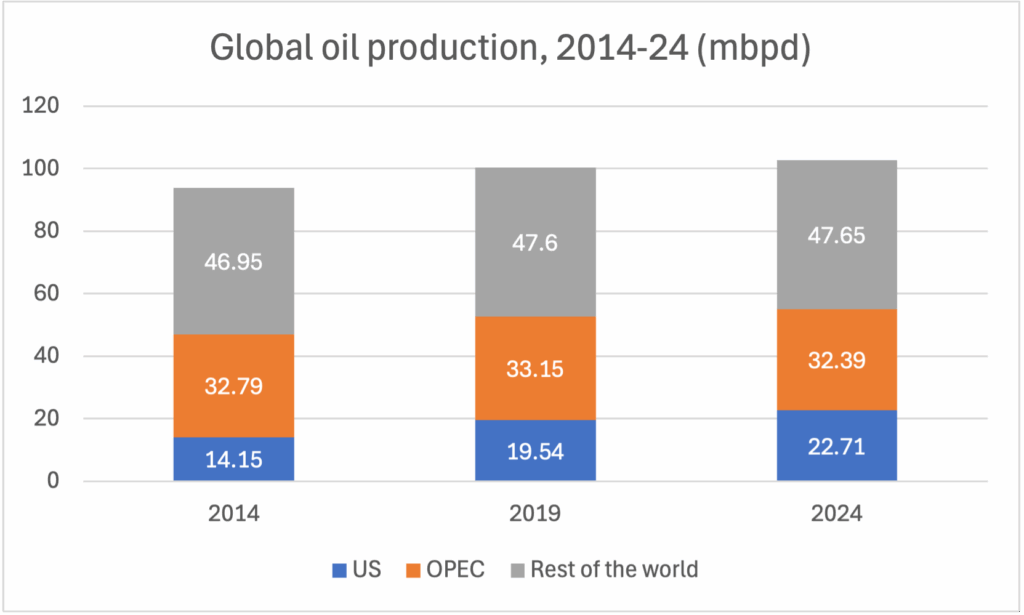
The departure of the UAE, one of OPEC’s largest producers, is a significant blow to the oil-exporting groups and their de facto leader, Saudi Arabia, potentially creating disarray and weakening the group’s unity and control over global oil supplies and prices.
The UAE’s exit removes it from collective output agreements, allowing it to determine its own production levels based on capacity and market conditions, potentially leading to increased oil production from the UAE.
While near-term effects on oil markets may be limited due to ongoing disruptions in the Strait of Hormuz, the longer-term implication is a structurally weaker OPEC, as the UAE is one of the few members with significant spare capacity.
The exit may also exacerbate existing tensions and rifts between the UAE and Saudi Arabia over oil output policy and regional political influence, as Saudi Arabia may struggle to maintain OPEC’s cohesion.
UAE’s Strategic and Economic Vision
The UAE’s decision reflects its long-term strategic and economic vision, evolving energy profile, and a desire for greater flexibility to chart its own path.
The UAE aims to increase investment in domestic energy production and responsibly contribute to meeting global energy demand, especially given increasing demand and disruptions in the Persian Gulf.
The country has felt that OPEC production quotas unfairly limited its ability to export oil and has had disagreements with general OPEC policy for some time.
The exit is also seen as a move to no longer tether its economic or security destiny to a perceived failing regional consensus, particularly given the perceived weakness of the Gulf Cooperation Council during the conflict with Iran.