

via ThreatJournal
What You Need To Know
This week, FBI Director Kash Patel disclosed that the FBI and other law enforcement partners successfully disrupted a domestic terror plot aimed at the UFC Freedom 250 event held on the White House South Lawn.
This landmark gathering, part of America’s 250th anniversary celebrations and coinciding with President Trump’s 80th birthday, was attended by thousands, including lawmakers and other VIPs.
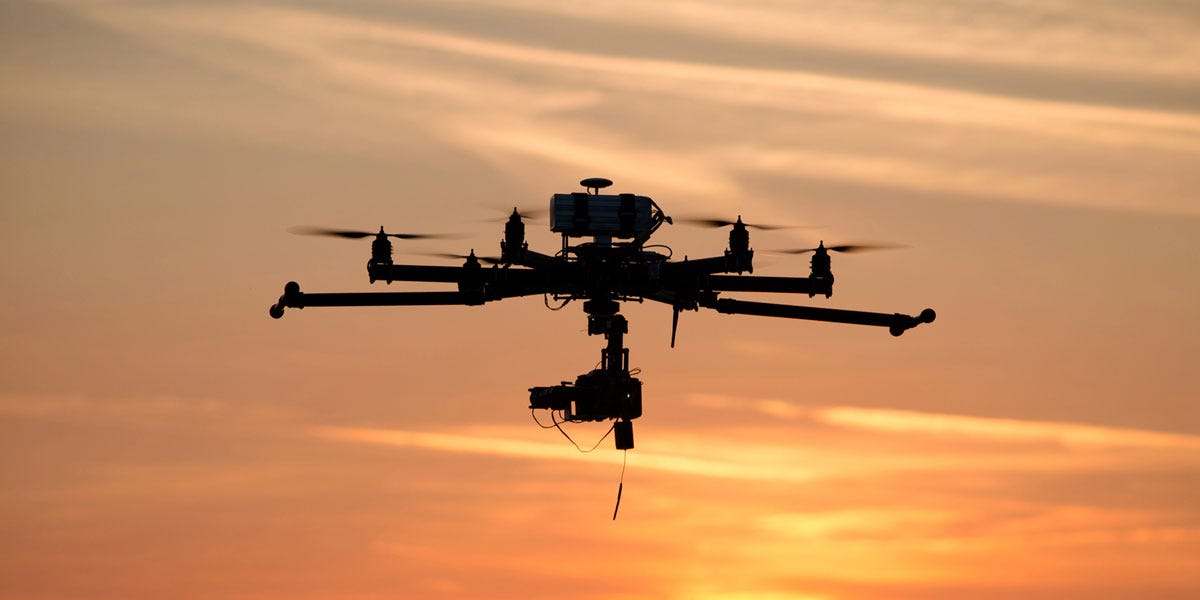
Court documents reveal that the attack plotters coordinated via encrypted platforms to launch explosive-laden commercial drones from the north side of the venue.
The goal was to detonate devices to create mass panic, forcing crowds southward into pre-positioned sniper kill zones targeting “high-value” government officials and others.
Additional plans included breaching the White House perimeter at different points and striking nearby structures.
Discussions referenced acquiring “as many and as deadly as we can get” drone payloads, along with maps, escape routes via the Potomac River, and rendezvous points.
Grievances cited in the chats included anti-government sentiments, corruption, the Epstein files, and the targeting of figures seen as supporting certain policies with which they disagreed.
The plot was discussed in encrypted Signal group chats and other apps, with maps marking drone launch points and sniper positions around the White House and D.C. area.
Participants allegedly pooled money for drones, explosives, tactical gear, firearms, body armor, and ammunition.
The Tip That Exposed the Plot
The investigation was triggered by a concerned mother’s tip on June 10.
Rapid multi-state action by FBI Joint Terrorism Task Forces, the Secret Service, and local partners led to arrests in Ohio, Missouri, Nebraska, and California.
Firearms, ammunition, tactical gear, and incriminating communications reflecting anti-government grievances were recovered.
The broader group reportedly involved upwards of 23 individuals at different levels of involvement across operational, logistics, and support tiers.
None of the arrested suspects were reportedly in D.C. at the time of the event, as the plot was disrupted beforehand.
A meet-up was allegedly planned in Fredericksburg, Virginia, about 50 miles south of D.C., on June 12 to prepare and coordinate before heading to the D.C. area for the June 14 attack.
One suspect admitted to investigators that he planned to drive to the meeting with weapons including an AR-15, ammunition, body armor, and other gear.
The accused face federal charges related to conspiracy to commit acts of terrorism and plotting attacks on government officials and high-value targets.
Drone Violations Surge at Major Events
This plot arrives amid a sharp rise in drone-related security incidents.
Just days before the UFC event, during FIFA World Cup activities in Atlanta, the FBI’s Counter-UAV Task Force seized 21 drones from operators violating TFAs (Temporary Flight Restrictions) around venues like Centennial Olympic Park.
One high-profile case involved Lorenzo Rojas-Martinez, a twice-deported illegal immigrant from Mexico with a prior cocaine distribution conviction.
He was arrested for flying a drone over restricted airspace at the Fan Festival while attempting to record the event.
Prosecutors emphasized risks to public safety, commercial aircraft, and large crowds, with potential fines reaching as high as $100,000.
Of the 3 FIFA host countries, the United States has seen the most drone-related enforcement actions.
Dozens of seizures and incursions have been reported across host cities.
DHS notes that over 50 drones were seized near World Cup sites during the first week or so of the tournament, alongside 145+ incursions in restricted airspace at venues including Atlanta, Dallas, Houston, Kansas City, and others.
An Accessible and Evolving Threat
These incidents illustrate the democratized nature of modern threats. Commercial off-the-shelf drones; cheap, accessible, and easily modified with explosives or cameras, lower the barrier for both ideologically motivated extremists and opportunistic actors testing defenses.
The UFC plotters exploited encrypted apps for communications and planning, while World Cup violators probed no-fly zones during major public events.
Effective countermeasures require layered defenses, including radar and acoustic detection, mobile intercept teams, robust Temporary Flight Restrictions enforced via the FAA’s B4UFLY service, and aggressive prosecution.
Family and community tips remain the earliest warning system, as demonstrated in the UFC plot case.
Law enforcement must treat drone misuse as a serious precursor to terrorism, not a minor regulatory issue.
Proactive intelligence fusion, training on commercial UAV modifications, and swift interagency response will be decisive in protecting mass gatherings, critical infrastructure, and national symbols.