
Founding Fathers Series
Step into history like never before.
Starting today and on a daily basis (Mon thru Fri), we will be posting 2 to 3 videos, about 5 minutes worth of videos, presenting the signers of the Declaration of Independence and the ladies of the American Revolution come alive through vivid, first-person storytelling.
This Series will be tagged on the right column of our blog as Founding Father Series
You may not know some, that does not devalue the contributions they provided in the founding of our country.
Their courage, sacrifice, and triumph unfold in gripping moments that shaped America’s founding.
If you are finding this series informative, continue on with researching the Founding Fathers in the Library of Congress as well as the National Archives. Once there, feel free to hone the search down to a particular Founding Father as well.
Stephen Hopkins
Stephen Hopkins, born on March 7, 1707, was a Founding Father of the United States and a significant figure in Rhode Island during the 1700s. He served as governor of the Colony of Rhode Island and Providence Plantations, chief justice of the Rhode Island Supreme Court, and was a signer of both the Continental Association and the Declaration of Independence. Hopkins was born in what is now Cranston, Rhode Island, and was the second of nine children to William and Ruth (Wilkinson) Hopkins. He was largely self-educated, gaining knowledge by reading classics and receiving instruction in subjects like mathematics and surveying from his mother and other relatives. His father, William, was descended from Thomas Hopkins, who moved to Providence in 1641 after Roger Williams, the founder of Rhode Island.
Hopkins began his political career as a Justice of the Peace in Scituate, Rhode Island, at age 23. He later moved to Providence in 1742 and became a merchant, also forming business partnerships and co-owning an iron foundry that supplied cannons to the Revolutionary army. In 1755, he was elected governor of Rhode Island, a position he held several times until 1766. Hopkins was a strong critic of British policies and taxation, publishing a pamphlet in 1764 that contributed to the concept of "No Taxation Without Representation." He was selected as a delegate for Rhode Island to the First Continental Congress in 1774 and the Second Continental Congress in 1775. Hopkins signed the Declaration of Independence in 1776, supporting his palsied right hand with his left as he did so, remarking, "my hand trembles, but my heart does not." John Trumbull's painting "The Declaration of Independence" depicts Hopkins standing in the back wearing a hat.
William Whipple
William Whipple Jr. was an American Founding Father and a signer of the United States Declaration of Independence. Born on January 14, 1730, in Kittery, in the Province of Massachusetts Bay (now Maine), he was the son of Captain William Whipple Sr., a sea captain and brewer, and Mary Cutt, who came from a wealthy ship-building family. Whipple received his early education in common schools and was also tutored by his mother's cousin, Robert Gerrish, a Harvard graduate. He began his career at sea in his teens, following his father's profession, and by age 21, he became a ship's master. His merchant voyages took him to Europe, Africa, and the West Indies, participating in the profitable Triangle Trade, which involved transporting commodities, including enslaved people, sugar, and rum.
In 1759, before turning 30, Whipple left his life at sea and settled in Portsmouth, New Hampshire, to establish a mercantile business with his brothers. His experiences led him to oppose British commercial controls. He was elected as a representative to the New Hampshire Provincial Congress in 1775, playing a role in New Hampshire becoming the first state to establish a new government after the start of the Revolutionary War. Whipple was also selected to serve in the Continental Congress, where he voted for independence on July 2, 1776, and signed the Declaration of Independence on August 2, 1776. During the Revolutionary War, he commanded a brigade of four militia regiments at Saratoga and was chosen to negotiate terms of capitulation with General John Burgoyne's representatives, signing the Convention of Saratoga. After the war, he served as a state legislator in New Hampshire from 1780 to 1784 and as an Associate Justice of the New Hampshire Superior Court from 1782 until his death on November 28, 1785, at the age of 55.
A Note About Prince Whipple
Prince Whipple was an African American man born in Africa around 1750, who was enslaved and brought to America as a child. He was purchased by William Whipple of Portsmouth, New Hampshire, a merchant who became a signer of the Declaration of Independence and a general in the Continental Army. Prince Whipple served as an enslaved aide, bodyguard, and soldier under General William Whipple during the American Revolution. He was formally manumitted in 1784 after the war.Prince Whipple participated in the American Revolution, fighting at the battles of Saratoga in 1777 and in Delaware. In 1779, he was among twenty enslaved men who petitioned the New Hampshire legislature for freedom. He married Dinah Chase, a free Black woman, in 1781, and after his manumission, they lived together in Portsmouth, New Hampshire.
Perspectives
Prince Whipple’s presence during Washington’s crossing of the Delaware
Prince Whipple is depicted in Emanuel Leutze’s 1851 painting “Washington Crossing the Delaware” and Thomas Sully’s painting “Passage of the Delaware.”
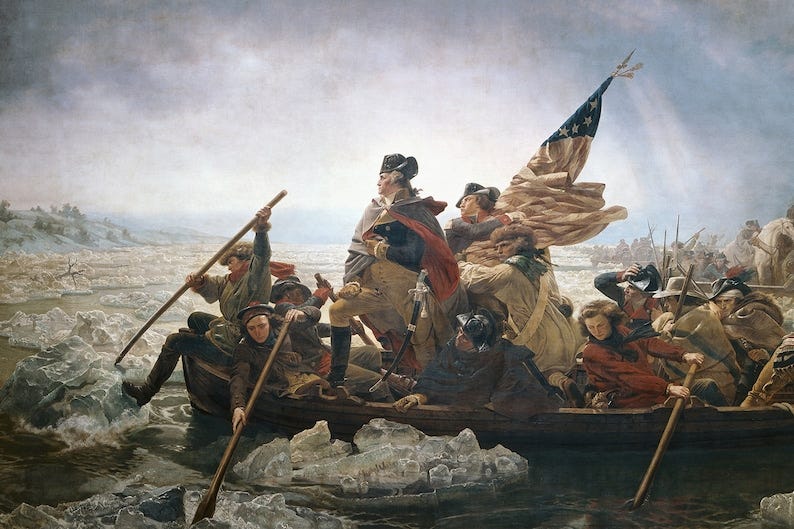
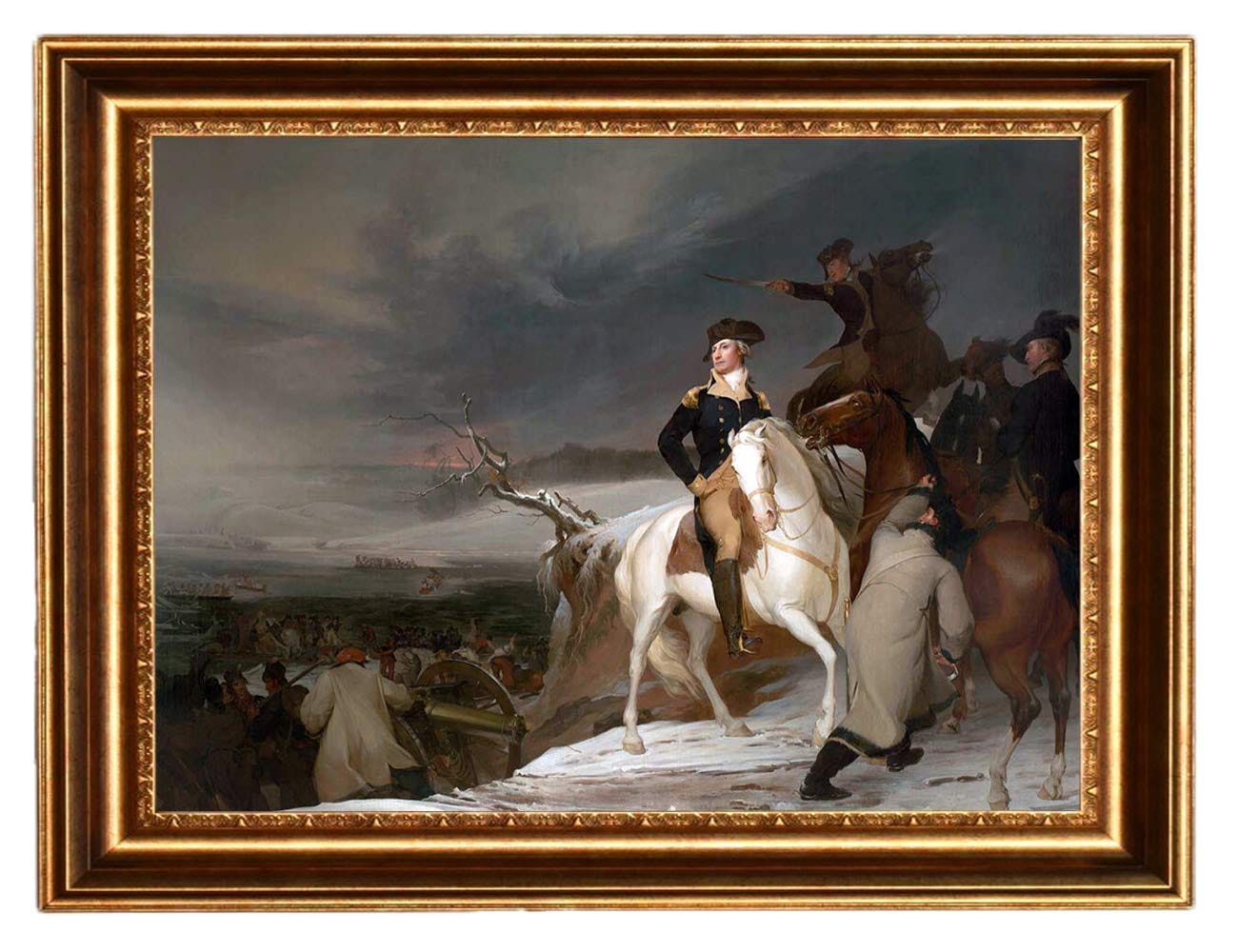
Some accounts state that William Whipple and Prince crossed the Delaware with General George Washington’s army on Christmas Eve of 1776, for a surprise attack on the British.
Thomas Lynch, Jr.
Thomas Lynch Jr. was a signer of the United States Declaration of Independence as a representative of South Carolina, making him one of the Founding Fathers of the United States. He was born on August 5, 1749, near Georgetown, South Carolina, at his family's Hopsewee Plantation. His father, Thomas Lynch Sr., was also a prominent figure, serving in the Continental Congress and signing the 1774 Continental Association. Thomas Lynch Jr. received an extensive education, attending the Indigo Society School in Georgetown before studying at Eton and Cambridge in England and training in law at the Middle Temple from 1764 to 1772. Upon returning to South Carolina in 1772, he decided against practicing law and became a planter, with his father giving him the Peach Tree plantation.
In 1776, Thomas Lynch Jr. was elected to the Continental Congress to replace his ailing father, who had suffered a cerebral hemorrhage. He traveled to Philadelphia despite his own poor health and signed the Declaration of Independence. Thomas Lynch Jr. was the second-youngest member of Congress and the fifty-second signer of the Declaration of Independence. He and his ill father began the journey back to South Carolina in December 1776, but his father died in Annapolis, Maryland, during the trip. Thomas Lynch Jr.'s own health continued to decline, and he sailed to Europe in 1779 with his wife, Elizabeth Shubrick, in search of a cure; however, their ship was lost at sea, and they were never seen again. They had no children.
It was really sad to read about Thomas Lynch Jr.