
Reactions of Russia and China to Operation Epic Fury

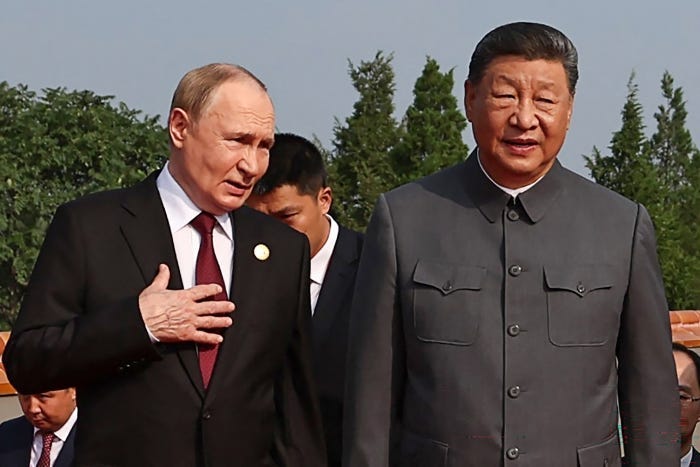
Following the U.S. and Israeli military strikes against Iranian targets in Operation Epic Fury, Russia and China issued statements of condemnation and called for de-escalation.
Russia’s Reaction
Russia’s Foreign Ministry characterized the strikes as “a pre-planned and unprovoked act of armed aggression against a sovereign and independent U.N. member state” and accused the U.S. and Israel of potentially plunging the Middle East into “uncontrolled escalation.”
Russia also suggested that Washington and Tel Aviv were falsely escalating threats regarding Iran’s nuclear program to pursue regime change.
There were unconfirmed reports of the U.S. striking the Iran Atomic Energy Agency headquarters in Tehran, the explosive research testing facility at Parchin, and other strikes at the Isfahan nuclear complex, with the Bushehr reactor, operated with Russian help, presenting an escalatory risk.
Earlier, Russia also criticized the U.S. for its actions in Venezuela, labeling it an act of aggression and calling for a U.N. Security Council meeting.
Russia’s Foreign Ministry labeled the strikes as “a pre-planned and unprovoked act of armed aggression” against a sovereign state and called for an immediate return to diplomatic talks.
Russia accused the U.S. and Israel of falsely exaggerating threats from Iran’s nuclear program to pursue regime change, warning of uncontrolled escalation and potential catastrophe in the Middle East.
Russia initially suggested diplomatic solutions and showed little interest in directly supporting Iran, with President Putin proposing discussions on an exit ramp from the conflict.
Despite previous support from Iran for Russia’s war effort in Ukraine, Russia was considered unlikely to return the favor with military support for Iran.
China’s Reaction
China expressed great concern and called for an immediate halt to military actions, emphasizing the need for no further escalation, a resumption of dialogue and negotiation, and efforts to uphold peace and stability in the Middle East.
China’s Foreign Ministry spokesman stated that Iran’s sovereignty, security, and territorial integrity should be respected.
China, in particular, relies on Gulf energy flows, making it wary of disruptions, and observes these developments carefully to avoid direct confrontation while geopolitical dynamics unfold.
China’s Foreign Ministry called for an immediate cessation of military actions, no further escalation, and a resumption of dialogue and negotiation to uphold peace and stability in the Middle East.
China’s statement reflected concern over instability in a region crucial to global energy markets and its Belt and Road investments, warning that further escalation could destabilize the entire Middle East.
China remained passive, recognizing its dependence on Middle Eastern oil and the risks associated with escalating tensions, indicating a transactional nature in its international partnerships.
Overall
Both Russia and China have previously criticized U.S. plans for a missile defense system, calling it destabilizing and expressing concerns about its potential to strengthen U.S. capabilities for combat operations in space.
Both China and Russia are closely monitoring the region, and it is considered highly probable that they could obtain classified information regarding the U.S. during the operation.
Sources