
PERESTROIKA Announced by the Cuban Dictatorship

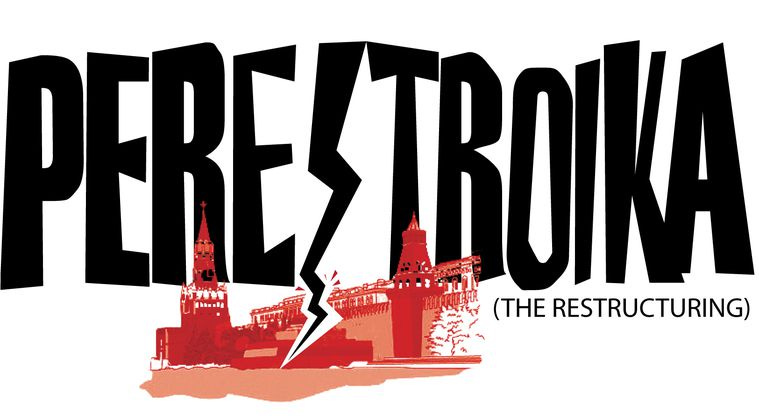
Cuban opposition media reports that the Cuban dictatorship has just announced the PERESTROIKA1 on national television as the NATIONAL ENERGY GRID of the Communist-ruled Island COLLAPSED
The same death decree that accelerated the collapse of the Soviet Union.
The measures will be as follows:
The Cuban Regime will allow Exiled Cubans, without effective residence in Cuba, to participate in or own private businesses in Cuba.
Exiled Cubans can partner with Cuban private companies through their companies. Not just small businesses, they can encompass infrastructure and large-scale operations.
The Regime will allow exiled Cubans to participate in the country’s financial and banking system. This opens up participation for Cubans in the business and financial realms.
Exiled Cubans will be able to open foreign-currency bank accounts at Cuban banks.
For land-related businesses, usufruct rights will be granted.
Exiled Cubans will be able to establish alliances with the Cuban state or private entities.
Such an announcement will be carried out by order of the United States.
It will be announced by Oscar Pérez-Oliva Fraga2, grandson of Raúl Castro.
Díaz Canel3 is out of the announcement.
Perestroika was a political reform movement within the Communist Party of the Soviet Union during the late 1980s, primarily associated with its general secretary, Mikhail Gorbachev. The term, meaning “restructuring” in Russian, encompassed a series of political and economic reforms intended to modernize and revitalize the Soviet economy. It aimed to make socialism more efficient by incorporating elements of liberal economics and was also paired with Gorbachev’s glasnost (”openness”) policy reform. The initial goal of Perestroika was not to end the planned economy, but rather to improve it to better meet the needs of Soviet citizens. Gorbachev launched Perestroika when he became head of the Communist Party in 1985.
Under Perestroika, Gorbachev introduced market reforms, multi-candidate elections, increased free speech, and reduced press censorship. These changes loosened centralized control over many businesses, allowing some farmers and manufacturers to make independent decisions about products, production volume, and pricing. Perestroika also aimed to improve economic well-being, raise morale through greater public involvement and transparency, and optimize accountability of officials. Despite these intentions, Perestroika exacerbated existing shortages and created political, social, and economic tensions within the Soviet Union, ultimately increasing instability amid rising prices and worsening shortages. It is argued that these reforms ironically undermined the legitimacy of the autocratic USSR and facilitated its dissolution, paving the way for liberal capitalism
Oscar Pérez-Oliva Fraga is the Deputy Prime Minister of Cuba, a position he was promoted to on October 18, 2025, a decision approved by the Political Bureau of the Central Committee of the Communist Party and ratified by the Council of State at the proposal of President Miguel Díaz-Canel. He also retains his role as Minister of Foreign Trade and Foreign Investment concurrently with his duties as deputy prime minister. Before this, he was appointed Minister of Foreign Trade and Investment in May 2024, after serving as Vice Minister of the same ministry starting in January 2024. Pérez-Oliva Fraga is an electronics engineer by profession and has developed his career within the Cuban state enterprise system.
Pérez-Oliva Fraga is a significant figure in the Cuban government, notably for his family lineage as the great-nephew of Fidel and Raúl Castro. He is the son of Mirsa Fraga Castro and the grandson of Ángela Castro, the older sister of Fidel and Raúl Castro. Born in 1971 in Havana, he is 54 years old as of 2026. He has been described as a part of the direct family nucleus that has maintained power in Cuba since 1959. In his role, he has been working to revitalize Cuba’s economy through reforms aimed at creating a “dynamic business environment,” including allowing Cuban nationals living abroad to invest in and own businesses on the island. Pérez-Oliva Fraga has stated that a “blockade” by the United States is hindering these economic efforts.
It has been reported that Oscar is the true leader of Cuba, with Miguel Díaz-Canel Bermúdez serving as a figurehead.
Miguel Díaz-Canel Bermúdez is a Cuban politician and engineer who has served as the 8th First Secretary of the Communist Party of Cuba since 2021 and as the 17th president of Cuba since 2019.