
Fair Court? Or Political Theater? Judge Alvin Hellerstein Appointed to the Maduro Case
This judge could set off very problematic issues in which SCOTUS may need to inject itself - or even We the People...

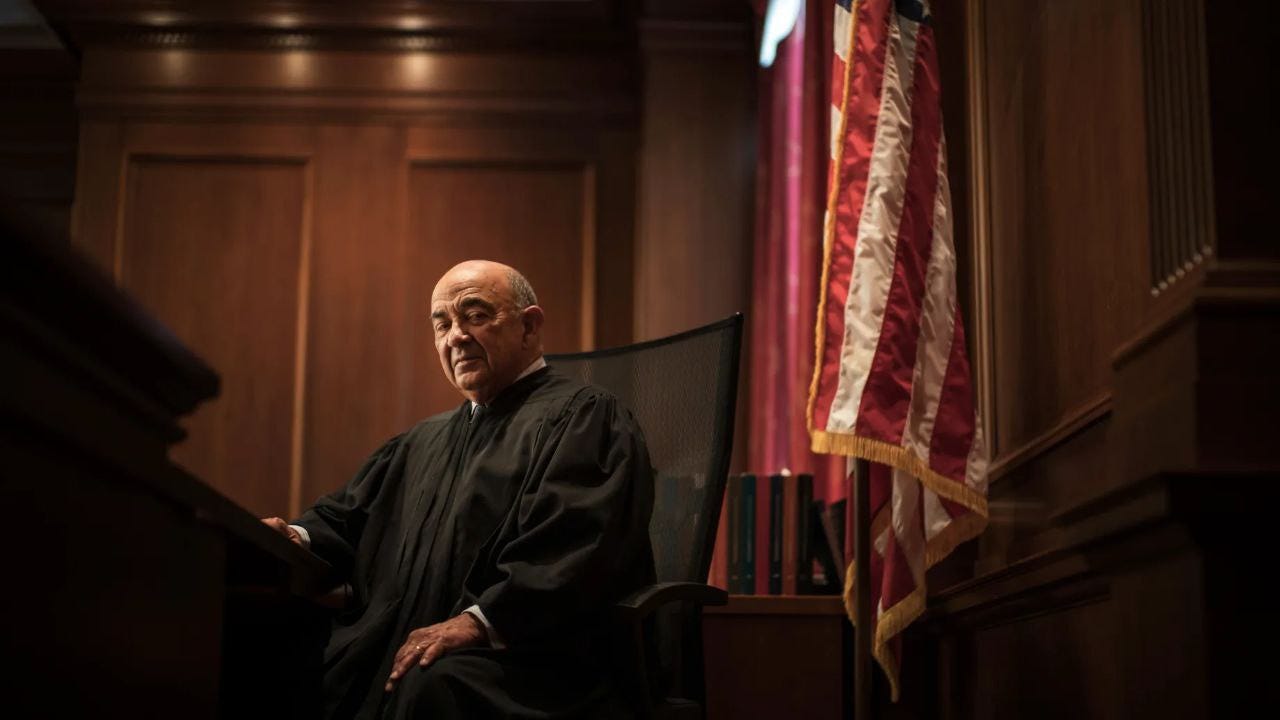
via Tony Lane, x.com
BREAKING: The Maduro case is heading to a Clinton-appointed judge.
Meet Alvin Hellerstein — 92 years old, appointed by Bill Clinton, and a judge who has ruled against Trump in the past.
Now this judge is set to oversee one of the most explosive international criminal cases in decades.
That raises serious questions …
Is this about justice - or politics?
Can the public expect neutrality?
Why this judge, at this moment?
The courtroom just became the story.
Be sure to share this, keep tabs on this judge, and expose his actions during this case…
Which brings up the question…
How are Judges Assigned to High-Profile Cases?
Case assignment in federal district courts is typically (which means not always, this has to be discovered for the Maduro case) handled by a random drawing or rotation system to ensure an equitable distribution of cases and to prevent judge shopping.
The chief judge of each district court is responsible for enforcing the court’s rules and orders on case assignments and for overseeing this process.
Each court uses written plans or systems for assigning cases.
Appeals courts and the Supreme Court use similar systems, though the number of judges assigned can vary depending on the type of filing.
For instance, emergency motions might only require one judge, while final decisions in essential cases may require the full court.
Judges may also be assigned based on their technical expertise for specific case types or geographical considerations.
The Judicial Conference of the United States has strengthened its policy on random civil case assignments to limit litigants' ability to select judges based on where they file lawsuits.
In some state courts, the chief justice or the administrative head of the state court may assign a specific trial judge to a high-profile case.
The chief judge or administrative head exercises discretion when appointing a trial judge for such cases, unless there is a strict policy of random assignment.
The assigned trial judge is then responsible for setting the case scheduling order, communicating with parties, deciding pretrial motions, overseeing trials, and overseeing a high-profile case team, including setting policies for media coverage and public access.
Concerns have been raised about the randomness of judge assignments, particularly in high-profile cases.
Some sources indicate that the assignment process, while claiming to be random, might not always be so.
This issue has drawn attention due to controversies surrounding recent high-profile case assignments.
Both Democrats and Republicans have acknowledged that judge shopping damages the judicial system, with Chief Justice John Roberts stating that random case assignment is essential for public confidence in the courts.
Perspectives
Critiques of Judge Assignment Randomness and Potential for Bias
The claim that federal courts assign judges and juries at random is questionable, as evidenced by specific judges repeatedly receiving high-profile cases involving figures such as Donald Trump.
Some judges appointed by Donald Trump, like Judge Tanya Chutkin and a judge in the Northern District of Texas, have been assigned to high-profile cases involving Donald Trump or figures like Elon Musk, raising concerns due to their past rulings.
There are instances where specific judges, like Judge Maureen Clancy, are seen as an ‘unlucky draw’ for a defendant due to their reputation for being law enforcement-friendly and tough sentencers.
Support for Random Assignment and Concerns about Judge Shopping
The principle of random case assignment is crucial for public confidence in the courts, a view supported by Chief Justice John Roberts and recognized by both Democrats and Republicans.
Divisional judge-shopping, in which litigants strategically choose the division to select a pool of eligible judges, can affect high-profile cases and is seen as problematic.
To prevent judge shopping, the Judicial Conference strengthened its policy on random civil case assignments, particularly in districts where single-judge divisions allowed litigants to effectively pre-select their judge.
Standard Practices for Judge Assignment
Federal courts generally aim for random judge assignments to ensure equitable distribution of caseloads and prevent judge shopping, with chief judges responsible for enforcing these rules.
Some state courts allow the chief justice or administrative head to assign specific trial judges to high-profile cases, exercising discretion in the selection.
In the Supreme Court, justices are not ‘assigned’ to cases; instead, if the Chief Justice is in the majority, they assign the majority opinion, and the Court decides which cases to hear based on conflicting decisions or egregious errors.
92?!
On the one hand it will be another case study of contrasts - blind justice vs TDS-driven outcomes. Especially past handling of criminal cases against other huge narco-ops.
On the other hand, influence by politics rather than based on real legal issues and their intended benefactors of "rule of law", US citizens.