
Dealing with Regime Change: Approaches and Outcomes

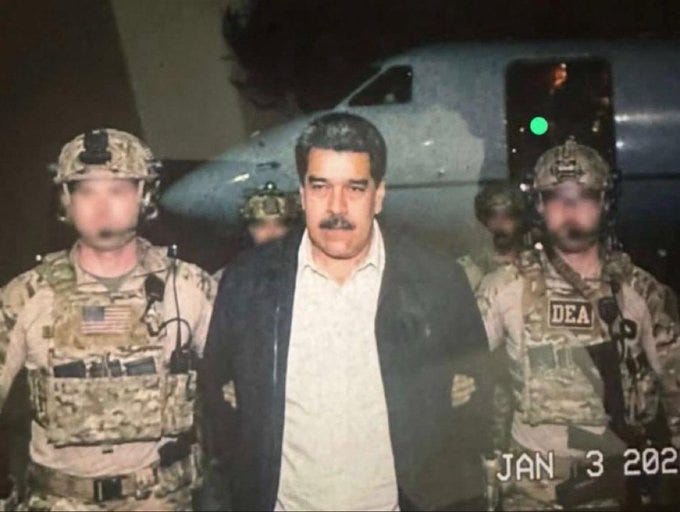
The following 2 weeks in Venezuela will be VERY crucial to the future of the people of that country.
The two most helpful books for understanding coups and regime changes are…
Both are available as downloadable PDFs from our online library.
GROK: External Regime Change, Democratic Approach
External regime change refers to efforts by foreign actors—such as states, international organizations, or NGOs—to alter or replace a government in another country.
This can range from military interventions to non-coercive support for internal transitions. Historically, forcible regime change (e.g., invasions or coups backed by external powers) has rarely led to stable democracy; it often results in civil unrest, authoritarian backsliding, or reduced democratic quality.
A “democratic approach” typically implies non-violent, institution-building methods aimed at fostering genuine democratic transitions, often through diplomacy, aid, and civil society support rather than top-down imposition.
Challenges with Traditional External Regime Change
Foreign-imposed regime change (FIRC) succeeds in promoting democracy under limited conditions:
It works best when restoring a previously democratic government disrupted by events like coups or occupations (e.g., post-WWII restorations in Western Europe, or UN-authorized actions in Haiti in 1994 and Sierra Leone in 1997-1998).
Success is more likely in countries with pre-existing favorable factors, such as economic development, ethnic homogeneity, and a history of democratic institutions (e.g., U.S. occupations of Japan and West Germany after 1945).
However, FIRC often fails because interveners lack local knowledge, impose illegitimate institutions, or prioritize other goals over democracy. Leaders installed this way may resist elections to maintain power, leading to dictatorships (e.g., Iran’s Shah in 1953 or Chile’s Pinochet in 1973). Weak states vulnerable to intervention are least equipped for democratization, heightening risks of instability.
International law generally prohibits forcible regime change as a violation of sovereignty and self-determination under the UN Charter (Article 2(4)), with exceptions only for self-defense, UN Security Council authorization, or rare cases of restoring elected governments via invitation or multilateral action.
Unilateral actions, even for “democratic” reasons, face widespread criticism and lack legal consensus.
Democratic Approaches to External Regime Change
A democratic approach emphasizes non-violent, bottom-up strategies that empower local actors and build sustainable institutions, often through “democracy promotion” rather than direct overthrow.
These methods correlate positively with successful transitions, especially in regimes open to change (e.g., party-based authoritarian systems) and supportive international environments. Key tools include:
Democracy Assistance and Capacity Building: External actors provide funding, training, and networking for civil society, political parties, trade unions, media, and NGOs.
This fosters pluralism, civic education, and economic equity.
Organizations like the Friedrich-Ebert-Stiftung (FES) exemplify this with long-term programs in countries like Portugal (1974 transition), South Africa (1994), Serbia (2000), Peru (2000), and Tunisia (2011), focusing on union strengthening, election monitoring, and dialogue without military involvement.
Foreign aid targeted at institutions (e.g., U.S. or EU programs) can strengthen judiciaries, legislatures, and electoral systems, avoiding leader-focused overthrows.
Conditionality and Diplomatic Pressure: International organizations tie aid, trade, or membership to democratic reforms (e.g., EU accession requirements for Eastern European countries post-Cold War, which encouraged transitions without force).
Sanctions, monitoring, and reporting can incentivize change, as seen in regional bodies like the OAS, AU, or OSCE, which use suspensions or non-recognition against undemocratic regimes while respecting non-intervention.
Supporting Internal Reformers: Guidance for aspiring democrats includes clear communication of reform goals, building broad coalitions, ensuring economic inclusion, and leveraging international norms to deter authoritarian interference.
Democracies can “deter” hybrid threats from authoritarians by reinforcing norms and values through alliances and public diplomacy.
These approaches avoid the pitfalls of military intervention, which often incurs high costs (e.g., the Iraq war’s trillions in expenses and massive casualties) and yields minimal democratic gains.
Instead, they rely on multi-stakeholder collaboration and adaptability, though challenges persist in repressive contexts with laws targeting “foreign agents.”
Overall, evidence suggests that patient, non-coercive external support is more effective for lasting democratic regime change than aggressive imposition.
Tunisia’s Democratic Transition: A Case Study in Non-Violent, Bottom-Up Change with External Support
Tunisia’s Jasmine Revolution (December 2010–January 2011) marked the start of the Arab Spring, leading to the ouster of longtime authoritarian President Zine El Abidine Ben Ali on January 14, 2011. Unlike many Arab Spring uprisings that descended into civil war or renewed dictatorship, Tunisia achieved a relatively successful democratic transition from 2011 to around 2021, often hailed as the region’s only enduring democracy during that period. This case exemplifies a largely internal, non-violent regime change supported by external democracy assistance, aligning with “democratic approaches” emphasizing civil society empowerment, institution-building, and diplomatic incentives over coercion.
The Revolution: Internally Driven with Minimal Direct External Involvement
The uprising began in Sidi Bouzid after street vendor Mohamed Bouazizi’s self-immolation in protest against police harassment and economic despair. Protests spread rapidly via social media (e.g., Facebook and Twitter), bypassing state censorship and mobilizing a broad coalition: youth, trade unions, lawyers, and middle-class professionals frustrated with corruption, unemployment, and repression.
Key internal factors: A strong, pre-existing civil society played a pivotal role. The Tunisian General Labor Union (UGTT), human rights groups like the Tunisian League for Human Rights (LTDH), and women’s organizations (e.g., Tunisian Association of Democratic Women, ATFD) organized strikes and protests. Social media enabled a “digital elite” to amplify grievances and coordinate nationally.
Limited pre-2011 external role: Ben Ali’s regime restricted foreign democracy aid, so U.S. and EU support was modest and indirect (e.g., limited NGO funding). No evidence of direct foreign orchestration; the revolution was authentically Tunisian.
Ben Ali fled to Saudi Arabia, triggering a transitional period.
Post-Revolution Transition (2011–2021): Successes Through Compromise and External Assistance
Tunisia’s transition featured inclusive dialogue, free elections, and institutional reforms:
2011–2014: Elections for a National Constituent Assembly; Ennahda (Islamist party) won a plurality but formed coalitions. Political assassinations in 2013 sparked a crisis, resolved by the National Dialogue Quartet (UGTT, employers’ union, bar association, human rights league)—awarded the 2015 Nobel Peace Prize for brokering a compromise.
2014 Constitution: Progressive document guaranteeing freedoms, gender equality, and separation of powers.
Elections: Free and fair in 2014 and 2019; power alternated peacefully.
External support as a democratic approach:
U.S. and NGOs: Post-2011, influx of aid (~$1.4 billion by 2020). Organizations like the National Democratic Institute (NDI), the International Republican Institute (IRI), Freedom House, and the Carter Center provided training for parties, election monitoring, and civil society capacity-building. U.S. diplomacy encouraged inclusion.
EU: Major donor (€485 million 2011–2013; over €2 billion total grants). Programs via the European Instrument for Democracy and Human Rights (EIDHR) funded NGOs, judicial reform, and media. Conditionality tied aid/trade to reforms; German foundations (e.g., Konrad Adenauer, Friedrich Ebert) expanded partnerships.
Other: UN (OHCHR office), international NGOs saturated civil society with technical assistance, though sometimes criticized for top-down approaches overlooking local capacities.
This non-coercive support empowered local actors, fostering pluralism without imposition. Transitional justice efforts (e.g., Truth and Dignity Commission) received international funding but faced domestic challenges.
Challenges during transition:
Persistent economic issues (high youth unemployment, inequality) fueled discontent.
Polarization between secularists and Islamists; security threats (e.g., terrorism) strained reforms.
Yet, Tunisia maintained “free” status (Freedom House) until ~2021.
Backsliding Under President Kais Saied (2021–Present)
Elected in 2019 as a populist outsider, Saied exploited economic crises and political gridlock. On July 25, 2021, he invoked emergency powers to suspend parliament, dismiss the prime minister, and rule by decree—widely seen as a self-coup.
Consolidation of power: Dissolved parliament (2022), imposed a hyper-presidential constitution via low-turnout referendum, undermined judicial independence, and controlled the electoral commission.
Repression: Arrests of opponents, journalists, and critics; restrictions on NGOs receiving foreign funding; media crackdowns.
2024 Election: Saied won ~90% with 28% turnout; opposition candidates barred or imprisoned.
As of early 2026, Tunisia is rated “Partly Free” (Freedom House 2025 score: 44/100) or lower, with ongoing authoritarian drift. Economic woes worsen (high debt, inflation, rejected IMF loans), risking instability.
Lessons for Democratic External Regime Change
Tunisia illustrates the successes of non-violent, bottom-up transitions aided by patient external support:
Strengths: Pre-existing civil society, elite compromise, and targeted aid (training, funding) built sustainable institutions.
Limits: External actors couldn’t overcome structural economic failures or populist backlash. Over-reliance on civil society funding sometimes created inefficiencies.
Compared to forcible interventions (e.g., Iraq), Tunisia’s organic change with supportive (not impositional) aid yielded better initial democratic outcomes—though vulnerable to reversal.
Evidence shows non-coercive democracy promotion correlates with progress in receptive contexts, but lasting success requires addressing socio-economic grievances alongside political reforms. Tunisia remains a cautionary yet hopeful case: civil society resilience persists, offering potential for future recovery.
What Grok Missed About Tunisia
EU’s Ursula Von der Leyen was supposed to assist Italy’s Giorgia Meloni with easing the stress caused by the volume of immigration - Ursula threw Giorgia under the bus instead with backroom betrayals.
From our post…

We learn that Ursula was letting the southern European nations basically rot while she redirected funds meant for them towards the war in Ukraine.
Even if you are President Trump (and not that he would do this), you DON’T cross Giorgia Meloni without dire consequences - Giorgia has no problem leveraging when she knows against anyone playing dirty.
To wit - the Tunisia transcripts….
In July 2023, the European Union and Tunisia signed a Memorandum of Understanding for a strategic and global partnership.
This agreement was formalized in Carthage during a meeting that included Italian Premier Giorgia Meloni, European Commission President Ursula von der Leyen, Dutch Prime Minister Mark Rutte, and Tunisian President Kais Saied.
The deal, which has been under discussion since June 2023, aims to curb irregular migration from Tunisia to Europe.
The partnership includes a financial aid package from the EU to Tunisia.
Von der Leyen announced that the EU was ready to provide Tunisia with over €1 billion across trade, investment, and energy cooperation.
Specifically, the agreement involved an initial package of €255 million for Tunisia’s state budget and migration management, with €150 million provided immediately.
The EU and Italy have also promised additional support, such as a €50 million aid package for energy projects and credits for small and medium-sized businesses.
A key objective of the agreement is to manage migration flows and strengthen border controls to prevent irregular departures to Europe, particularly to Italy.
The deal also includes provisions for the readmission of undocumented Tunisians and cooperation on renewable energy development.
Meloni has promoted this partnership as a potential model for future relations with North African countries and as part of her broader ‘Mattei Plan’ for Africa.
Perspectives
Support for the EU-Tunisia Partnership
Italian Prime Minister Giorgia Meloni expressed gratitude to the European Commission for its work and confirmed her readiness to return to Tunisia with Ursula von der Leyen to accelerate the implementation of the EU package. She views the partnership as essential to Tunisia’s political and security stabilization and democratic growth, and it also benefits Italy.
Ursula von der Leyen stated that the EU’s objective is to invest in shared prosperity with Tunisia, emphasizing five pillars, including migration. She highlighted Tunisia’s potential in renewable energy and expressed the EU’s commitment to supporting its development.
Meloni believes the agreement is a ‘completely new’ and ‘egalitarian’ approach, grounded in mutual interest, and aligns with her Africa policy and migration strategy to end irregular arrivals in Italy. Tunisian President Kais Saied reportedly appreciates Meloni’s rhetoric about dealing with nations on an equal footing.
Meloni indicated that the initial agreement was intended to break an impasse with the International Monetary Fund and to aim for a true partnership with the EU. She also emphasized that the situation in Tunisia is now an ‘European problem,’ not solely an Italian one.
Concerns and Criticisms Regarding the Partnership
European Union states expressed ‘incomprehension’ regarding the Tunisia migration pact, according to Josep Borrell, the EU’s chief diplomat.
Despite the agreement, the number of people crossing from Tunisia to Italy increased by almost 70% since the pact was signed in July. However, experts noted that poor weather in May made a rise in June and July inevitable.
The agreement’s announcement took Tunisia by surprise, with a representative from the Tunisian Forum for Economic and Social Rights (FTDES) stating that they learned of the signing via Ursula von der Leyen’s tweet.
Tunisian President Saied has consistently stated that Tunisia will not accept returns of third-country nationals or become a processing center for the EU to check asylum claims.