
Ambassador Jamieson Greer Announces United States-European Union Action Plan for Critical Minerals Supply Chain Resilience

Why This is Important: President Trump has been moving us away from global dependencies and towards self-sufficiency. The E.U. had been dependent upon the U.S. for many things - now it’s time for the E.U. to pay us back. (Monroe and Hamilton economics)
Released 24 April 2026
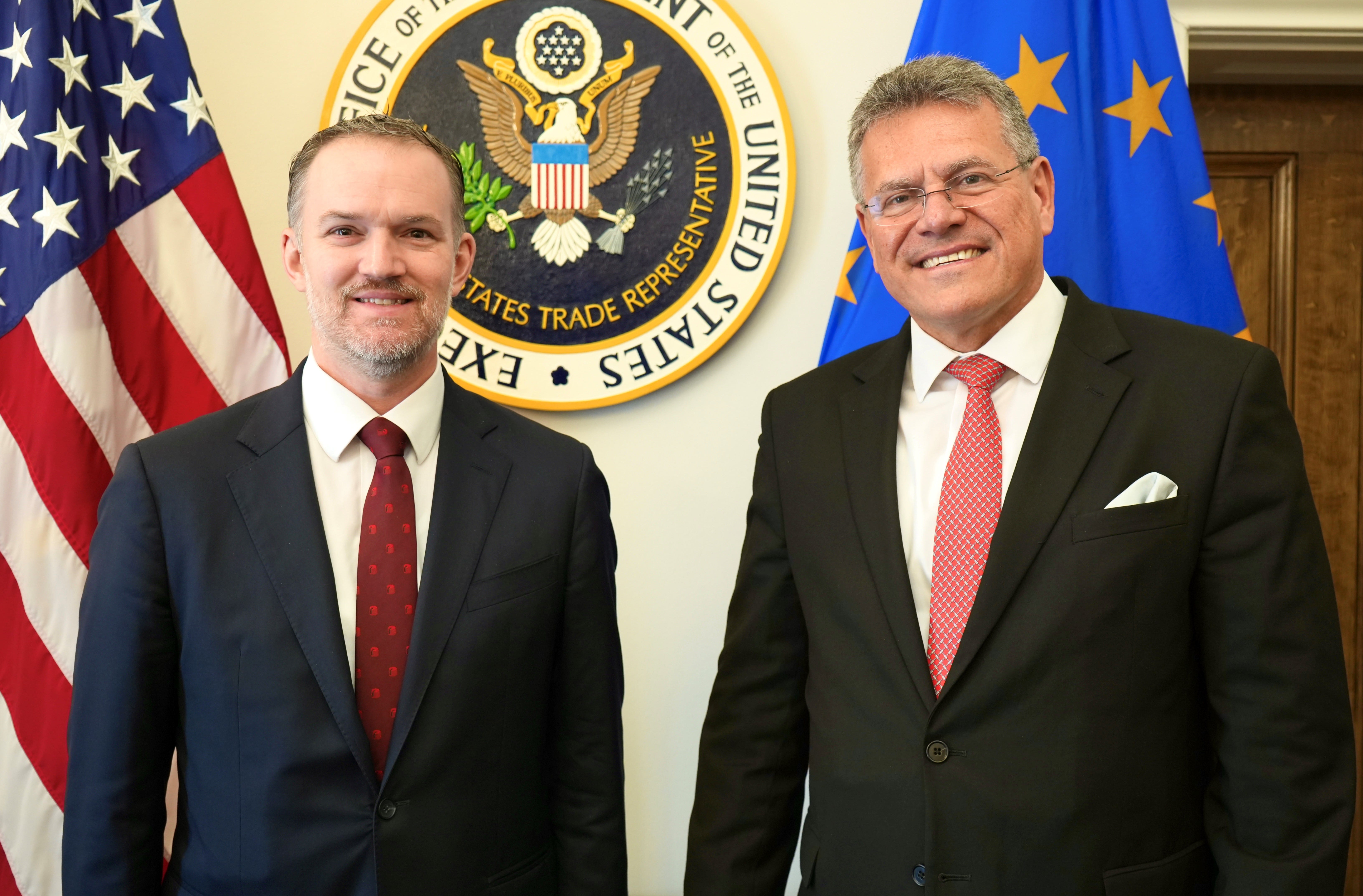
WASHINGTON — Today, Ambassador Jamieson Greer announced agreement on the United States-European Union Action Plan for Critical Minerals Supply Chain Resilience. The Action Plan will serve as the primary U.S.-EU mechanism to coordinate trade policies and measures on critical minerals supply chains with a view to concluding a binding plurilateral agreement on trade in critical minerals.
“The United States and the European Union share a commitment to addressing the non-market policies and practices that have distorted critical minerals supply chains,” said Ambassador Greer. “We will explore how trade measures, such as border-adjusted price floors, can strengthen our domestic critical minerals industries and the downstream sectors critical to our industrial competitiveness. I thank EU Trade Commissioner Maroš Šefčovič for his commitment to securing transatlantic trade in critical minerals.”
Read the United States-European Union Action Plan for Critical Minerals Supply Chain Resilience here and below…
Introduction
In recent decades, distortions resulting from pervasive non-market policies and practices have left critical minerals supply chains of market-oriented economies vulnerable to a myriad of disruptions, including economic coercion. Correcting these vulnerabilities is imperative, as critical minerals are strategic assets integral to modern and innovative industrial economies, and diverse, resilient, and market-based supply chains are essential for our economic and national security.
To this end, the United States and the European Union (“EU”) (collectively, “the
Participants”) have established this Action Plan with a view to developing a plurilateral trade initiative with like-minded partners on trade in critical minerals which would support the objective of securing mutual supply chain resilience for critical minerals.Action Plan
The Participants intend to expeditiously implement the following Action Plan:
• The Participants intend to discuss the feasibility and development of coordinated trade policies and mechanisms, including market and trade measures based on reference prices, such as border-adjusted price floors, standards-based markets, price gap subsidies, or offtake-agreements, focusing in the first instance on mutually agreed select critical minerals and associated supply chains.• The Participants intend to further explore how such measures may be embodied in a plurilateral agreement on trade in critical minerals. The Participants intend to also consider any other provisions that would be necessary to ensure supply chain resilience. Such other provisions may include, but would not be limited to:
o Trade measures to support a resilient critical minerals marketplace among
the contracting parties;
o Standards for mining, processing, recycling, or trade in critical minerals;
o Technical and regulatory cooperation;
o Investment promotion and screening cooperation;
o Coordinated rapid responses to prevent disruptions and crises in critical
minerals supply chains, including from third countries;
o Research and development cooperation on critical minerals technologies;
and
o Stockpiling cooperation.This Action Plan will be implemented and developed by the Office of the United States Trade Representative (USTR) and the European Commission’s Directorate-General for Trade and Economic Security (DG TRADE).
The United States and the EU also recognize that complementary discussions on critical minerals resilience continue in other fora, such as the G7